Cornell Flooring Installation: What These Homes Actually Need
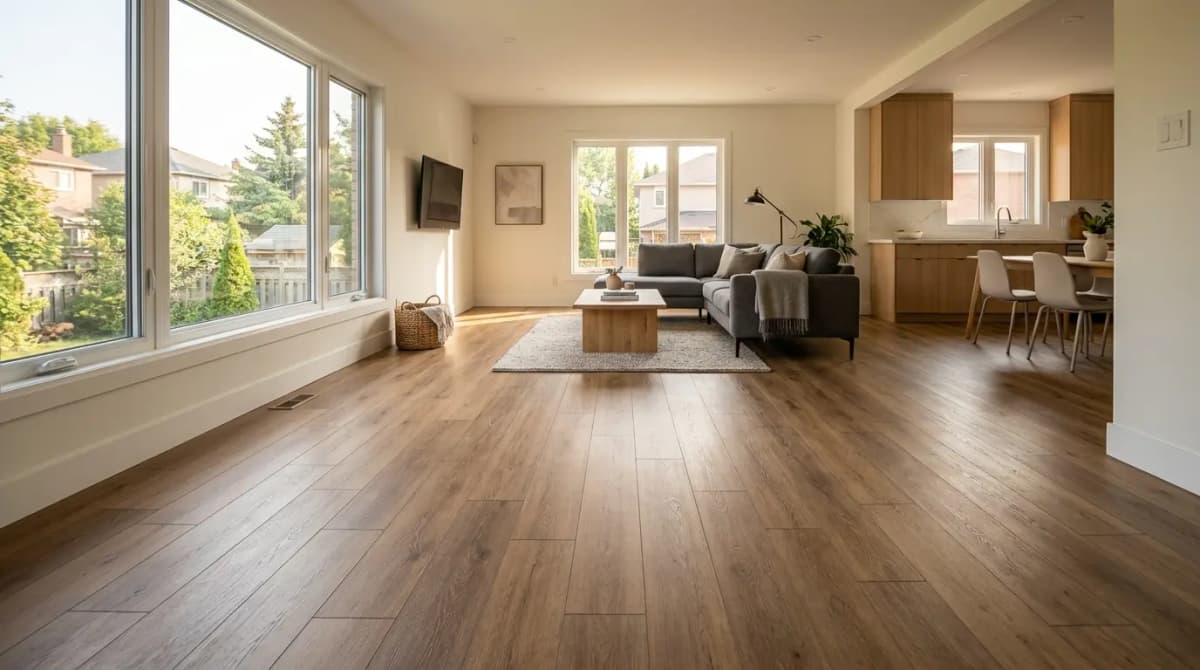
Cornell was built fast — most of the detached and semi-detached homes in this east Markham neighbourhood went up between 2000 and 2010, which means a lot of them are now hitting that 15-to-20-year wall where builder-grade flooring starts showing its age. The original laminate is lifting at the seams. The engineered hardwood in the main hallway has gone grey and scratchy. The carpet upstairs has seen two dogs and three kids. If you're in this boat, you're not behind on renovations — you're right on schedule. The question isn't whether to replace the floors, it's what to install and how to do it right the first time.
What Actually Happens to Builder-Grade Floors After 15 to 20 Years
The original flooring in most Cornell homes was installed to a price point, not a performance standard. Builders in that era typically used thin 7mm laminate or low-grade engineered hardwood over a concrete slab on the main level, and stapled carpet over OSB upstairs. By now, the laminate has absorbed enough seasonal humidity cycles that the core has started to swell and separate. The click-lock joints — never particularly tight to begin with — have loosened. You'll feel it as a subtle bounce or hear it as a hollow click underfoot.
The good news: the subfloor underneath is usually in decent shape. Most Cornell homes on slab don't have moisture issues if the grade drainage is intact, which means you're not looking at a subfloor repair job before you can install new floors. A proper Installation assessment will confirm that, but in most cases these homes are ready to go straight to new product.
Why SPC Vinyl Is the Right Call for Cornell's Main-Level Slab
Concrete slab subfloors are unforgiving. They don't flex, they can hold residual moisture, and they amplify any imperfection in the product above them. That's why we frequently recommend SPC (Stone Plastic Composite) vinyl for Cornell main floors — it's dimensionally stable in a way that traditional laminate simply isn't, and it handles the minor moisture variance you get in a slab-on-grade home without buckling or gapping.
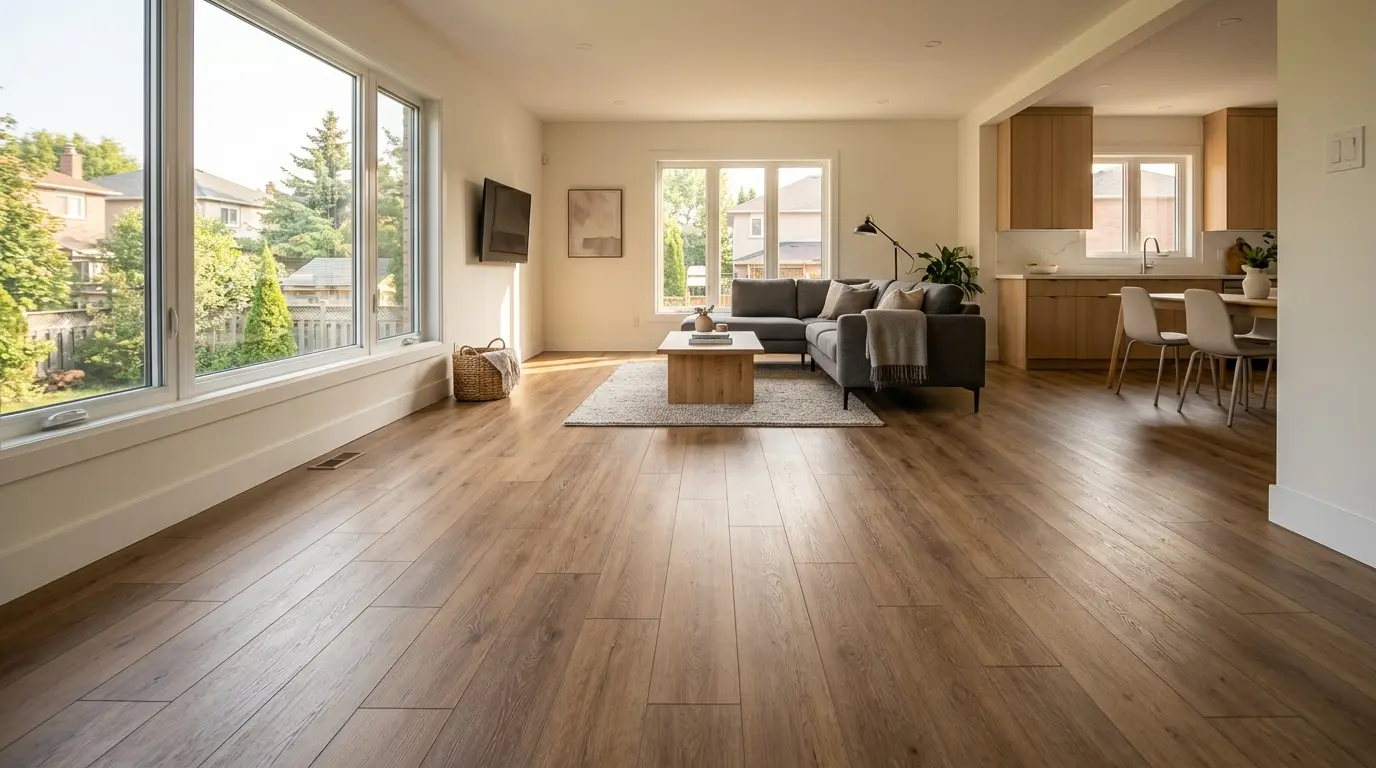
One product worth looking at closely is the Triforest Flooring TF SPC 421 — a 7mm SPC vinyl that combines a rigid core with a realistic wood-look finish. The colour, TFSPC421, reads as a warm, medium-toned plank that works well in the open-concept main floors Cornell homes are known for. It's not trying to look like something it isn't — it just looks clean, current, and right at home in a well-renovated 2000s build. You can view the full product details here: Triforest TF SPC 421.
If you're also considering options for the upper level, check out our full vinyl flooring collection — there are SPC profiles that work well over OSB subfloors too, with the right underlayment.
What a Professional Installation Actually Looks Like in a Cornell Home
A lot of homeowners have had bad flooring experiences — not because the product was wrong, but because the installation cut corners. Here's what a proper Installation looks like in a home like yours:
- Subfloor inspection first. Before anything is laid, we check the slab for moisture readings and flatness. SPC is forgiving, but a slab that's out of level by more than 3/16 of an inch over 10 feet will telegraph through the floor over time.
- Proper acclimation. SPC vinyl doesn't need to acclimate the way hardwood does, but it should be brought to room temperature before installation — especially in winter when Cornell garages and unheated spaces can get genuinely cold.
- Expansion gaps at every wall and vertical surface. This is where DIY and rushed installs fail. SPC still moves slightly with temperature. Without proper gaps, you'll see buckling within a year.
- Transitions done right. The handoff between your new floor and tile, carpet, or hardwood in adjacent rooms matters more than most people expect. A clean, properly measured transition strip is the difference between a renovation that looks finished and one that looks rushed.
Start with a Free In-Home Measurement
Cornell homes in the 2,000 to 2,800 square foot range have enough square footage that material estimates done by eye or rough math can be off by hundreds of dollars. We offer a free in-home measurement — we come to your home, assess the subfloor, measure every room accurately, and give you a real number to work with before you commit to anything.
No surprises on installation day. No running short on material. No awkward conversations about unexpected subfloor costs.
Ready to get started? Call us at (647) 428-1111 or come see us at 6061 Highway 7, Markham. We know Cornell homes, and we'll tell you exactly what your floors need.
📚 Helpful Resources
Your next step
Removal and installation are quoted together so there are no surprises at invoice time: carpet removal is $1.00 per sqft, vinyl, laminate or hardwood removal $1.50 per sqft, and floating installs $2.00 per sqft. book a free in-home measurement and we confirm the numbers on site, or call (647) 428-1111. Browse the full in-stock catalogue to pick the new floor while you are at it.