How to Refinish Hardwood Stairs: Cost, Process & What to Expect
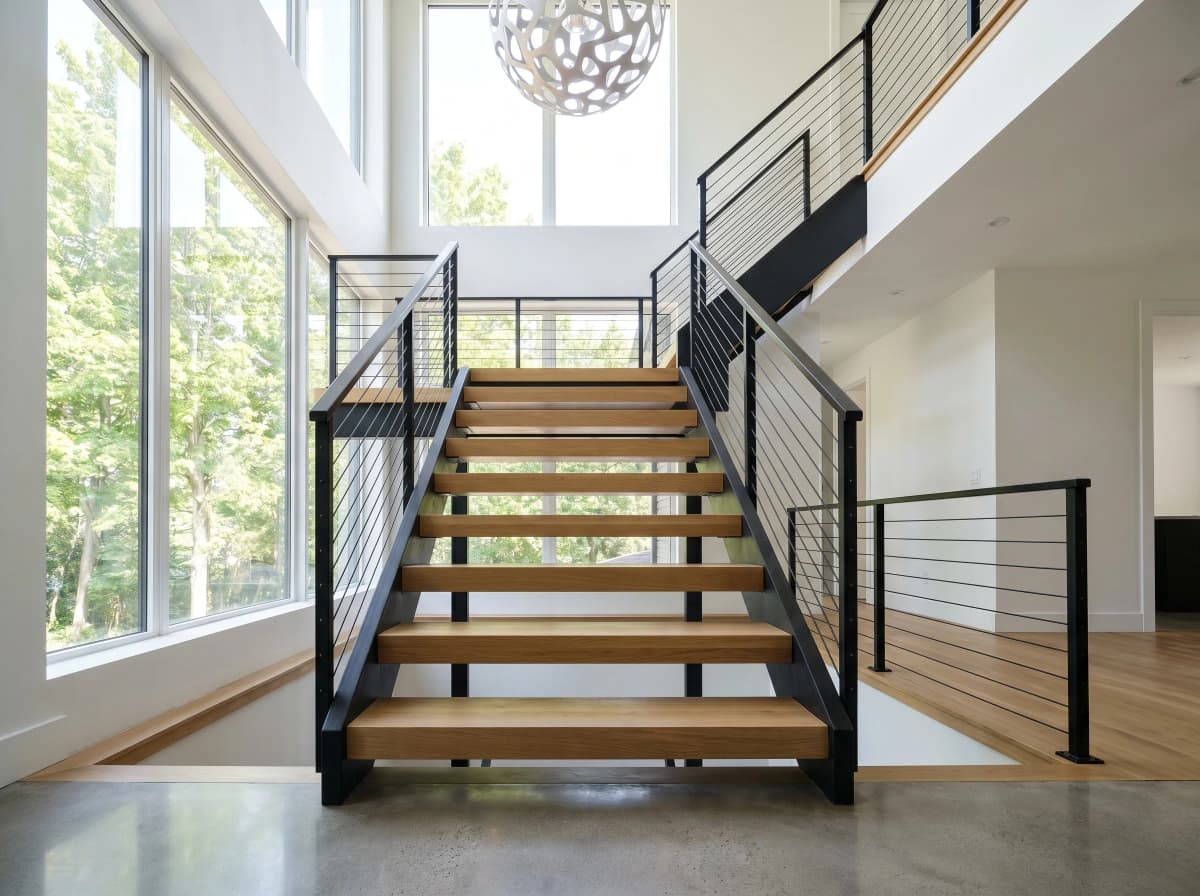
Refinishing hardwood stairs costs $125 to $185 per tread in the GTA, depending on whether you're doing a full sand-and-finish or a recap (overlay). A typical 13-tread staircase runs $1,625 to $2,405 professionally done — and it's almost always worth it over replacement if your treads are structurally sound and have at least 3/16" of wood above the tongue. The process takes 2–3 days including dry time, and the result lasts 10–15 years before the next refinish cycle. Here's exactly how it works, what it costs, and when you should consider replacing instead of refinishing.
Refinish vs. Recap: Understanding the Two Options
Before you get a quote, you need to know which service you actually need — because they're priced differently and produce different results.
- Refinish ($125/tread at BBS): Sand the existing finish off, repair minor gouges, apply new stain (optional), and lay 3 coats of polyurethane. This is the right call when your treads are scratched, dull, or discoloured but the wood itself is intact. You're restoring what's already there.
- Recap ($185/tread at BBS): Install a new hardwood tread overtop of the existing one. Used when the original tread is too thin to sand again, has deep structural damage, or you want to change the wood species entirely. Recapping is faster (no sanding dust, no waiting for stain to penetrate) and gives you a fresh surface with full thickness.
The rule of thumb: if a tread has been refinished 2–3 times already, it's likely too thin to sand safely. Recap it. If it's a first or second refinish and the wood is solid, sand it. A flooring contractor should measure tread thickness before quoting you — anything under 5/8" total remaining thickness is a recap candidate.
The Full Refinishing Process, Step by Step
Here's what a professional stair refinish actually involves. This is also the sequence you'd follow for a DIY attempt, though the equipment and dust management are significantly harder on stairs than on flat floors.
- Assessment and prep (Day 1, ~1 hour): Check tread thickness, identify loose treads or squeaks, remove carpet staples if applicable (see our carpet removal service if your stairs are currently carpeted), and tape off walls and balusters.
- Sanding (Day 1, 3–5 hours): Stairs can't be done with a drum sander — you need an orbital edge sander or belt sander for the flat tread surface, and a detail sander or hand-sanding block for the nosing edge and corners. Start at 36 or 60 grit to cut through old finish, progress through 80, then 100 or 120. This is where most DIYers underestimate the time and effort. Each tread is a separate confined workspace.
- Staining (Day 1 or 2, optional): If you're changing the colour, apply stain with a brush or rag, wipe excess, and let it dry fully — typically 4–8 hours depending on the product and humidity. In GTA winters, low humidity speeds dry time; in humid summers, add 2 hours minimum.
- First coat of polyurethane (Day 2): Apply water-based or oil-based poly with a brush (never a roller on stairs — it traps bubbles). Water-based dries in 2–4 hours and has low odour. Oil-based takes 8–12 hours per coat but produces a warmer amber tone and is generally more durable under heavy foot traffic.
- Light sanding between coats (220 grit screen): Scuff the surface to improve adhesion before the next coat. Remove all dust.
- Second and third coats (Day 2–3): Repeat. Three coats minimum on stairs — they take more abuse per square foot than any other surface in your home.
- Cure time: Light foot traffic in 24 hours (with socks). Full cure — meaning furniture, pets, and normal use — takes 7 days for water-based, 30 days for oil-based. During cure, avoid rubber-backed mats, which will leave marks.
Hardwood Stair Refinishing Cost Breakdown (GTA 2024)
Pricing varies based on tread count, wood condition, finish type, and whether staining is included. Here's a realistic cost table for Toronto-area homeowners:
| Service | Cost Per Tread (BBS) | 13-Tread Staircase | Best For |
|---|---|---|---|
| Sand & Refinish (clear finish) | $125 | $1,625 | Scratched/dull treads, first or second refinish |
| Sand, Stain & Refinish | $125–$145 | $1,625–$1,885 | Colour change, matching new flooring |
| Recap (new tread overlay) | $185 | $2,405 | Thin treads, heavy damage, species change |
| Full stair replacement | $250–$400+ | $3,250–$5,200+ | Structural failure, complete renovation |
| DIY refinish (materials only) | $8–$18 | $104–$234 + equipment rental | Experienced DIYers with proper equipment |
Equipment rental (sander + edger) runs $80–$120/day in the GTA. Add $40–$60 for sandpaper, $30–$50 for poly, $25–$45 for stain if used. A true DIY job on 13 treads costs $250–$400 in materials and rental — but takes a full weekend and carries real risk of uneven sanding or finish bubbling.
DIY vs. Professional Refinishing: The Honest Assessment
Flat hardwood floors are a reasonable DIY project for someone with patience and a free weekend. Stairs are harder. Here's why:
- Sanding geometry: Treads have a nosing that curves over the riser. A flat sander won't reach it. You'll hand-sand that edge, and if you're inconsistent, the nosing looks different from the flat tread — especially under stain.
- No drum sander access: Drum sanders (the fast, efficient machines) can't navigate a staircase. You're using an orbital or belt sander the entire time, which is slower and requires more passes.
- Finish application on a vertical workspace: Applying poly on a slope without drips or brush marks is genuinely difficult. Professionals use specific brush techniques and know which products flow better on angled surfaces.
- Dust containment: Stair sanding creates dust that travels through your entire home. Professionals use negative-pressure dust containment systems. DIYers usually don't.
Our honest take: If you've refinished hardwood floors before and own or can rent the right equipment, DIY on stairs is doable. If this is your first refinishing project, the stairs are a bad place to learn. The cost difference between DIY and professional ($1,200–$2,000 for a full staircase) is real, but so is the risk of a result you'll look at every day for the next decade.
For our full professional installation and refinishing services, or to get a quote specific to your staircase, use our quote calculator.
When to Recap or Replace Instead of Refinishing
Not every staircase is a refinish candidate. Here are the clear signals that you need a different approach:
- Tread thickness under 5/8": Each sanding removes 1/16" to 1/8" of wood. If you're already thin, another sand risks exposing the tongue-and-groove joint or weakening the tread structurally.
- Deep gouges or cracks through the wood: Surface scratches fill with stain and poly. Cracks that go through the board or deep gouges wider than a pencil won't disappear under refinishing — they'll telegraph through every coat.
- Squeaking or movement: A tread that flexes or squeaks needs to be re-secured before any finish work. Finishing over a loose tread just seals in the problem.
- Previous 3+ refinishes: Most solid hardwood treads can handle 4–6 refinishes over their lifetime. If you're on the third or fourth, measure thickness carefully before committing.
- You want to change wood species: Refinishing restores what's there. If you want to go from pine to oak, or from oak to something more contemporary, recapping is the path.
If you're recapping, the new tread material matters. The Gunstock Solid Maple by Wickham ($5.50/sqft) is a strong choice for stair treads — maple is one of the hardest domestic species (1,450 Janka), handles foot traffic better than oak, and the warm gunstock tone pairs well with most GTA interior palettes. For a more contemporary look, the Pollo European Oak by Northernest ($5.19/sqft) offers a wide 7.5" plank with a wire-brushed texture that hides wear between refinishes better than a smooth finish would.
Browse our full stair flooring options or our solid hardwood collection if you're considering new treads.
Matching Refinished Stairs to New Flooring: The GTA Reality
One of the most common scenarios we see at our Markham showroom: a homeowner installs new hardwood or engineered hardwood on their main floor and then realizes their stairs look completely wrong next to it. The stain colour, sheen level, and wood grain all mismatch. Here's how to handle it.
If you're refinishing stairs to match existing floors: Bring a sample of your floor (a leftover plank, or even a photo with accurate colour rendering) to the refinisher. Stain matching is more art than science — it takes test patches on the actual tread wood to get right. Oak stairs stained to match maple floors, for example, will never be a perfect match because the grain absorbs stain differently.
If you're installing new flooring and refinishing stairs at the same time: This is the easiest scenario. Do the stairs and floors in the same job. The finisher can pull stain directly from the floor installation and apply it wet on the treads for a near-perfect match.
If you're matching engineered hardwood: Products like the Kansas Oak by NAF Elegant Collection ($4.69/sqft) have a factory-applied finish that's difficult to replicate exactly in a site-applied stain. In these cases, recapping the stairs with a matching solid oak tread and staining on-site gets you closer than trying to match the factory colour on old treads. See our engineered hardwood collection for more options if you're also updating your main floor.
GTA-specific note: most homes built between 1990 and 2010 in Markham, Richmond Hill, and Vaughan have oak treads under carpet. When that carpet comes off (see our carpet removal service), the treads are usually in refinishable condition — but they're often a red-toned stain that was popular in the 90s. Updating to a grey, natural, or dark walnut tone is one of the highest-impact cosmetic changes you can make in one of these homes.
Stain Colours That Work in GTA Homes Right Now
Stain trends in the GTA have shifted significantly in the last five years. Here's what's actually moving through our showroom and what's aging out:
- Natural/clear (no stain): Letting the wood speak for itself is the dominant trend right now, especially on white oak and European oak. Works best when the wood has natural character — knots, variation, wire-brushed texture.
- Warm grey (e.g., Bona Ash, RBC Warm Grey): Still popular in newer builds and renovations with white or greige walls. Pairs well with matte black hardware.
- Dark walnut: Classic choice, still in demand, but showing its age in homes that went all-in on the look in 2015–2018. If your main floor is already dark walnut, matching the stairs is still the right call.
- Aging out: Red-toned stains (Early American, Gunstock applied over red oak), orange-toned pine finishes, high-gloss polyurethane on flat surfaces.
For sheen level: matte or satin (15–35% sheen) on stairs. Semi-gloss shows every scratch and footprint. High-gloss is a maintenance nightmare on a high-traffic surface. If you want durability with low maintenance, a satin water-based poly is the current professional standard.
Check our 2026 Flooring Cost Guide for updated material and labour pricing across all flooring categories in the GTA.
Ready to fix the stairs?
Stair refinishing starts at $125 per step, new hardwood treads over existing stairs from $185 per step, and specialty steps (curved, landings, open risers) run $225 per step. Final pricing is confirmed after a site visit, so the fastest path is to book a free in-home measurement or send a photo of your staircase to (647) 428-1111. See finished projects and the full rate card on our stair refinishing page.
Frequently Asked Questions
How long does hardwood stair refinishing take from start to finish?
A professional refinish on a standard 13-tread staircase takes 2–3 days: one day for sanding and staining, one to two days for polyurethane coats with dry time between each. You can use the stairs with socks after 24 hours, but full cure takes 7 days (water-based) or up to 30 days (oil-based). Plan to use a secondary staircase if you have one, or schedule the work when you can minimize stair traffic.
Can I refinish hardwood stairs myself, or should I hire a professional?
DIY is possible if you have prior experience refinishing hardwood floors and can rent an orbital or belt sander — but stairs are harder than flat floors due to the nosing geometry, sanding access, and finish application on a slope. Materials and equipment rental run $250–$400 for a 13-tread staircase. Professional refinishing at $125/tread ($1,625 for 13 treads) eliminates the risk of uneven sanding, drips, or finish bubbling. First-time refinishers should hire a pro.
How do I know if my stairs can be refinished or need to be replaced?
Measure tread thickness — if there's less than 5/8" of wood remaining above the tongue, the tread is too thin to sand safely and should be recapped or replaced. Also inspect for deep structural cracks, significant movement or squeaking, and count previous refinishes (most treads handle 4–6 over their lifetime). Treads with surface scratches, dullness, or colour fading are almost always good refinish candidates.
What's the difference between refinishing and recapping stairs?
Refinishing means sanding the existing tread down to bare wood and applying new stain and finish coats. Recapping means installing a new hardwood tread directly overtop of the existing one. Refinishing costs $125/tread at BBS and is right for treads in good structural condition. Recapping costs $185/tread and is the better choice when treads are too thin to sand, heavily damaged, or when you want to change wood species entirely.
How do I match refinished stairs to my existing hardwood floors?
Bring a physical sample of your existing floor to the refinisher for stain matching — photos are unreliable for colour accuracy. If your floors have a factory-applied finish (common with engineered hardwood), an exact match via site stain is difficult; recapping the treads with matching solid wood and staining on-site usually gets closer. Doing the stairs and main floor refinish simultaneously in the same job produces the best colour match.
Is it worth refinishing hardwood stairs before selling a home in the GTA?
Yes, in most cases. Worn or carpet-covered stairs are one of the first things buyers notice, and they mentally add the cost of fixing them to their offer. A professional refinish at $1,600–$2,400 typically returns more than its cost in perceived value — especially in the $900K–$1.5M detached home market common in Markham, Richmond Hill, and Vaughan. If the stairs are under carpet, removing it and refinishing the treads beneath is one of the highest-ROI pre-sale improvements available.
Ready to get a real number for your staircase? Use our quote calculator for an instant estimate, or book a free in-home measurement and we'll assess your treads in person before recommending refinish, recap, or replacement. Call us at (647) 428-1111 or visit our showroom at 6061 Highway 7, Markham — we carry the materials and do the work.