Why Milliken's Townhouse Floors Are Overdue for a Laminate Upgrade
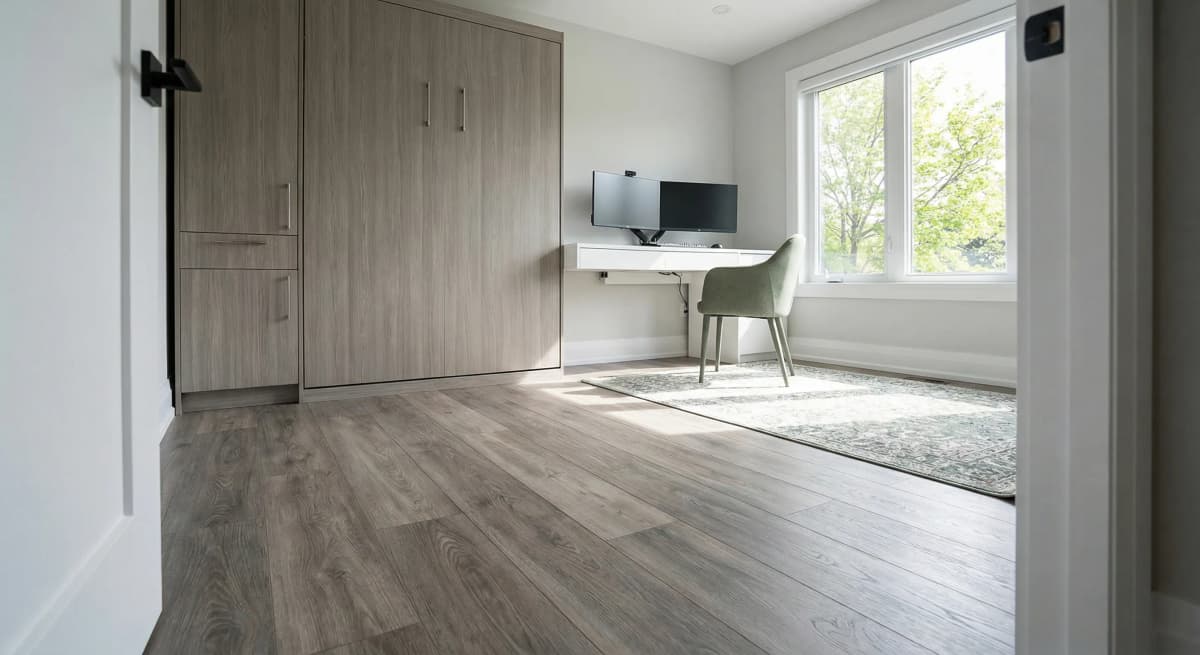
Most of Milliken's housing stock was built in the late 1980s through the mid-1990s — a wave of townhouses and semi-detached homes that went up fast along Steeles, McNicoll, and Middlefield. The original flooring in most of these units was builder-grade carpet over a plywood subfloor, or low-end strip hardwood that's been refinished once (maybe twice) and is now too thin to touch again. If you're at the point where the carpet is holding odours no amount of cleaning will fix, or the old hardwood is cupped, gapped, or just visually exhausted — you're not alone, and you're not imagining it. This is exactly the renovation moment most Milliken homeowners hit between year 25 and 35 of ownership.
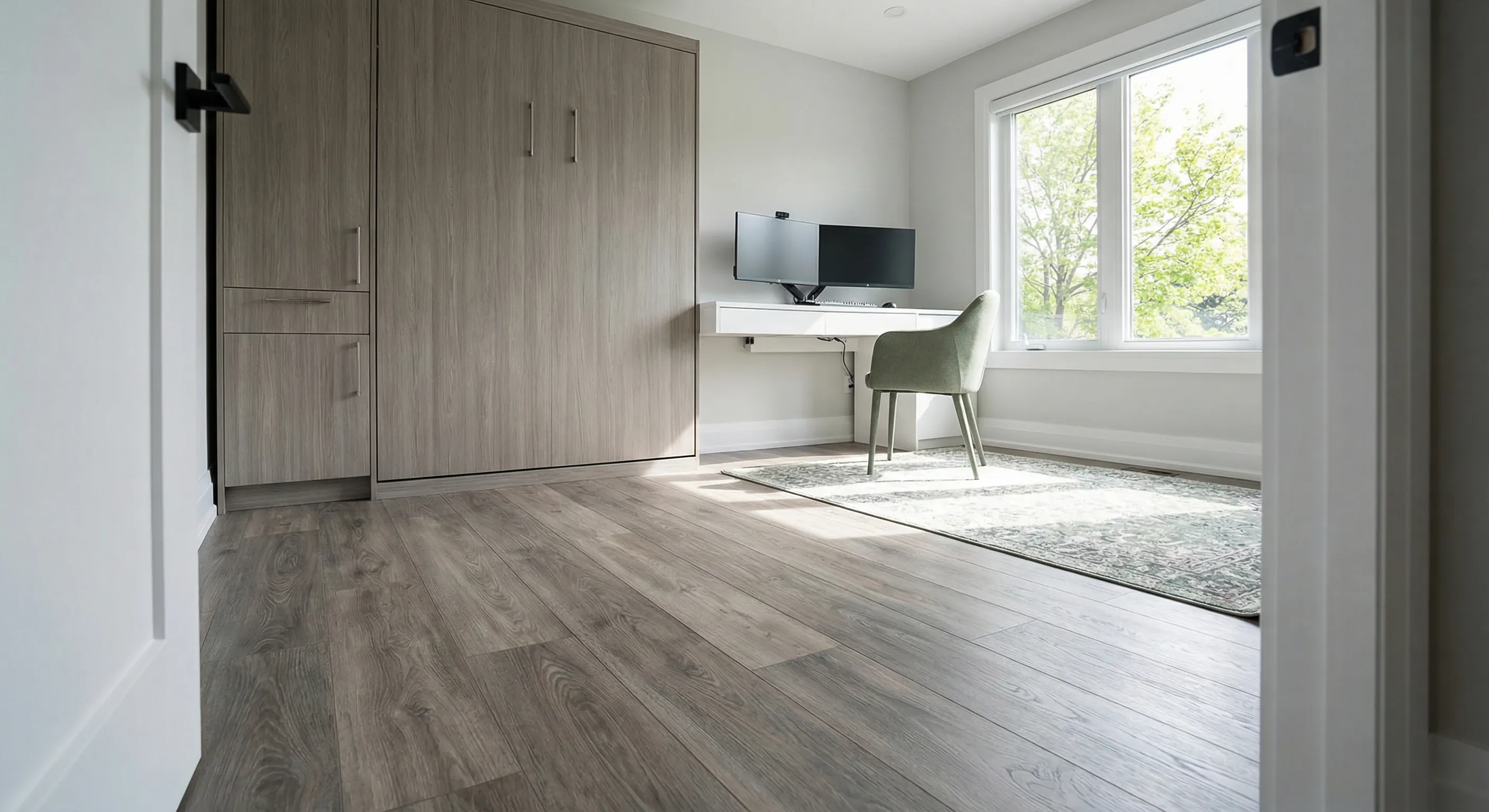
What Actually Happens to Builder-Grade Floors in a 30-Year-Old Townhouse
The townhouses in Milliken were built with efficiency in mind, not longevity. The plywood subfloors are generally solid — that's good news — but what sits on top has taken decades of abuse: furniture drag, pet traffic, kids, humidity swings from those brutal GTA winters and muggy summers. Engineered hardwood is a strong option, but it comes at a price point that doesn't always make sense for a mid-level renovation. Solid hardwood is often overkill when the subfloor has minor flex or unevenness. What Laminate does well is bridge that gap — it installs as a floating floor, which means it doesn't bond directly to the subfloor and can handle minor imperfections without telegraphing them up through the surface. For a plywood subfloor that's seen three decades of seasonal movement, that flexibility matters.
How Laminate Holds Up Through GTA Winters and Humid Summers
Milliken gets the full GTA climate treatment: furnaces running hard from November through March, humidity dropping to 20% indoors if you're not running a humidifier, then flipping to sticky 80% summers. That thermal cycling is hard on any floor. The key with laminate is the AC rating and the core construction. A quality 12mm laminate with a high-density fiberboard (HDF) core and a proper underlayment will absorb that seasonal movement without gapping at the joints or peaking at the seams. Cheap laminate — the kind you'll find at big-box stores in the $1.50/sq ft range — uses lower-density core that swells unevenly and fails at the locking joints within a few winters. When we spec Laminate for a Milliken home, we're looking at AC4-rated products minimum, with a pre-attached underlayment that accounts for the minor subfloor variation common in these older builds. If you're also considering a waterproof option for the kitchen or a finished basement, it's worth looking at vinyl plank as a complementary product — different rooms often call for different solutions.
The Rooms Where Laminate Makes the Most Sense in a Milliken Townhouse
The typical Milliken townhouse layout runs two or three storeys with a main-floor living and dining area, a second-floor with bedrooms, and often a finished basement that's used as a rec room or in-law suite. Here's how we usually think about it:
- Main floor living and dining: This is the prime candidate. Open-concept or semi-open layouts benefit enormously from a continuous laminate run — no transitions, no visual breaks. A wide-plank oak-look in a warm greige reads as current without trying too hard.
- Upstairs hallway and bedrooms: Laminate here is a practical upgrade from carpet. Easier to clean, better for allergy sufferers, and the floating installation means no disruption to the subfloor.
- Basement: Laminate works in a dry, conditioned basement. If there's any history of moisture intrusion — even minor — we'll flag it during the free in-home measurement and recommend waterproof vinyl instead. We'd rather lose a sale than have you call us in two years about buckling floors.
What a BBS Flooring Installation Looks Like in Practice
We start with a free in-home measurement — not a rough estimate over the phone, but an actual walkthrough where we're checking subfloor levelness, identifying transitions, flagging any areas that need prep work before the laminate goes down. Milliken townhouses often have a step-down between the front entrance and the main living area, or a transition from tile to wood at the kitchen threshold — these details matter and they affect both the material estimate and the installation approach. On install day, we prep the subfloor, let the laminate acclimate to your home's conditions, and work through the space methodically. Most main-floor jobs in a standard townhouse are completed in a single day. We don't leave exposed transitions, rough cuts at doorways, or gaps at baseboards — the finish work is part of the job, not an afterthought.
If you're ready to stop walking on floors that belong to 1994, give us a call at (647) 428-1111 or come see the samples in person at 6061 Highway 7, Markham. You can also start with our quote calculator online to get a ballpark before we visit.
📚 Helpful Resources
Your next step
Ready to price it out? Browse in-stock laminate flooring with live pricing, then book a free in-home measurement. We confirm the square footage, check the subfloor and quote the floor and installation ($2.00 per sqft for floating installs) as one firm number. Prefer to talk it through? Call (647) 428-1111 or visit our Markham showroom (Mon to Sat, 10am to 5pm).