Wismer Staircase Upgrades: What Your Builder Stairs Are Missing
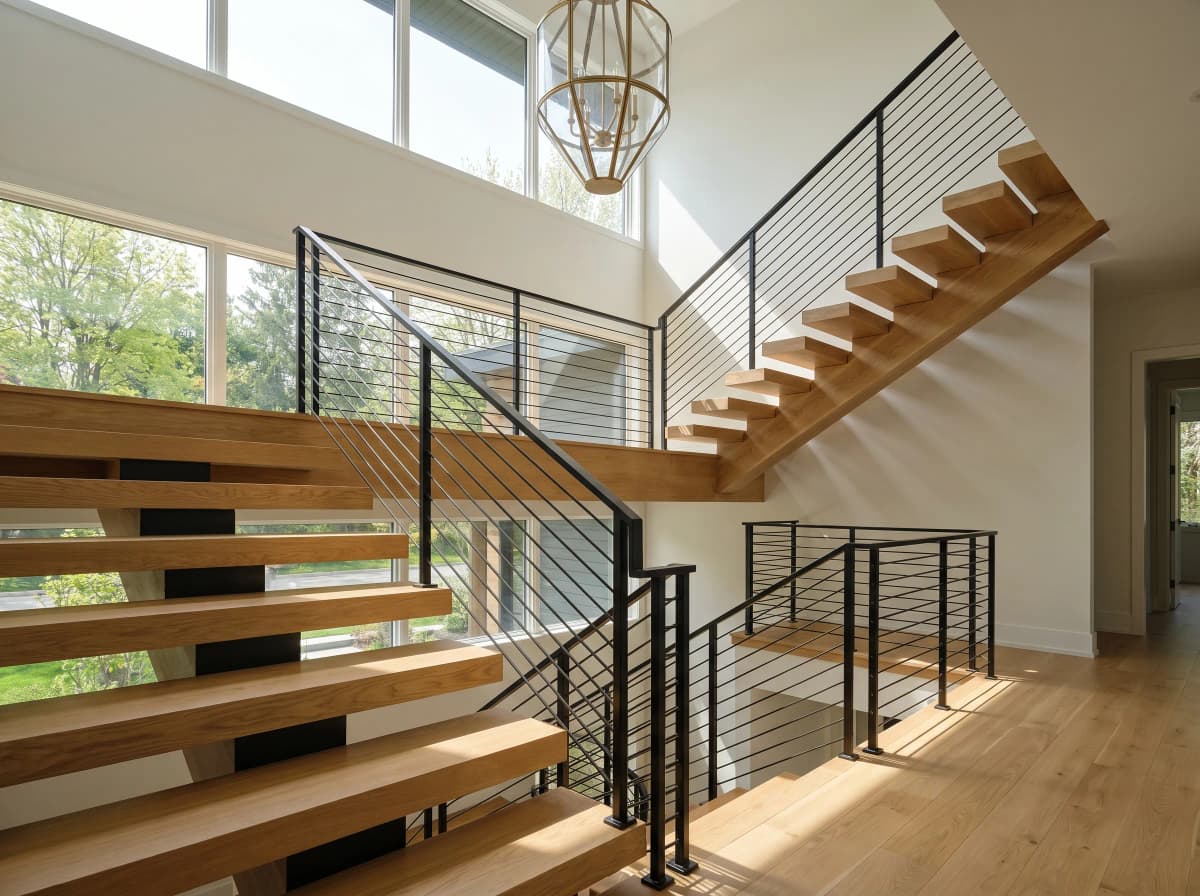
Most Wismer homes were built between 2000 and 2010 by developers like Mattamy and Monarch — and if you've lived in yours for more than a few years, you already know what that means for the staircase: thin pine treads, hollow-sounding box newels, and those chunky wood spindles that were already looking dated the day you moved in. You've probably renovated the kitchen, maybe the bathrooms, possibly even the main floor flooring. The stairs are the one thing left that still looks exactly like it did on possession day. That's exactly where we come in.
What Builder-Grade Stairs Actually Look Like After 15 Years
The staircase in a typical Wismer semi or detached was built to a price point, not a standard. Developers used finger-jointed pine treads finished with a thin coat of polyurethane — material that scuffs, yellows, and wears through at the nosing edge within a decade of normal family use. The balusters were almost universally square-cut wood in a colonial profile, painted white or stained to match whatever the builder's standard package offered that year.
By now, those treads have compression marks from years of foot traffic, the nosing edge may be chipped or rounded off, and the spindles likely have paint buildup in the grooves. None of this is cosmetic neglect — it's just what happens to builder-grade material at the 10-to-15-year mark. The good news is that the underlying stair structure in these homes is typically solid. The carriages are fine. You don't need to rebuild — you need to Stairs specialists who know how to work with what's already there.
Recapping vs. Refinishing: Which One Is Right for Your Wismer Staircase
This is the question we get asked most often, and the answer depends on the condition of your existing treads. If the pine is structurally sound but just worn and discolored, refinishing — sanding back to bare wood, applying stain, and laying down a fresh coat of durable polyurethane — can be a cost-effective option. But in most Wismer homes we see, the treads have been worn unevenly, or the nosing has been damaged enough that sanding alone won't produce a flat, clean result.
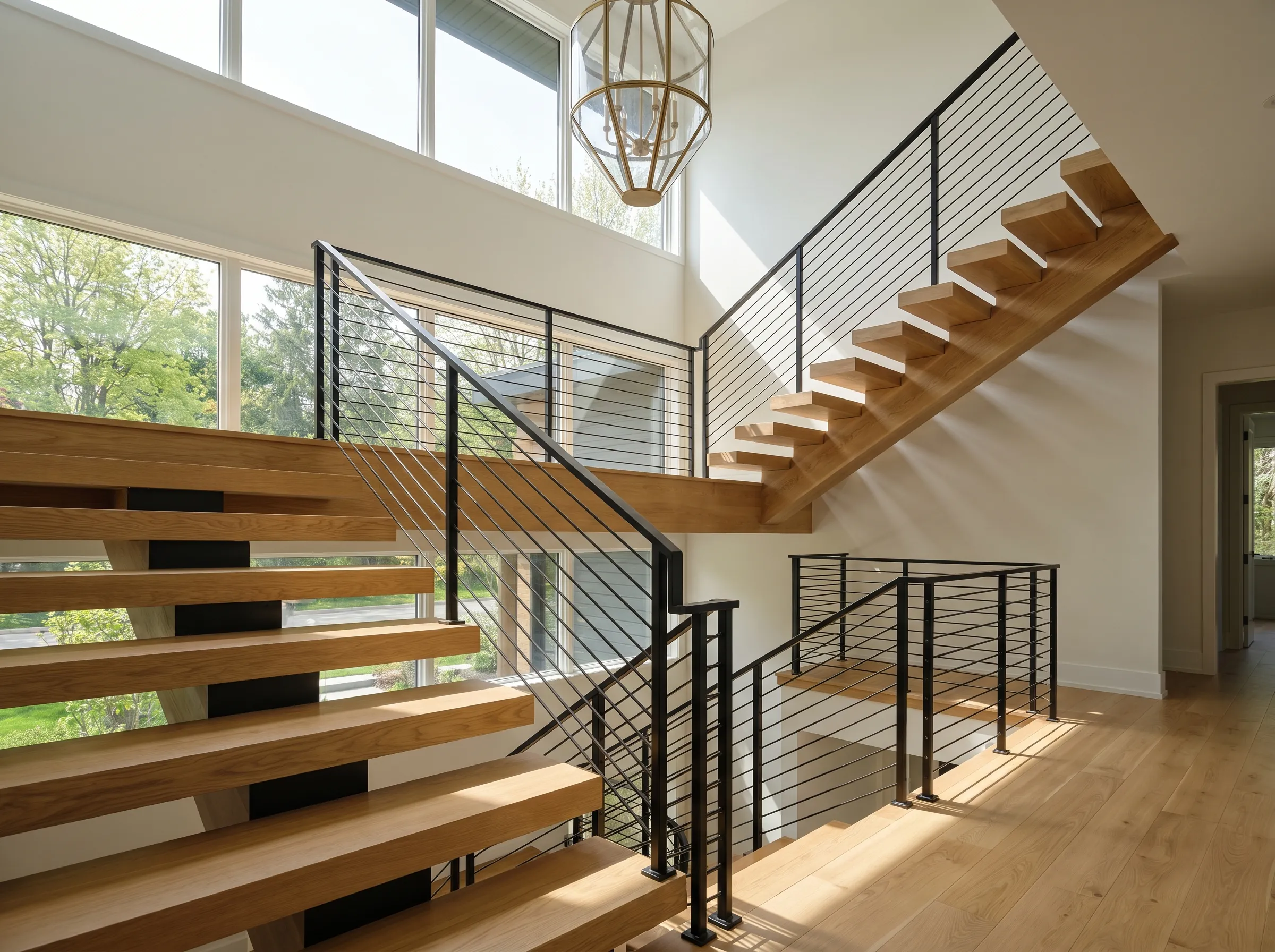
In those cases, recapping is the better call. We install new hardwood treads — typically in red oak, white oak, or maple — directly over the existing stair structure. Each tread is custom-cut to fit your specific stair width, glued and fastened, and finished with a hardwood nosing that gives you a clean, durable edge. The result looks and feels completely different from what came with the house. Paired with new iron pickets and a stained handrail, a recapped staircase in a Wismer home can look like it belongs in a custom build.
Iron Pickets: Why Wismer Homeowners Keep Choosing Them
Wrought iron and steel balusters have become the dominant choice in Wismer renovations for a straightforward reason: they open up the staircase visually, they don't collect dust the way wood spindles do, and they hold up to kids and pets without showing wear. The profile options — square bar, basket twist, hollow box — let you match the aesthetic of your interior without committing to a look that dates quickly.
Installation matters here. Iron pickets are set into the tread with either a shoe rail system or direct-mount pins depending on your tread thickness and stair design. Getting the spacing right — typically no more than four inches between balusters under Ontario building code — and keeping the vertical alignment true across a full flight requires precision. It's the kind of detail that separates a finished staircase from one that just looks finished from a distance. Our team handles the full scope: tread work, nosing, baluster removal, iron picket installation, and handrail refinishing or replacement, all coordinated so your staircase comes together as one cohesive piece.
What to Expect When BBS Flooring Works on Your Staircase
We offer a free in-home measurement for staircase projects — this isn't just a formality. Stair dimensions in Wismer homes vary more than people expect, even between houses on the same street. Tread depth, riser height, landing configurations, and the transition to your main floor all factor into material quantities and installation approach. We measure everything on-site before quoting so there are no surprises on installation day.
The work itself is typically completed in one to two days depending on the scope. We protect your main floor during the process — especially important if you've already invested in Stairs-adjacent flooring like engineered hardwood or engineered hardwood on your main level. We clean up fully before we leave, and we'll walk you through care and maintenance for your new treads before the job is done.
If your Wismer staircase is the last thing in your home that still looks like a builder special, it doesn't have to stay that way. Call us at (647) 428-1111 or stop by our showroom at 6061 Highway 7, Markham to see tread samples, iron picket profiles, and stain options in person.
📚 Helpful Resources
Ready to fix the stairs?
Stair refinishing starts at $125 per step, new hardwood treads over existing stairs from $185 per step, and specialty steps (curved, landings, open risers) run $225 per step. Final pricing is confirmed after a site visit, so the fastest path is to book a free in-home measurement or send a photo of your staircase to (647) 428-1111. See finished projects and the full rate card on our stair refinishing page.