Best Flooring for High Traffic Areas: Ranked by Durability
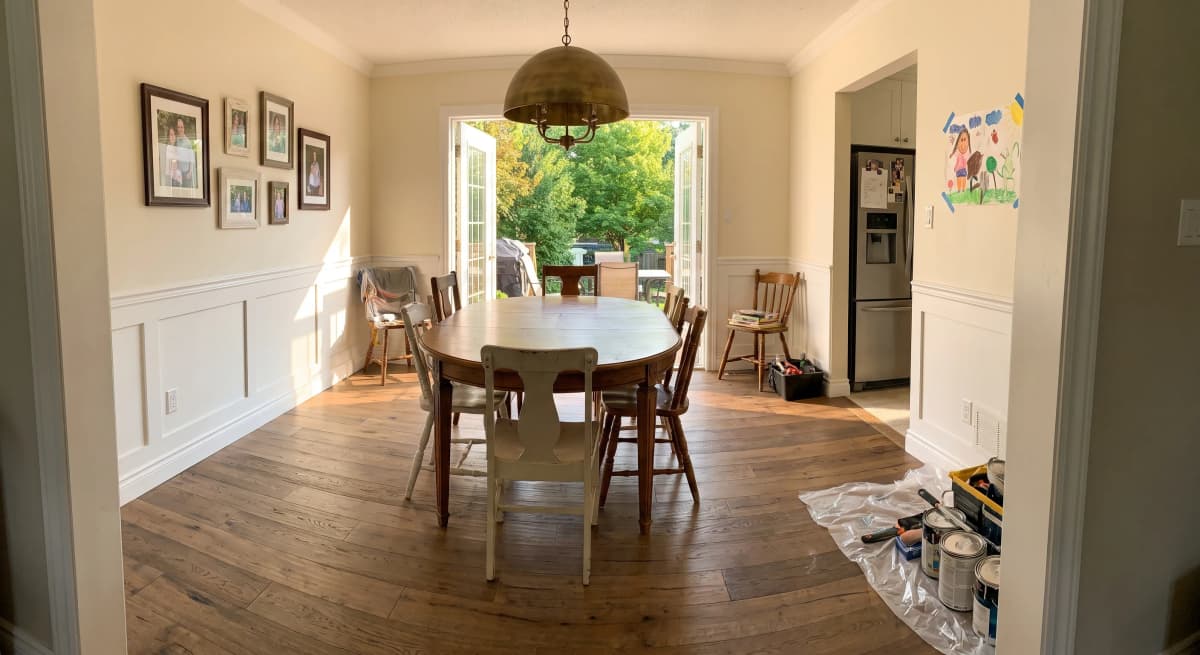
The best flooring for high traffic areas — entryways, hallways, kitchens, and main-floor living rooms — is SPC vinyl or rigid-core LVP for most GTA homes. It handles foot traffic, pet claws, dropped groceries, and the wet boots that come with six months of Canadian winter without warping, denting, or showing wear lines within five years. That said, the "best" answer changes based on your subfloor, your budget, and whether the high-traffic zone is also a wet zone. Here's how every major flooring type actually performs under real daily use.
What Makes a Floor "High Traffic Ready"?
Traffic durability comes down to four measurable factors — not marketing language. Before you spend a dollar, understand what you're actually evaluating:
- Wear layer thickness: For vinyl/LVP, this is the clear protective layer above the print. Residential high-traffic zones need at least 12 mil (0.3mm). Heavy-use areas — mudrooms, main hallways — should have 20 mil or more.
- AC rating (laminate): The Abrasion Class rating runs AC1 to AC5. AC3 is the minimum for residential high traffic. AC4 handles light commercial use. Anything below AC3 will show scratches within two years in a busy household.
- Hardness (Janka rating for wood): Solid and engineered hardwoods are rated on the Janka scale. White oak sits around 1290 lbf — hard enough for most homes. Brazilian cherry at 2820 lbf is nearly indestructible but nearly impossible to refinish.
- Core construction: Floating floors with a rigid SPC (stone plastic composite) core handle subfloor imperfections and resist denting far better than HDF or WPC cores under heavy point loads.
Flooring for High Traffic Areas: Full Comparison
Here's how the main flooring categories stack up across the specs that actually matter in a busy GTA home:
| Material | Installed Cost (GTA) | Waterproof? | Traffic Durability | Best High-Traffic Use |
|---|---|---|---|---|
| SPC / LVP Vinyl | $4.50–$8.00/sqft | ✅ 100% waterproof | Excellent (20+ mil wear layer) | Entryways, kitchens, mudrooms, basements |
| Waterproof Laminate | $4.00–$7.50/sqft | ⚠️ 72-hour waterproof protection | Very Good (AC4, HDF core) | Living rooms, hallways, dining rooms |
| Engineered Hardwood | $7.00–$14.00/sqft | ❌ Water-resistant only | Good (refinishable 2–3x) | Living rooms, bedrooms, above-grade hallways |
| Solid Hardwood | $9.00–$18.00/sqft | ❌ Not suitable for wet zones | Good (refinishable 5–7x) | Above-grade bedrooms, formal living rooms |
| Tile (Porcelain) | $8.00–$16.00/sqft | ✅ 100% waterproof | Excellent (grout is the weak point) | Bathrooms, laundry, commercial entries |
| Budget Laminate | $2.50–$5.00/sqft | ❌ Water-resistant only | Fair (AC3, shows wear in 5–8 yrs) | Low-traffic bedrooms, rental units |
SPC Vinyl: The Workhorse for Most GTA Homes
Vinyl flooring — specifically rigid-core SPC — is the dominant choice for high-traffic residential areas right now, and the reasons are practical, not trendy. SPC cores don't expand and contract with humidity swings the way wood-based products do. In a GTA home that goes from 20% indoor humidity in January to 65% in July, that stability matters. The floor won't gap in winter or buckle in summer.
A product worth knowing: the Zurich by NAF AquaLuuuz 5mm Loose Lay Vinyl at $3.49/sqft is a 100% waterproof option with a loose-lay installation format — meaning no glue, no click system, just a heavy backing that holds the floor in place. This makes it ideal for rental properties, renovation projects, or areas where you might need to pull up flooring for plumbing access. The 5mm profile keeps transitions clean with adjacent rooms, and the loose-lay system means zero acclimation time. For a 1,500 sqft main floor, you're looking at roughly $5,235 in material before installation.
For wet-zone high-traffic areas specifically — mudrooms, laundry rooms, kitchens — vinyl is the only product category we'd recommend without qualification. See our full waterproof flooring guide for a deeper breakdown of what "waterproof" actually means structurally.
Laminate in High Traffic Areas: What the AC Rating Actually Means
Laminate flooring gets unfairly dismissed in the durability conversation. A quality AC4-rated laminate with a thick HDF core will outlast mid-grade vinyl in scratch resistance — the aluminum oxide in the wear layer is genuinely hard. The honest limitation is water, not traffic.
The Silver Dune by NAF 14mm Waterproof Laminate at $3.19/sqft addresses the water concern directly. At 14mm thick, this is one of the thicker laminate profiles on the market — you get a noticeably solid underfoot feel, excellent sound dampening, and 72-hour waterproof protection at the seams. That 72-hour window means a spilled glass of water or a wet mop won't destroy the floor. A burst pipe or standing water left for days still will. Know the difference before you install laminate in a kitchen or near an exterior door.
For a budget-conscious high-traffic renovation — a rental unit, a finished basement rec room, or a hallway in a home you're prepping to sell — the Tosca Laminate 9912 by Tosca Floors at $1.49/sqft is hard to argue with. It won't perform like a 14mm premium laminate, but at that price point across 800 sqft, you're spending $1,192 on material for a floor that looks clean and handles normal residential foot traffic. Check our clearance section for additional budget options that don't sacrifice basic durability specs.
Engineered and Solid Hardwood: When Traffic Isn't the Main Concern
Hardwood — both engineered and solid — handles foot traffic reasonably well in above-grade, dry zones. The real vulnerability isn't traffic volume; it's moisture and point-load denting. A dining chair leg dragged across white oak will leave a mark. Stiletto heels on any hardwood will dent it. These are physical realities, not product failures.
Solid hardwood is not suitable for basements — full stop. The concrete slab beneath a GTA basement floor releases moisture year-round, and solid wood will cup, warp, or buckle regardless of how well you seal it. Engineered hardwood with a thick veneer (3mm+) can work above a vapor barrier in a basement, but it's not our first recommendation for a high-traffic basement space.
Where hardwood earns its place in high-traffic areas: main-floor open-concept living spaces where aesthetics are a priority and you're prepared to refinish every 8–12 years. White oak at 1290 Janka is our most-recommended species for this use — hard enough to handle daily life, light enough to show less visible scratching than darker stains, and refinishable multiple times over a 50-year floor lifespan.
GTA-Specific Realities: What Changes the Answer Here
National flooring guides are written for a generic North American home. GTA homes have specific conditions that change the calculus:
- Concrete slabs in 1990s–2010s builds: A large portion of GTA homes built after 1990 have concrete subfloors on the main level, not just the basement. Concrete holds moisture. Any wood-based product needs a proper vapor barrier and a moisture test before installation. We use a calcium chloride test — if you're getting readings above 3 lbs/1000 sqft/24 hours, vinyl is your safest option.
- Freeze-thaw cycles at entryways: Your front entryway sees salt, sand, ice melt, and wet boots from November through April. This is the most abusive zone in any GTA home. Vinyl is the only residential flooring we'd install here without hesitation. Laminate can work with a proper transition and a mat, but you're taking a risk near the door threshold.
- Builder-grade flooring aging out: If your home was built between 1995 and 2010, there's a strong chance you have 8mm laminate or glue-down vinyl that's now delaminating, swelling at seams, or simply worn through the wear layer. This is the most common high-traffic flooring replacement scenario we see. See our carpet and flooring removal service if you're starting from scratch.
- Radiant heat compatibility: Some GTA homes have in-floor heating, particularly in newer builds and renovated kitchens. Not all flooring is compatible. SPC vinyl and engineered hardwood generally work with radiant heat; solid hardwood and some laminates do not. Always confirm with the manufacturer spec sheet.
- Stair landings and transitions: High-traffic hallways almost always connect to stairs. Mismatched flooring at stair nosings looks bad and creates a trip hazard. Our stair flooring service ensures your high-traffic floor continues seamlessly onto your staircase.
For a full breakdown of what flooring costs in the GTA right now — including installation labour rates — see our 2026 Toronto flooring cost guide.
Installation: What Changes for High-Traffic Zones
The floor is only as good as what's under it. In high-traffic areas, installation quality matters more than in low-use rooms because every imperfection gets amplified by foot traffic over time.
- Subfloor flatness: High-traffic floating floors need a subfloor flat to within 3/16" over 10 feet. Humps and dips cause click joints to stress and eventually separate. Self-leveling compound is not optional if your subfloor fails this test.
- Expansion gaps: Floating floors need 1/4" expansion gap at all walls. In high-traffic open-concept spaces, installers sometimes skip this to avoid visible gaps under baseboards. The floor will buckle within two summers if the gap is missing.
- Underlayment choice: For concrete subfloors, use an underlayment with a built-in vapor barrier rated at least 15 mil. For wood subfloors, acoustic underlayment reduces the hollow sound that plagues floating floors in high-traffic hallways.
Our professional installation team handles subfloor prep, moisture testing, and transitions as part of the full installation process — not as add-ons. Use our quote calculator to get a ballpark before booking a measurement.
Frequently Asked Questions
What is the most durable flooring for a high-traffic hallway?
SPC vinyl with a 20 mil or higher wear layer is the most durable option for a residential hallway. It handles abrasion, moisture from wet footwear, and the constant friction of foot traffic better than any other flooring category at a comparable price point. If you want the look of wood, a high-AC-rated laminate (AC4 minimum) is the next best option for dry hallways.
Can laminate flooring handle heavy foot traffic?
Yes — AC4 and AC5 rated laminate handles heavy residential foot traffic well. The wear layer contains aluminum oxide, which is genuinely scratch-resistant. The limitation is water, not traffic volume. Laminate WILL swell and delaminate if water sits at the seams for more than 72 hours, which is why we don't recommend standard laminate near exterior doors or in kitchens without careful moisture management.
What flooring is best for a high-traffic kitchen in a GTA home?
100% waterproof SPC vinyl or porcelain tile. Kitchens combine high foot traffic with water exposure — spills, steam, and mopping — which eliminates laminate and hardwood as safe long-term choices. For a kitchen that connects to an open-concept living area where you want visual continuity, SPC vinyl in a wood-look format is the practical solution most GTA homeowners choose.
How long does high-traffic flooring last before it needs replacing?
A quality SPC vinyl (20 mil wear layer) in a busy household should last 15–25 years before the wear layer shows meaningful degradation. AC4 laminate typically lasts 10–20 years depending on traffic intensity and whether moisture exposure has been managed. Engineered hardwood can last 25–40 years if refinished every 8–12 years. Solid hardwood, installed in appropriate above-grade dry conditions, can last the lifetime of the home.
Is loose-lay vinyl good for high-traffic areas?
Yes, provided it has a heavy, dimensionally stable backing — typically 5mm or thicker. The Zurich NAF AquaLuuuz loose-lay vinyl uses a backing weight that prevents the floor from shifting under normal foot traffic. The advantage in high-traffic commercial or rental settings is that individual planks can be lifted and replaced if one section is damaged, without disturbing the rest of the floor.
What's the cheapest flooring that still holds up to high traffic?
Budget laminate like the Tosca 9912 at $1.49/sqft is the lowest entry point for a floor that will handle normal residential traffic. For a 1,000 sqft space, that's $1,490 in material. Add $2.50–$3.50/sqft for professional installation and you're looking at a complete floor for roughly $4,000–$5,000 — significantly less than vinyl or hardwood alternatives. The trade-off is a thinner profile (typically 8mm), less sound dampening, and greater water sensitivity.
Ready to choose the right floor for your high-traffic spaces? Book a free in-home measurement and one of our flooring specialists will assess your subfloor, traffic patterns, and moisture conditions before recommending a product — not the other way around. Call us at (647) 428-1111 or visit our showroom at 6061 Highway 7, Markham to see full-size samples of every product mentioned in this guide.