Best Flooring for Open Concept Homes (2026): What Actually Works
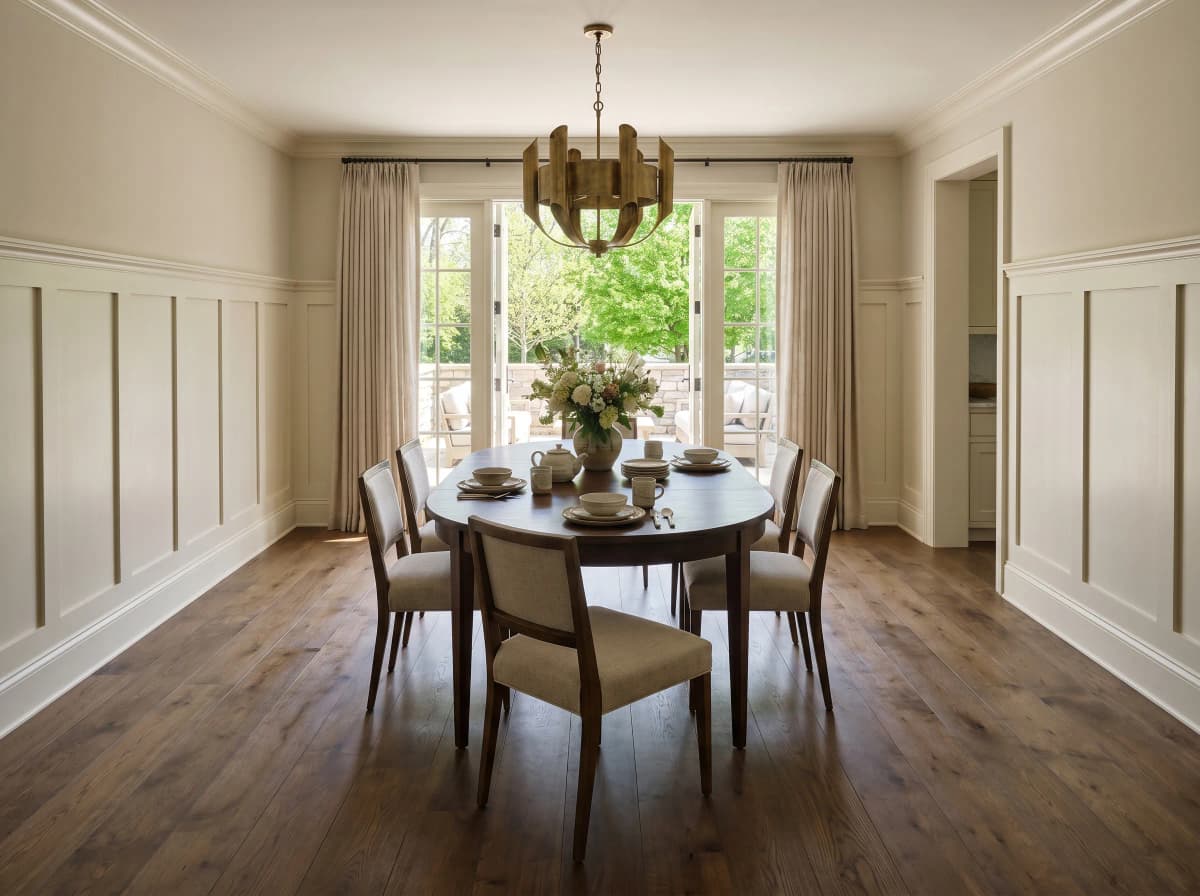
The single biggest flooring mistake in open concept homes is treating each zone — kitchen, dining, living — as a separate decision. When there are no walls to hide transitions, inconsistent flooring materials, finishes, or plank directions will visually chop up the space you paid extra to open up. The right move: choose one continuous flooring material that performs across all zones, or use a deliberate, planned transition strategy if you genuinely need different materials. Here's how to make that call, with real numbers and GTA-specific context.
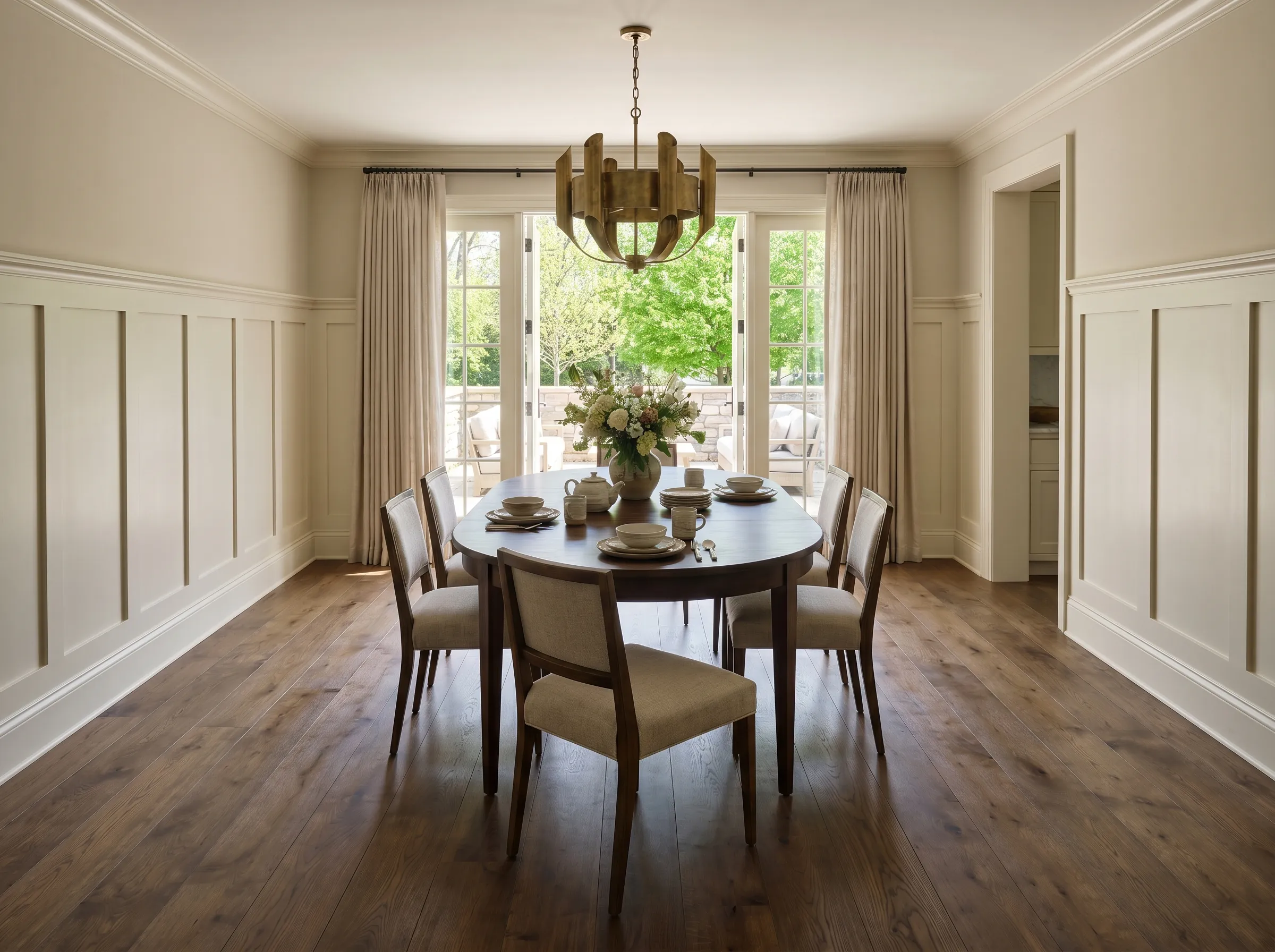
Why Flooring Continuity Matters More in Open Concept Layouts
In a traditional floor plan, each room gets its own flooring and the door frame hides the transition. In an open concept home — which describes the majority of GTA new builds from 2005 onward — the eye travels 30 to 50 feet without interruption. Every material change, every grout line, every height difference registers immediately.
This is why designers consistently recommend running one flooring material from the front door through the kitchen, dining area, and living room. It makes the space read as larger, the sightlines stay clean, and you avoid the visual "speed bump" of a metal T-bar transition strip cutting across your main living area.
That said, continuity doesn't mean you're locked into one material for your entire main floor. Bathrooms, laundry rooms, and mudrooms can reasonably use tile — and should, given standing water risk. The goal is to eliminate unnecessary breaks in the open zone itself.
Which Flooring Materials Actually Work Across Open Concept Zones?
Not every flooring type is suited to spanning kitchen, dining, and living areas simultaneously. Here's an honest breakdown:
| Material | Cost (Material Only) | Waterproof? | Durability | Best For Open Concept? |
|---|---|---|---|---|
| Engineered Hardwood | $3.69 – $7.00/sqft | No — moisture-resistant only | High — refinishable 1-3x | ✅ Best overall choice |
| SPC/LVP Vinyl | $2.50 – $5.50/sqft | 100% waterproof | Very high — won't scratch easily | ✅ Best for families with kids/pets |
| Laminate | $1.80 – $3.50/sqft | Water-resistant (not waterproof) | Moderate — cannot be refinished | ⚠️ Avoid near kitchen sink zones |
| Solid Hardwood | $5.00 – $12.00/sqft | No | Highest — refinishable 5-7x | ⚠️ Avoid if layout includes basement or slab |
| Porcelain Tile | $3.00 – $8.00/sqft | 100% waterproof | Extremely high | ❌ Cold underfoot, hard on joints, grout maintenance |
Engineered Hardwood: The Top Pick for GTA Open Concept Homes
Engineered hardwood is the dominant choice for open concept main floors in the GTA for one straightforward reason: it looks like solid hardwood, performs better under humidity swings, and runs continuously from the front hallway through the kitchen and living room without demanding different treatment per zone.
For open concept layouts specifically, wider planks — 6 inches and up — reduce the number of seams the eye sees across a large floor, which reinforces that sense of uninterrupted space. Longer planks (48" and up) work the same way.
Three products worth knowing:
- The Bloor West Select Grade European Oak by BBS Reserve ($3.39/sqft) is a 6½" wide-plank engineered oak with a clean, natural grain that reads well across large open areas without competing with furniture or cabinetry. Select grade means minimal knots and colour variation — ideal if you want a calm, cohesive look across 1,200+ sqft.
- The Midnight Hickory Engineered Hardwood by Falcon Flooring ($3.99/sqft) is a 6½" hickory plank with a deep, dark finish that anchors an open concept space — particularly effective under high ceilings where a lighter floor might feel washed out. Hickory's natural hardness (1820 Janka) handles high-traffic zones well.
- The Simba Greyish Hickory/Oak Engineered Hardwood ($5.19/sqft) at ¾" thickness is one of the thicker engineered options we carry — closer to solid hardwood in feel underfoot, and refinishable more times than a standard ½" core. The grey tone works well in contemporary open layouts where the floor needs to recede rather than compete.
Browse the full engineered hardwood collection to compare widths, species, and finishes side by side.
SPC Vinyl: The Right Call When Kids, Pets, or a Kitchen Island Are Involved
If your open concept layout includes a kitchen island with a prep sink, a dog that comes in from the backyard, or children who reliably spill things, SPC (stone plastic composite) vinyl deserves serious consideration. It is 100% waterproof — not water-resistant, not "waterproof with caveats" — meaning a puddle that sits for 12 hours won't cause the plank to swell or the core to delaminate.
Modern SPC vinyl at 6mm+ thickness with an attached underlayment feels substantially more solid underfoot than the peel-and-stick vinyl of 15 years ago. At 4–5mm wear layer thickness, it resists pet claws and chair legs better than most laminates.
The visual trade-off is real: vinyl does not have the warmth or refinishability of wood, and at lower price points the embossing can look repetitive across a large open floor. Choose products with longer repeat patterns (12"+ before the texture repeats) and wider planks to minimize this effect.
See our full vinyl flooring range or explore waterproof flooring options if moisture is your primary concern.
What About Laminate in Open Concept Homes?
Laminate is water-resistant, not waterproof. If water sits on a laminate floor for 72+ hours — a slow dishwasher leak, a pet bowl that gets knocked over and isn't noticed — the HDF core will swell and the planks will buckle. In a kitchen zone of an open concept home, that risk is real.
That said, laminate at $1.80–$3.50/sqft delivers excellent visual results at a lower price point than engineered hardwood, and if your kitchen is separated from the main living area by an island (rather than being fully open), the risk drops considerably. It's also a strong option for the living and dining zones where direct water exposure is unlikely.
If you're considering laminate, check our laminate flooring page for current stock, and be honest with yourself about how close the kitchen sink and dishwasher are to the open floor area.
Flooring Direction and Visual Flow in Open Concept Spaces
This is the detail most homeowners don't think about until it's too late: which direction do the planks run?
The standard rule is to run planks parallel to the longest wall in the space, or toward the primary light source (usually the main window or sliding door). In an open concept home, this means the plank direction should be consistent across the entire open zone — kitchen, dining, living — even if those areas are at different angles to each other.
Changing plank direction mid-room to "define zones" is a design technique that occasionally works in editorial photos and almost never works in real homes. It creates visual noise, makes the space feel smaller, and requires a transition piece that draws attention to the seam. Avoid it unless you're working with a designer who has a specific, well-reasoned plan.
For diagonal installation — which can work well in very large open concept homes to draw the eye toward a focal point — budget for 10–15% additional material waste versus a straight run. Our installation team can walk you through layout options before a single plank is cut.
GTA-Specific Considerations: Climate, Housing Stock, and Subfloors
Toronto and the surrounding GTA experience one of the widest humidity swings of any major Canadian city: indoor relative humidity can drop to 25–30% in January (forced-air heating, sealed windows) and climb to 65–70% in August. This matters enormously for flooring selection.
Solid hardwood in GTA open concept homes will expand and contract seasonally. Gaps in winter, slight cupping in summer — this is normal, but in a large open floor it becomes visible. Engineered hardwood, with its cross-ply core, handles this movement significantly better. Solid hardwood is still a viable choice for main-floor living and dining areas, but it requires consistent humidity management (humidifier in winter, A/C or dehumidifier in summer) to perform well long-term.
Subfloor type matters too. GTA homes built in the 1990s and early 2000s typically have ¾" OSB or plywood subfloors over wood joists — excellent for nailing or stapling solid or engineered hardwood. Homes built on concrete slabs (more common in townhomes and some semis) require a floating or glue-down installation, which rules out nail-down solid hardwood and makes engineered hardwood or SPC vinyl the practical choice.
Builder-grade flooring aging out: A significant portion of GTA homes built between 2000 and 2015 were finished with 2¼" strip oak hardwood or entry-level laminate. If you're renovating one of these homes, the existing flooring is likely at or near the end of its useful life. Replacing it with a wider-plank engineered hardwood (6" or wider) in a single continuous run through the open concept area is one of the highest-ROI flooring upgrades available in this market.
For a detailed breakdown of what flooring costs in the Toronto area right now, see our 2026 Flooring Cost Guide.
How to Budget for Flooring an Open Concept Main Floor
A typical GTA semi-detached or detached home has a main floor open concept area of 600–900 sqft. Here's what realistic budgeting looks like:
- Entry-level engineered hardwood (e.g., Bloor West at $3.69/sqft): Material for 800 sqft = ~$2,950. Add 10% waste = ~$3,250 in material. Professional installation in GTA: $2.50–$3.50/sqft = $2,000–$2,800. Total installed: $5,250–$6,050.
- Mid-range engineered hardwood (e.g., Midnight at $3.99/sqft): Material for 800 sqft with waste = ~$3,510. Installation = $2,000–$2,800. Total installed: $5,510–$6,310.
- Premium engineered hardwood (e.g., Simba Greyish at $5.19/sqft): Material for 800 sqft with waste = ~$4,570. Installation = $2,000–$2,800. Total installed: $6,570–$7,370.
- SPC Vinyl: Material at $3.50–$4.50/sqft for 800 sqft with waste = $3,080–$3,960. Installation at $1.80–$2.50/sqft = $1,440–$2,000. Total installed: $4,520–$5,960.
If you're replacing carpet or old flooring first, add $0.50–$1.00/sqft for carpet removal. Don't forget stair nosings if your open concept main floor connects to stairs — see our stair flooring options for matching materials.
Use our quote calculator for a fast estimate, or book a free in-home measurement for an accurate number before you commit.
White Oak: The Finish That Works in Almost Every Open Concept Style
If you're undecided on colour or species, white oak in a natural or light grey finish is the safest and most versatile choice for open concept homes right now. It reads warm without being yellow (unlike traditional red oak), works with both white and greige cabinetry, and doesn't date as quickly as darker espresso tones or the grey-heavy finishes that peaked around 2018.
Browse our white oak flooring collection — it includes both engineered and solid options in widths from 3" to 7".
If budget is a constraint, check our clearance section for discontinued runs and overstock — we regularly have 6"+ engineered hardwood at significantly reduced prices, and for an open concept floor where you need 600–900 sqft, the savings can be substantial.
Your next step
The fastest way to turn research into a firm number is to book a free in-home measurement: we confirm the square footage, check the subfloor and quote floor and installation together. Browse the full in-stock catalogue with live pricing, call (647) 428-1111, or visit our Markham showroom (Mon to Sat, 10am to 5pm).
Frequently Asked Questions
Should I use the same flooring throughout an open concept home?
For the main open living zone — kitchen, dining, living — yes. Running one continuous material eliminates visual breaks and makes the space feel larger. Bathrooms, laundry rooms, and mudrooms can reasonably use tile or a different material, but plan deliberate transitions rather than letting them happen by accident.
Is engineered hardwood okay in a kitchen as part of an open concept floor?
Yes, with caveats. Engineered hardwood handles the humidity fluctuations of a kitchen better than solid hardwood, but it is not waterproof. Wipe up spills promptly — standing water for extended periods will damage the wood veneer and core. If your kitchen sees heavy water exposure (young kids, messy cooking, a dog bowl that overflows), SPC vinyl is a more practical choice for that zone.
What plank width is best for open concept homes?
6 inches and wider. Wider planks show fewer seams across a large floor, which reinforces the open, uninterrupted look. In rooms under 400 sqft, 4–5" planks are fine. In a 700–900 sqft open concept main floor, 6½" to 7" planks make a noticeable visual difference.
Can I use different flooring materials in different zones of an open concept home?
You can, but it requires careful planning. If you're transitioning from hardwood to tile in a kitchen, the transition line should fall at a natural architectural break — under an island overhang, at the edge of a peninsula — not in the middle of open floor space. Avoid metal T-bar transitions in high-visibility areas; a flush reducer or a deliberate design element works better.
What flooring is best for open concept homes with dogs or cats?
SPC vinyl with a 12-mil or thicker wear layer is the most practical choice. It's 100% waterproof, scratch-resistant, and easy to clean. If you prefer the look of hardwood, choose a species with a higher Janka hardness rating — hickory (1820) and white oak (1360) outperform maple and pine in scratch resistance. Avoid hand-scraped or heavily distressed finishes, which trap pet hair and dander in the texture.
How much does it cost to floor an open concept main floor in the GTA?
For a typical 700–900 sqft open concept main floor in Toronto or Markham, expect $4,500–$7,500 installed, depending on material choice. Entry-level engineered hardwood lands around $5,200–$6,000 installed; SPC vinyl comes in at $4,500–$6,000; premium engineered hardwood or solid hardwood runs $6,500–$9,000+. Get an accurate number with a free in-home measurement.
Ready to pick the right floor for your open concept home? Visit our showroom at 6061 Highway 7, Markham to see full-size plank samples in person — the difference between a 4" and a 7" plank is hard to judge from a photo. Call us at (647) 428-1111 or book a free in-home measurement and we'll come to you with samples and a firm quote.