Builder Grade Flooring Upgrade Guide: What to Replace It With
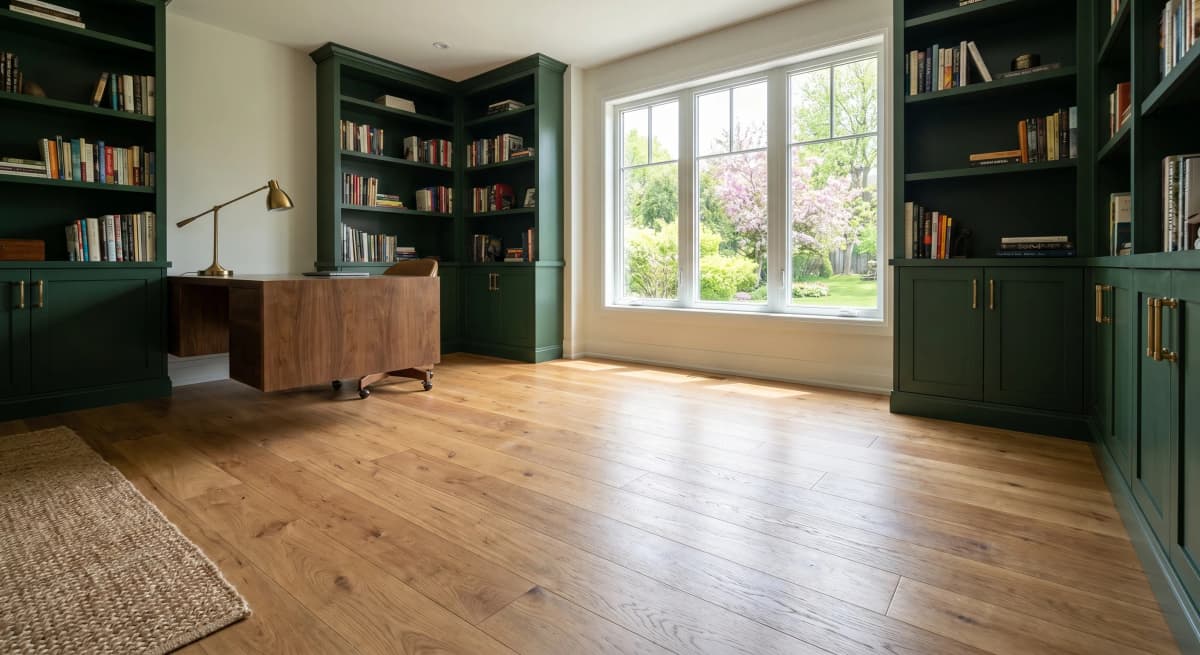
Builder grade flooring — the thin laminate, cheap carpet, and 3mm vinyl that developers install to hit a price point — typically lasts 7 to 12 years before it starts buckling, peeling, fading, or just looking worn-out. If your GTA home was built between 2000 and 2015, there's a good chance you're living on flooring that was never meant to last. The good news: replacing it today costs less than most homeowners expect, and the options available in 2026 are dramatically better than what was available when your home was built.
What Counts as Builder Grade Flooring — and Why It Fails
Builder grade flooring is selected by volume purchasing, not quality. Developers buy flooring by the truckload for the lowest possible per-square-foot cost, which means you typically end up with:
- Thin laminate (6–7mm total thickness) with a 0.2mm wear layer — scratches visibly within 2–3 years of normal use
- Loop or Berber carpet at 20–26 oz face weight — matting and staining are common within 5 years
- 3mm peel-and-stick vinyl tiles or basic sheet vinyl in kitchens and bathrooms — adhesive fails, edges curl, grout lines trap dirt
- Hollow-core engineered hardwood at 3/8" thickness — too thin to refinish, prone to denting
In GTA homes specifically, the failure mode is often moisture-related. Concrete slabs in basements and on-grade main floors retain moisture, especially during spring thaw. Builder grade laminate — which has no meaningful moisture barrier — absorbs that humidity and swells at the joints. Within a decade, you'll see bubbling, gapping, and edge-lifting that no amount of cleaning will fix.
How to Assess What You're Working With Before You Buy Anything
Before choosing a replacement, you need to know three things: your subfloor type, your moisture situation, and your floor's current height relative to transitions and door frames.
- Subfloor type: Most GTA homes built after 1990 have either a concrete slab (basement and often main floor in townhomes) or 3/4" plywood over joists (upper floors). Concrete limits your options — solid hardwood is not suitable for concrete subfloors due to moisture movement. Engineered hardwood and SPC vinyl are the right calls.
- Moisture test: Tape a 45cm × 45cm piece of plastic sheeting to your concrete slab for 48 hours. If condensation forms underneath, you have active moisture transmission. That rules out most laminates and standard LVP — you need SPC (stone polymer composite) or a product with a proper moisture barrier.
- Height clearance: Builder grade laminate is typically 7–8mm thick. Most replacement products run 8–12mm. If you're replacing flooring in a space with tight door clearances or existing transitions, measure carefully — you may need to undercut door casings, which adds roughly $10–$15 per door to your installation cost.
Not sure how to evaluate your space? Book a free in-home measurement — we'll assess your subfloor, moisture, and transitions before you commit to anything.
The Best Builder Grade Replacements by Room
Main Floor Living Areas and Dining Rooms
This is where most homeowners want the biggest visual upgrade. The builder laminate here is usually a mid-tone oak or cherry print that looked dated by 2012. Your best upgrade path depends on your subfloor:
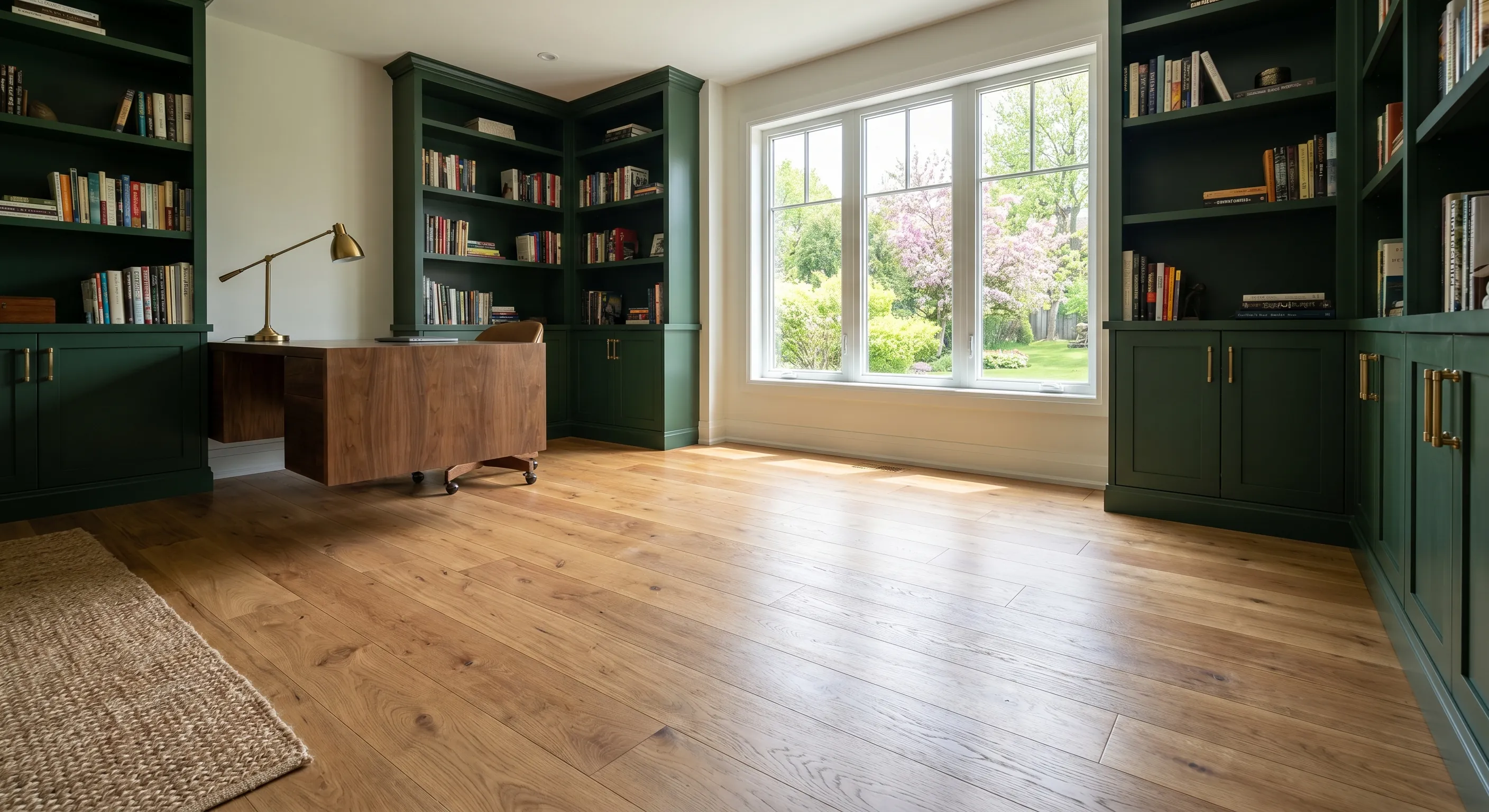
- Plywood subfloor: Engineered hardwood is the right call. Real wood surface, dimensional stability, and the ability to refinish at least once. The Silver Fox by Falcon Flooring ($3.99/sqft) is a 6.5" wide-plank hickory in a cool grey-brown tone that reads as genuinely high-end — the kind of floor that makes builder-grade everything else in the room look worse by comparison. Wide plank formats (5"+ wide) are the clearest visual signal that you've upgraded from builder grade.
- Concrete slab: SPC vinyl or engineered hardwood with a proper moisture barrier. Both float over concrete without adhesive issues.
Kitchens and Bathrooms
Builder grade vinyl tile and sheet vinyl in wet areas fail at the seams first. Water gets under the edges, the adhesive releases, and you end up with curling corners and potential subfloor damage. The replacement here should be 100% waterproof — meaning SPC or LVP, not laminate.
The Siberia by NAF AquaPlus Gold ($3.29/sqft) is a 7mm vinyl with a cork underlayment already attached — that cork layer adds warmth underfoot (important in kitchens where you stand for long periods) and sound dampening. It's 100% waterproof throughout its thickness. At $3.29/sqft, it's roughly $1.50–$2.00/sqft more than what a developer would install, but the performance difference is not marginal — it's categorical. Browse the full waterproof flooring collection if you're prioritizing wet-area durability.
Basements
Basements in GTA homes are the highest-risk environment for flooring. Concrete slabs, freeze-thaw moisture cycling, occasional sump pump failures — builder grade carpet down here is a mold risk, and standard laminate will swell within a few years. The only sensible choices are SPC vinyl or a purpose-built waterproof product.
The TF SPC 709 Revere by Triforest Flooring ($2.79/sqft) is a stone polymer composite plank — the rigid core won't flex over uneven concrete, it's 100% waterproof, and at $2.79/sqft it's one of the most cost-effective ways to upgrade a basement without cutting corners on performance. SPC is also significantly more comfortable underfoot than bare concrete with a thin vinyl overlay.
Bedrooms
Bedrooms are the one area where builder grade carpet sometimes makes sense to keep — if it's in good condition and you have young children or prefer the warmth underfoot. But if you're replacing it, luxury vinyl plank or engineered hardwood are both appropriate. Bedrooms see low moisture and low traffic, so you have the most flexibility here.
Stairs
Builder grade carpet on stairs wears at the nosing within 5–7 years. Replacing stair flooring is more complex than flat surfaces — you need proper stair nose profiles, and the installation requires cutting and fitting around risers and stringers. See our stair flooring guide for specifics on nosing options and what materials work best on stair treads.
Builder Grade Upgrade: Full Comparison Table
| Material | Cost (Material Only) | Waterproof? | Wear Layer / Durability | Best For | Basement Safe? |
|---|---|---|---|---|---|
| SPC Vinyl (e.g., Revere) | $2.79–$4.50/sqft | ✅ 100% waterproof | 12–20 mil wear layer; rigid core | Basements, kitchens, high-traffic areas | ✅ Yes |
| LVP Vinyl w/ Cork (e.g., Siberia) | $3.29–$5.00/sqft | ✅ 100% waterproof | 12–20 mil wear layer; quieter underfoot | Kitchens, bathrooms, open-plan main floors | ✅ Yes (check moisture first) |
| Engineered Hardwood (e.g., Silver Fox) | $3.99–$8.00/sqft | ❌ Water-resistant only | Real wood surface; refinishable 1–2x | Main floors, living rooms, bedrooms | ⚠️ Only if moisture is controlled |
| Solid Hardwood | $5.00–$12.00/sqft | ❌ Not water-resistant | Refinishable 5–7x; longest lifespan | Above-grade living areas only | ❌ No |
| Waterproof Laminate | $2.50–$4.50/sqft | ⚠️ 72-hour waterproof protection | AC3–AC4 rating; good scratch resistance | Main floors, low-moisture areas | ⚠️ Not recommended |
| Builder Grade Laminate (what you have) | $0.89–$1.50/sqft | ❌ Water-resistant at best | 0.2mm wear layer; 6–7mm total | Nowhere — this is what you're replacing | ❌ No |
What Does a Builder Grade Upgrade Actually Cost in the GTA?
Here's a realistic breakdown for a 1,400 sqft main floor and basement in a typical GTA townhome or semi-detached built in the 2000s. These numbers include material, underlayment, installation, and basic carpet or laminate removal:
- Budget upgrade (SPC vinyl throughout): $2.79–$3.50/sqft material + $2.50–$3.50/sqft installation = $7,400–$9,800 total for 1,400 sqft
- Mid-range upgrade (LVP main floor, SPC basement): $3.29–$4.50/sqft material + $3.00–$4.00/sqft installation = $8,800–$12,000 total
- Premium upgrade (engineered hardwood main floor, SPC basement): $3.99–$6.00/sqft material + $3.50–$5.00/sqft installation = $10,500–$15,400 total
These are GTA market rates as of 2026. Material costs can shift with supply chain and tariff conditions — for current pricing, use our quote calculator or check the Toronto flooring cost guide for the latest numbers. If budget is a constraint, the clearance section regularly has first-quality overstock at 20–40% below regular pricing.
GTA-Specific Realities: What National Guides Don't Tell You
Most flooring guides are written for a generic North American audience. Here's what's actually relevant if you're in the Greater Toronto Area:
- Freeze-thaw moisture cycling: Toronto averages 40+ freeze-thaw cycles per winter. Concrete slabs in attached garages, basements, and on-grade main floors in townhomes absorb and release moisture with every cycle. Any flooring installed over these slabs needs to tolerate that movement — SPC's rigid core handles it; standard laminate doesn't.
- 2000s-era builder laminate is at end of life: A significant portion of GTA homes built between 1998 and 2012 used 7–8mm laminate with a thin HDF core. That product is now 12–25 years old and showing its age. It was never meant to last this long.
- Townhome concrete slabs: Many GTA townhomes — especially in Markham, Vaughan, Brampton, and Mississauga — have concrete slabs on all levels, not just the basement. If you're on a middle or upper floor of a stacked townhome, you may still have concrete under your flooring. Test before you buy.
- Builder carpet in bedrooms: The loop-pile Berber or cut-pile carpet installed in GTA bedrooms during this era typically has a 28–32 oz face weight. That's functional but not premium. If it's matted, stained, or holding pet odors, no amount of professional cleaning will restore it — replacement is the only real fix.
- Door height clearances: Older GTA homes with 8' ceilings and standard door frames often have tight clearances. Going from 7mm builder laminate to a 12mm SPC product means undercutting door casings. Factor in $10–$15 per door in your budget.
Our showroom is at 6061 Highway 7 in Markham — central to Scarborough, Richmond Hill, Pickering, and Ajax. We see this housing stock every day and stock products specifically suited to it. For a proper assessment, book an installation consultation before committing to a product.
The Upgrade Sequence: What to Do First
If you're upgrading your entire home, do it in this order to avoid damaging new flooring during installation of adjacent areas:
- Basement first — lowest priority aesthetically, highest priority for moisture protection. Get the SPC down before you do anything else.
- Main floor living and dining areas — highest visual impact, typically the largest square footage.
- Kitchen and bathrooms — requires more careful cutting around cabinets and fixtures; do this after open areas are done.
- Stairs — always last, as installers need clear access moving materials through the home.
- Bedrooms — typically the least urgent; do these last if budget is phased.
If you're doing a phased upgrade over 2–3 years, choose a product line that will still be available and match when you get to the next phase. Discontinued products are one of the most common problems with phased renovations — ask us specifically about product availability timelines before you start.
Your next step
The fastest way to turn research into a firm number is to book a free in-home measurement: we confirm the square footage, check the subfloor and quote floor and installation together. Browse the full in-stock catalogue with live pricing, call (647) 428-1111, or visit our Markham showroom (Mon to Sat, 10am to 5pm).
Frequently Asked Questions
How do I know if my builder grade flooring needs to be replaced or can be refinished?
Builder grade laminate and vinyl cannot be refinished — once the wear layer is gone, replacement is the only option. If you have builder grade engineered hardwood (check by measuring total thickness; if it's under 1/2", it's likely builder grade), it may have a veneer too thin to sand safely. Solid hardwood can be refinished multiple times, but it's rarely what developers install. If your floor is laminate or vinyl, plan to replace it.
Is SPC vinyl a good long-term replacement for builder grade laminate?
Yes — SPC (stone polymer composite) is categorically better than builder grade laminate in almost every metric: it's 100% waterproof, dimensionally stable over concrete, more durable underfoot, and typically has a 20–25 year residential warranty. The main trade-off is that it doesn't have a real wood surface. If authentic wood grain matters to you, engineered hardwood is the alternative.
Can I install new flooring directly over my existing builder grade laminate?
Technically yes, but it's generally not recommended. Installing over existing laminate adds height (which compounds door clearance issues), and if the existing floor has any moisture damage or subfloor irregularities, those problems will telegraph through the new floor. Removing the old flooring first gives you the opportunity to inspect and level the subfloor — which directly affects how good your new floor looks and performs. See our carpet and flooring removal service for details.
What's the best flooring upgrade for a GTA basement that occasionally gets damp?
SPC vinyl is the right answer — 100% waterproof, rigid enough to bridge minor concrete imperfections, and unaffected by the humidity swings that come with GTA freeze-thaw cycles. Do not install laminate (even waterproof laminate) in a basement that sees regular moisture. Waterproof laminate provides 72-hour protection — it's not designed for chronic moisture exposure. The TF SPC 709 Revere by Triforest at $2.79/sqft is a cost-effective starting point.
How long does a full builder grade flooring upgrade take to install?
For a typical GTA home of 1,200–1,800 sqft, expect 2–4 days for a professional installation crew. Basements with furniture moving, stair work, and kitchen cutouts add time. Removal of existing flooring (if included) typically adds half a day. We can usually schedule within 1–2 weeks of material selection — book a free measurement to get a firm timeline.
Does upgrading from builder grade flooring actually increase home resale value?
In the GTA market, yes — with caveats. Buyers notice flooring immediately, and worn builder grade laminate or stained carpet is consistently cited by real estate agents as a price-reduction trigger. Upgrading to hardwood or quality LVP typically returns 50–80% of the cost in resale value, and more importantly, it removes a negotiation point for buyers. The highest ROI upgrades are main floor living areas and the primary bedroom — these are the rooms buyers spend the most time evaluating.
Ready to replace your builder grade flooring? Visit our showroom at 6061 Highway 7, Markham to see full-size samples of every product mentioned in this guide, or call (647) 428-1111 to speak with a flooring specialist. Book a free in-home measurement and we'll assess your subfloor, measure your space, and give you a firm quote — no obligation. You can also get a preliminary estimate using our online quote calculator.