Engineered Hardwood vs Laminate: Which Floor Is Worth It?
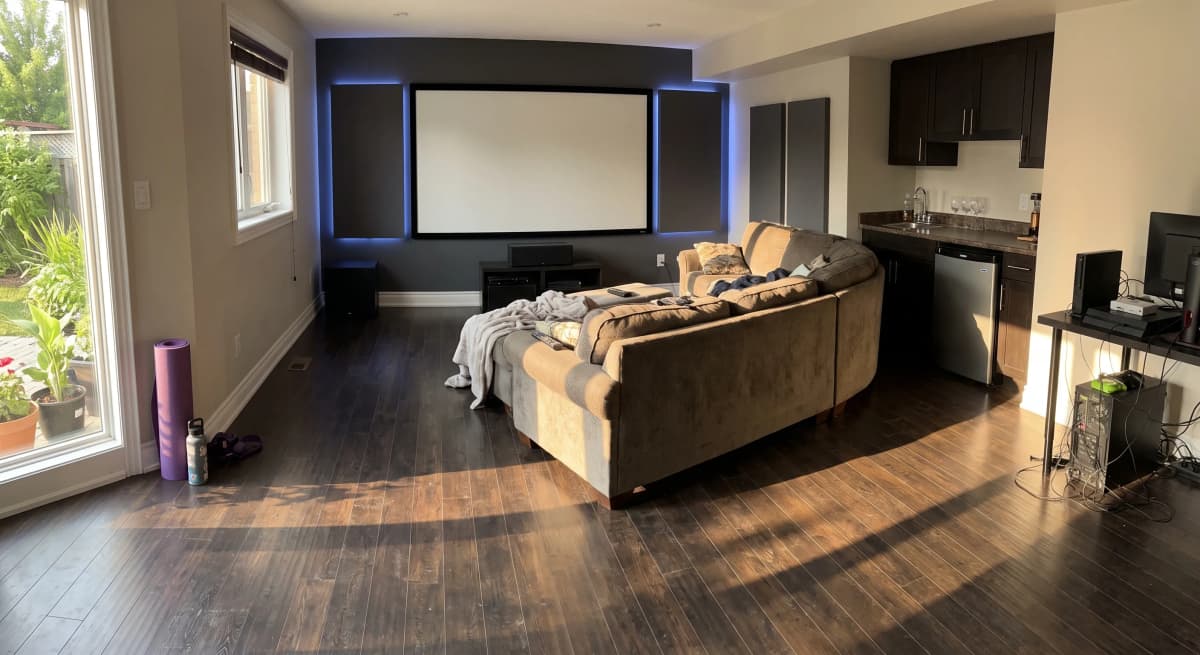
Engineered hardwood and laminate look nearly identical in photos, but they are fundamentally different products with different lifespans, different resale impacts, and different failure modes. The short answer: if your budget is $4–$6/sqft for material and you're installing above-grade in a living room or bedroom, engineered hardwood is the smarter long-term buy. If your budget is $2–$3/sqft, you have kids or pets, or you're finishing a basement, quality laminate is a perfectly rational choice — not a compromise.
What They're Actually Made Of (This Explains Everything)
Engineered hardwood is a real wood product. It has a genuine hardwood veneer — typically 2mm to 6mm thick — bonded over a cross-ply plywood or HDF core. The top layer is actual maple, oak, hickory, or whatever species you choose. It can be sanded and refinished (once or twice, depending on veneer thickness), and it responds to humidity the way real wood does — slowly, and within manageable limits.
Laminate is a photographic product. The wood grain you see is a high-resolution image printed on paper, sealed under a clear wear layer, and pressed onto an HDF core. Modern laminate photography is genuinely impressive — 12mm laminate with embossed-in-register texture can fool most people from standing height. But the wear layer is melamine, not wood, and once it's scratched through, the floor cannot be refinished. It gets replaced.
This distinction — real veneer vs. printed image — is the root cause of almost every difference between the two products. Keep it in mind as you read through the comparisons below.
Head-to-Head Comparison
| Category | Engineered Hardwood | Laminate |
|---|---|---|
| Material cost (GTA) | $4.00 – $9.00/sqft | $1.80 – $4.50/sqft |
| Installation cost (GTA) | $3.00 – $4.50/sqft | $2.50 – $3.50/sqft |
| Water resistance | Moisture-sensitive — wipe spills immediately | Water-resistant; waterproof laminate offers 72-hour protection |
| Refinishable? | Yes — 1 to 3 times depending on veneer | No — must be replaced when worn |
| Lifespan (realistic) | 25 – 50+ years with refinishing | 15 – 25 years before replacement |
| Basement installation | Not recommended | Yes (waterproof laminate preferred) |
| Resale value impact | High — buyers recognize real wood | Moderate — neutral to slightly negative at luxury price points |
| Underfloor heating | Compatible (check manufacturer specs) | Compatible (check manufacturer specs) |
| DIY-friendly? | Moderate — floating or glue-down | Yes — click-lock floating is beginner-friendly |
| Feel underfoot | Solid, warm, real wood sound | Slightly hollow sound; AC5-rated 12mm reduces this significantly |
The Refinishing Argument — Engineered Hardwood's Biggest Advantage
This is the angle that most flooring guides underplay. Laminate cannot be refinished. Ever. When the wear layer scratches through — and it will, eventually, in high-traffic areas — your only option is replacement. That means tearing out the floor, disposing of it, buying new material, and paying installation costs again. On a 1,500 sqft main floor in a GTA home, that's a $10,000–$18,000 decision every 15–20 years.
Engineered hardwood with a 3mm or thicker veneer can be lightly sanded and refinished once or twice over its life. You're not restoring it to factory condition, but you're removing surface scratches, refreshing the stain, and extending the floor's life by another decade. A professional sand-and-finish on 1,500 sqft in Toronto typically runs $2,500–$4,500 — dramatically cheaper than replacement.
If you're buying a home you plan to stay in for 20+ years, the refinishing option on engineered hardwood is a genuine financial advantage, not just a luxury feature.
Water and Basements: Where Laminate Has the Edge
Engineered hardwood is NOT suitable for basements. Full stop. The cross-ply core is more dimensionally stable than solid hardwood, but it is still a wood product. Concrete slabs in GTA homes — particularly those built between 1960 and 2000 — frequently have elevated moisture vapor emissions, especially in spring and after heavy rainfall. Engineered hardwood installed over a damp slab will cup, buckle, and delaminate. This is not a warranty situation; it's physics.
For basements, waterproof flooring — specifically SPC vinyl or waterproof laminate — is the correct category. If you're set on a wood-look product in your basement, our laminate collection includes products rated for below-grade installation with proper vapor barriers.
For above-grade installations, both products handle typical household spills well if wiped promptly. The difference is margin for error: laminate's AC-rated wear layer is more forgiving of a wet dog shaking off after a walk. Engineered hardwood requires you to wipe that up within minutes, not hours.
GTA-Specific Realities: What Changes in Toronto's Climate
Ontario's climate creates specific flooring conditions that national guides ignore. Here's what actually matters in the GTA:
- Freeze-thaw humidity swings: Toronto winters drop indoor humidity to 20–30% as furnaces run constantly. Summers spike to 60–70%. Engineered hardwood handles this better than solid hardwood (its cross-ply core resists cupping), but you still need a humidifier in winter to keep indoor RH above 35%. Laminate is less sensitive to these swings.
- Builder-grade subfloors in 2000s-era homes: Many Markham, Vaughan, and Brampton homes built between 1998 and 2012 have OSB subfloors over engineered joists. These subfloors are generally sound for floating installation of either product, but squeaks are common. A proper subfloor assessment before installation prevents problems — our installation team checks for this on every job.
- Condo concrete slabs: High-rise and mid-rise condos in Toronto, Mississauga, and Richmond Hill almost always have concrete subfloors. Engineered hardwood can be glue-down over concrete above grade (not basement level). Laminate floats over an underlayment. Both work — but the installation method differs and affects your total cost.
- Resale market expectations: In GTA neighborhoods where average detached home prices exceed $1.2M — North York, Markham, Oakville, Thornhill — buyers notice flooring. Real estate agents consistently report that homes with hardwood (including engineered) photograph better and attract stronger offers than homes with laminate in the same price bracket.
Real Products at Real GTA Prices
Abstract comparisons only go so far. Here's what these categories actually cost at BBS Flooring right now:
For engineered hardwood, the Latte 6½" Maple Engineered Hardwood by NAF Flooring ($4.99/sqft) is a strong example of what mid-range engineered hardwood delivers. The 6½" wide plank format is current — wide-plank is the dominant look in GTA new builds and renovations right now. Maple is one of the harder domestic species (Janka hardness ~1450), meaning it resists denting better than pine or softer hardwoods. At $4.99/sqft for material, you're looking at roughly $7.99–$9.49/sqft fully installed on a typical main floor — call it $12,000–$14,000 for a 1,400 sqft main floor including carpet removal and stair installation.
On the laminate side, two products worth knowing:
- The AF72740 Rocky Mountain 12mm Laminate by Simba Flooring ($2.69/sqft) is a 12mm AC4-rated product — that's the commercial-light durability rating, which is overkill for residential use in the best possible way. Thicker core means less hollow sound and better resistance to subfloor imperfections.
- The 1202 Terra 12mm Laminate by Woden Flooring ($2.59/sqft) offers a similar spec at a slightly lower price point — a good option if you're covering a large area and watching material costs closely.
At $2.59–$2.69/sqft for material plus $2.50–$3.50/sqft for installation, a 1,400 sqft laminate job runs approximately $7,100–$8,700 fully installed. That's a $4,000–$6,000 difference versus engineered hardwood on the same footprint — real money that some budgets simply don't have.
If you want to see the full picture of what flooring costs in Toronto across all categories, our 2026 Flooring Cost Guide breaks it down room by room.
Which One Should You Actually Buy?
Stop overthinking it. Use this decision tree:
- Is it a basement? → Laminate (waterproof) or SPC vinyl. Not engineered hardwood.
- Is your budget under $3.50/sqft for material? → Laminate. Good 12mm laminate at this price point is not a downgrade; it's a rational choice.
- Are you planning to stay in this home 15+ years? → Engineered hardwood. The refinishing option pays off over that timeline.
- Is this a rental property or a flip? → Laminate. Lower upfront cost, acceptable durability, easier to replace in sections if damaged.
- Do you have a dog that comes in wet from outside daily? → Laminate or waterproof vinyl. Engineered hardwood will survive this, but it requires discipline about drying the floor that not everyone maintains.
- Are you in a condo and noise is a concern? → Both work, but check your condo's IIC rating requirements. Thicker underlay helps both products. Ask us — IIC compliance is a real issue in Toronto condo installs.
If you're still undecided, browse our engineered hardwood collection and laminate collection side by side. Seeing physical samples in your home — under your lighting, against your trim — resolves most decisions faster than any article.
Your next step
If engineered hardwood is where you are landing, see the boards in person before you decide. Browse in-stock engineered hardwood with live pricing, then book a free in-home measurement. We confirm square footage, check the subfloor and quote the floor and installation as one firm number. Call (647) 428-1111 or visit our Markham showroom (Mon to Sat, 10am to 5pm).
Frequently Asked Questions
Can engineered hardwood be installed over radiant in-floor heating?
Yes, most engineered hardwood products are compatible with radiant heat, but you must verify the manufacturer's maximum surface temperature (typically 27°C/80°F) and follow their acclimation requirements. Glue-down installation is generally preferred over floating for heated slabs, as it reduces the risk of gapping during temperature cycles. Always disclose radiant heat to your installer before purchase.
Does laminate add resale value to a home in Toronto?
Laminate is resale-neutral to mildly positive compared to worn carpet, but it does not command the same buyer response as hardwood in GTA's mid-to-upper market. In homes priced above $900K, buyers and their agents often note laminate as a future upgrade item. In homes under $700K, quality laminate is generally accepted without discount. If resale is your primary driver and budget allows, engineered hardwood is the stronger investment.
How long does laminate last before it needs to be replaced?
Quality 12mm laminate with an AC4 or AC5 wear layer realistically lasts 15–25 years in a residential setting with normal care. The failure mode is wear-through on the surface layer in high-traffic paths — hallways, kitchen entrances — rather than structural failure. Once the wear layer is breached, the HDF core absorbs moisture and swells. There is no repair option; the floor must be replaced.
Will laminate swell if water gets underneath it?
Standard laminate will swell if water sits on or beneath it for more than a few hours. Waterproof laminate products offer 72-hour waterproof protection at the surface and joint level, but the subfloor beneath can still be compromised by a sustained leak. Neither standard nor waterproof laminate should be installed in rooms with floor drains or high flood risk. For those applications, 100% waterproof SPC vinyl is the correct product category.
What's the difference between engineered hardwood and solid hardwood?
Solid hardwood is a single piece of wood milled to 3/4" thickness — it can be sanded and refinished many times over decades, but it is highly sensitive to moisture and cannot be installed below grade or over concrete without a subfloor system. Engineered hardwood has a real wood veneer over a plywood or HDF core, making it more dimensionally stable and suitable for more installation types. For a full breakdown, see our solid hardwood guide.
Is engineered hardwood worth the extra cost over laminate?
On a 1,400 sqft main floor, the material cost difference between quality laminate ($2.60–$2.70/sqft) and mid-range engineered hardwood ($4.99/sqft) is roughly $3,200–$3,400. Over a 25-year period, laminate will need at least one full replacement (~$7,000–$10,000 installed), while engineered hardwood may only need a refinish (~$3,000–$4,500). The long-term math favors engineered hardwood for homeowners staying put — but only if the upfront budget is available.
Ready to see both options in person? Visit our showroom at 6061 Highway 7, Markham — we carry samples of every product mentioned in this guide. Call (647) 428-1111 to speak with a flooring specialist, or book a free in-home measurement and we'll bring samples to you. You can also get a ballpark number right now with our quote calculator.