How to Choose Flooring for Your Kitchen (Honest 2026 Guide)
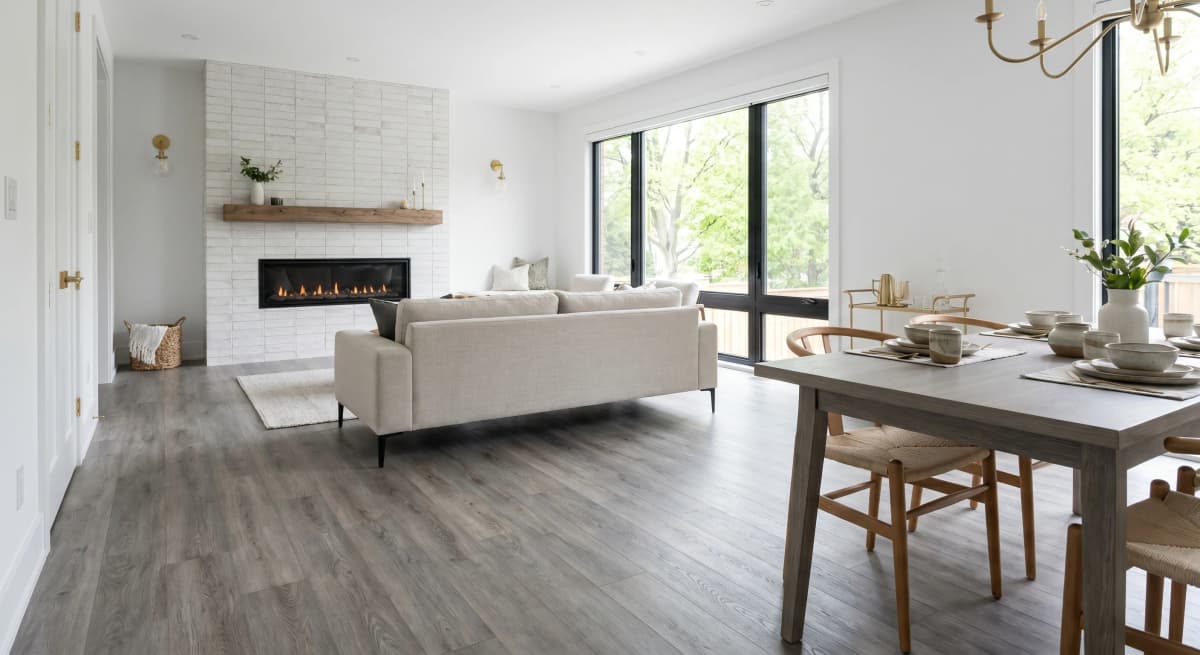
The best flooring for most kitchens in 2026 is luxury vinyl plank (LVP) or SPC vinyl — it's 100% waterproof, comfortable underfoot, and starts at $2.19/sqft. But that's not the whole answer. The right choice depends on your subfloor type, how much traffic your kitchen handles, whether you're matching adjacent rooms, and what you're willing to spend on installation. Here's how to work through each of those decisions without wasting money on the wrong material.
Why Kitchens Are the Hardest Room to Floor
Kitchens combine three things that destroy most flooring materials: standing water (spills, dishwasher leaks, wet mopping), concentrated foot traffic (the same 3-foot path from fridge to stove gets walked hundreds of times a week), and subfloor variability. In GTA homes built between 1990 and 2010, kitchen subfloors are typically 3/4" plywood over joists — forgiving and stable. In condos and newer builds, you're often on concrete slab, which introduces moisture concerns that change what you can safely install.
Get these three variables wrong and you'll be re-flooring in 5 years instead of 20. Get them right and your kitchen floor becomes a non-issue for decades.
The 4 Real Options for Kitchen Flooring (And Who Each One Is For)
1. Vinyl / LVP / SPC — Best Overall for Most Kitchens
Vinyl plank flooring is the most practical kitchen floor available right now. Modern SPC (Stone Plastic Composite) cores are 100% waterproof — not water-resistant, not splash-proof, but genuinely impervious to water. A full dishwasher flood won't damage the planks themselves, though standing water can still work under baseboards or into subfloor seams if left for days.
A strong entry-level option is the Sandstone by Falcon Flooring 6mm Vinyl at $2.19/sqft. At 6mm thick with a realistic stone-look finish, it handles kitchen moisture without issue and installs as a floating floor — no glue, no nails, which means it's DIY-friendly and easier to replace a section if needed. For a kitchen of 150–200 sqft (typical in a GTA semi-detached), material cost runs $330–$440 before installation.
Best for: Families with kids or pets, rental units, kitchens adjacent to basements, anyone who wants zero moisture anxiety.
Trade-off: Vinyl can feel hollow underfoot without a quality underlayment. It also won't add resale value the same way hardwood does, though it rarely hurts it either.
2. Waterproof Laminate — Best Budget Option With a Wood Look
Waterproof laminate sits in an interesting middle ground. It's not the same as standard laminate — the core is treated to resist moisture penetration for up to 72 hours, which covers most real-world spills. But let's be direct: waterproof laminate is NOT permanently waterproof. If a slow dishwasher leak goes unnoticed for a week, the core will swell. It's a 72-hour protection window, not a lifetime guarantee.
That said, the Sandy by Falcon Flooring 12mm Waterproof Laminate at $2.39/sqft is one of the better values in this category. At 12mm, it has genuine underfoot feel — noticeably more solid than most vinyl — and the thicker core means better sound dampening and a more realistic wood texture. For a 200 sqft kitchen, you're looking at roughly $478 in material.
Best for: Budget-conscious buyers who want a hardwood look, households that are careful about spills, kitchens with plywood subfloors (not slab).
Trade-off: Do NOT install waterproof laminate in kitchens directly over concrete slab without a proper moisture barrier and vapour test. Slab moisture is a slow killer. Also avoid in kitchens with a history of flooding or dishwasher leaks.
3. Engineered Hardwood — Best for Resale Value and Open-Plan Continuity
Engineered hardwood is real wood on top — typically 2–4mm of hardwood veneer over a multi-ply plywood core. It's dimensionally more stable than solid hardwood, handles moderate humidity swings better, and can run continuously from your living room through the kitchen for that seamless open-concept look that buyers love.
The Fog by Woden Vermont 6-1/2" Oak Engineered Hardwood at $3.99/sqft is a standout here. The 6.5" wide plank format reads as premium — it photographs well, makes smaller kitchens feel larger, and the Fog colourway (a cool, greyed-white oak tone) works with both white and grey cabinetry. For a 200 sqft kitchen, material cost is roughly $798.
Critical caveat: Do NOT treat engineered hardwood as waterproof. It handles humidity and the occasional splash, but standing water — even for a few hours — can damage the veneer and cause edge-cupping. If your kitchen sees regular spills or you have young kids, vinyl is the smarter call.
Best for: Open-concept homes where the kitchen flows into living/dining areas already floored in hardwood, lower-traffic kitchens, homeowners prioritizing resale value.
4. Ceramic or Porcelain Tile — The Durable Classic
Tile is still the most durable kitchen floor available — 20+ year lifespan, genuinely impervious to water, and easy to clean. But it has real downsides: it's cold underfoot (a real issue in GTA winters), hard on joints during long cooking sessions, grout lines collect grease and require maintenance, and installation costs are higher ($4–$7/sqft labour vs. $2–$4 for floating floors). We don't carry tile at BBS Flooring, but it's worth knowing where it fits so you can make an informed comparison.
Kitchen Flooring Comparison Table
| Material | Material Cost ($/sqft) | Waterproof? | Durability | Install Complexity | Best For |
|---|---|---|---|---|---|
| SPC/LVP Vinyl | $2.19–$4.50 | ✅ 100% waterproof | High (15–25 yr) | Low — floating | Families, rentals, slab subfloors |
| Waterproof Laminate | $2.39–$5.00 | ⚠️ 72-hr protection only | Medium-High (10–20 yr) | Low — floating | Budget buyers, plywood subfloors |
| Engineered Hardwood | $3.99–$9.00 | ❌ Not waterproof | High (20–30 yr) | Medium — float or glue | Open-concept, resale value |
| Porcelain Tile | $3.00–$10.00 | ✅ 100% waterproof | Very High (25–40 yr) | High — mortar set | Maximum durability, no kids |
| Solid Hardwood | $5.00–$14.00 | ❌ Not waterproof | Very High if maintained | High — nail down | Dry kitchens only, not recommended |
What Your Subfloor Type Changes Everything
This is the section most flooring guides skip, and it's the one that causes the most expensive mistakes.
- Plywood subfloor (most GTA homes, 1970s–2010s): You can install any of the above. Floating vinyl or laminate goes directly over it with underlayment. Engineered hardwood can float or be glued. This is the most forgiving subfloor situation.
- Concrete slab (condos, newer builds, some bungalow additions): Always do a moisture test before installing anything. A calcium chloride test or RH probe will tell you if moisture vapour is migrating up. Above 75% RH, you're in risky territory for laminate and engineered hardwood. Vinyl is your safest bet here — 100% waterproof flooring on slab eliminates the moisture variable entirely.
- Old vinyl or linoleum (common in pre-1990 GTA kitchens): If it's flat and firmly bonded, you can often float new vinyl or laminate directly over it. If it's lifting or cushioned, it needs to come up first. This affects your installation quote.
- Existing ceramic tile: If it's level and fully adhered, floating floors can go over it. But each layer adds height, which can create transition issues at doorways and affect appliance clearances.
Not sure what you're working with? Our team offers a free in-home measurement that includes a subfloor assessment — we'll tell you exactly what you're dealing with before you spend a dollar on material.
GTA-Specific Realities That Affect Your Kitchen Floor Choice
National flooring guides are written for a generic North American home. Here's what's actually true in the Greater Toronto Area:
Humidity swings are real and significant. Toronto summers hit 80–90% relative humidity. Winters drop indoor humidity to 25–35% with forced-air heating. That's a 50-point seasonal swing. Solid hardwood in a kitchen will move — expand in July, contract in January — and in a high-traffic room with moisture exposure, that movement accelerates wear at joints. Solid hardwood is not recommended for GTA kitchens for this reason.
Builder-grade flooring from 2000–2015 is aging out. A lot of GTA homes have original 8mm laminate or thin vinyl that's now 15–20 years old. If your kitchen floor is lifting at seams, showing water damage around the dishwasher, or just looks dated, you're in good company — this is one of the most common renovation projects we see.
Open-concept is the dominant layout. Most GTA homes renovated or built after 2005 have kitchens that flow directly into dining and living areas. This means your kitchen floor choice affects 60–80% of your main floor. Running the same engineered hardwood from the front door through the kitchen creates continuity and feels intentional. If you want vinyl in the kitchen only, plan your transitions carefully — a visible T-bar between rooms can look awkward in open layouts.
Typical GTA kitchen size: In a semi-detached or detached home, expect 120–200 sqft. In a condo, 60–100 sqft. This matters for budgeting — see our 2026 Toronto Flooring Cost Guide for full breakdowns including installation labour.
Installation costs in the GTA: Floating vinyl or laminate typically runs $2.00–$3.50/sqft for labour. Engineered hardwood (glued) runs $3.50–$5.50/sqft. Tile runs $6.00–$10.00/sqft. Factor this in — a $2.19/sqft vinyl floor with $2.50 installation is $4.69 all-in, while a $3.99/sqft engineered hardwood with $4.50 installation is $8.49 all-in. Use our quote calculator to run your specific numbers.
Colour and Style: What Actually Works in Kitchens
Practical concerns should drive your material choice. Aesthetics should drive your colour and format choice. A few rules that hold up in real kitchens:
- Light floors show dust and crumbs more than mid-tones. If you have kids or cook frequently, a medium warm oak or greyed tone hides daily debris better than bright white or very dark floors.
- Wide planks (5" and up) make small kitchens feel larger. The Fog engineered hardwood at 6.5" wide is a good example of this — the fewer seam lines, the more expansive the floor reads.
- Match your cabinet undertone. White shaker cabinets work with almost anything. Warm wood cabinets pair better with warm-toned floors. Grey or blue cabinets pair well with cool-toned floors like the Fog colourway.
- Matte finishes hide scratches and scuffs better than high-gloss. In a kitchen, this matters — chairs, dropped utensils, and pet nails will test any finish.
What to Budget: Real Numbers for a GTA Kitchen Re-Floor
Here's what a complete kitchen flooring project realistically costs in the GTA in 2026, assuming a 160 sqft kitchen:
- Vinyl (Sandstone Falcon 6mm): $2.19 material + $2.25 install + $0.50 underlayment = ~$4.94/sqft → ~$790 total
- Waterproof Laminate (Sandy Falcon 12mm): $2.39 material + $2.25 install + $0.30 underlayment = ~$4.94/sqft → ~$790 total
- Engineered Hardwood (Fog Woden Vermont): $3.99 material + $4.00 install + $0.50 underlayment = ~$8.49/sqft → ~$1,360 total
Add $150–$300 if your old flooring needs to come up first. We handle carpet and old flooring removal as part of our installation service. Check our clearance section for discounted stock that can bring material costs down 20–40%.
Your next step
If vinyl plank is the right call for your space, the next move is to see it in person. Browse in-stock vinyl plank flooring with live pricing, then book a free in-home measurement: we confirm square footage, check the subfloor and quote the floor and install ($2.00 per sqft for floating installs) as one firm number. Questions first? Call (647) 428-1111 or visit our Markham showroom (Mon to Sat, 10am to 5pm).
Frequently Asked Questions
Is vinyl or laminate better for a kitchen floor?
Vinyl is better for kitchens where moisture is a real concern — it's 100% waterproof and safe over concrete slab. Waterproof laminate offers a more solid underfoot feel and often a more realistic wood texture, but its 72-hour waterproof protection window means it can swell if a slow leak goes undetected. If you have kids, a dog, or an older dishwasher, choose vinyl. If your kitchen is low-traffic and well-maintained, waterproof laminate is a solid budget option.
Can you put engineered hardwood in a kitchen?
Yes, but with clear conditions. Engineered hardwood handles humidity swings and occasional splashes better than solid hardwood, but it is not waterproof. Standing water, dishwasher leaks, or regular wet mopping can damage the veneer and cause edge-cupping. It works best in lower-traffic kitchens that flow into open-concept living areas, where the aesthetic continuity justifies the added care. Never install engineered hardwood directly over a concrete slab without a thorough moisture test and appropriate vapour barrier.
What is the most durable flooring for a kitchen?
Porcelain tile has the longest lifespan (25–40 years) and is impervious to water, but it's cold, hard underfoot, and expensive to install. Among the options we carry, SPC vinyl is the most durable for practical kitchen use — the rigid core resists denting, the 100% waterproof construction handles spills and leaks, and wear layers on quality products handle 15–25 years of kitchen traffic. For a material that also refinishes and lasts 30+ years, engineered hardwood with a thick veneer is the answer, provided you manage moisture carefully.
How much does it cost to re-floor a kitchen in Toronto?
For a typical GTA kitchen of 150–200 sqft, expect $600–$1,100 for vinyl or waterproof laminate (material + installation), or $1,200–$1,800 for engineered hardwood. These figures include underlayment and basic subfloor prep but not removal of existing flooring, which adds $150–$300. Use our online quote calculator for a project-specific estimate, or book a free in-home measurement for a firm quote.
What flooring should I avoid in a kitchen?
Avoid solid hardwood — it's not suitable for the moisture and humidity swings in any GTA kitchen, and it will expand, contract, and cup over time. Avoid standard (non-waterproof) laminate for the same reason. Carpet is an obvious no. If you're on a concrete slab, avoid any product that isn't rated for below-grade or on-grade installation without a proper vapour barrier — this rules out most floating laminate and some engineered hardwood products.
Should my kitchen floor match the rest of the house?
In open-concept layouts — which describes most GTA homes built or renovated after 2005 — yes, matching or closely coordinating your kitchen floor with the adjacent living and dining areas creates a cleaner, more expensive-looking result. Running the same engineered hardwood or vinyl plank throughout eliminates awkward transitions. In closed-off galley kitchens, you have more freedom to use a different material, and that's often where vinyl makes sense even if the rest of the home has hardwood.
Ready to choose? Visit our showroom at 6061 Highway 7, Markham to see these products in full plank format under real lighting — photos don't capture texture and sheen the way a physical sample does. Call us at (647) 428-1111 or book a free in-home measurement and we'll assess your subfloor, measure the space, and give you a written quote before you commit to anything.