Laminate vs Vinyl Plank Flooring: The Honest Comparison (2026)
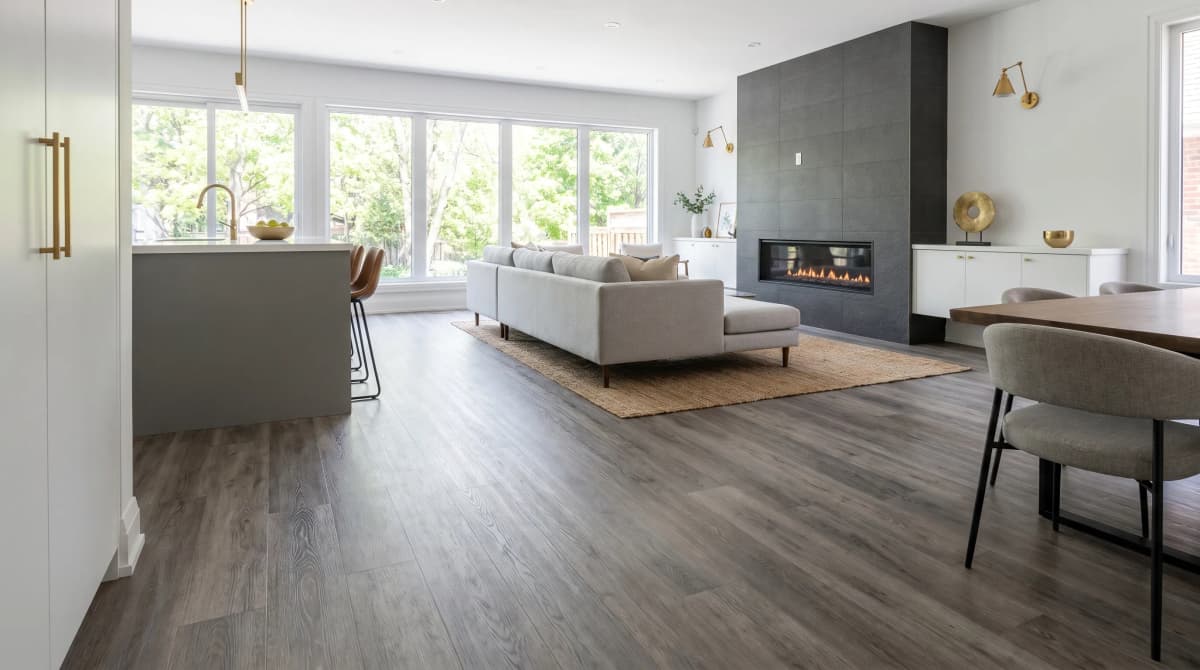
If you're choosing between laminate and vinyl plank flooring, here's the short answer: vinyl plank wins in wet areas and basements; laminate wins on budget and underfoot feel in dry living spaces. Neither is universally better — the right choice depends on where it's going, who lives in your home, and how much subfloor prep you're willing to do. This guide breaks down every meaningful difference with real numbers, so you can stop reading and start buying.
What's Actually Inside Each Product
Before comparing prices and performance, it helps to understand what you're actually buying.
Laminate flooring is a composite product: a high-density fiberboard (HDF) core topped with a photographic image layer and a clear wear layer, all fused under high pressure. The HDF core is wood-based, which means it responds to moisture the way wood does — it swells, warps, and eventually delaminates if water gets in and stays.
Vinyl plank flooring (also called LVP, or SPC when it has a stone-plastic composite core) is made entirely from PVC and limestone. There is no wood fiber anywhere in the construction. Water cannot penetrate the core, which is why 100% waterproof vinyl plank is a legitimate, defensible claim — not marketing language.
That one structural difference — wood core vs. plastic core — explains almost every performance gap between the two products.
Price Comparison: What You'll Actually Pay in the GTA
Material costs in the Greater Toronto Area (as of 2026) typically run:
- Entry-level laminate: $1.49–$2.50/sqft
- Mid-range laminate: $2.50–$4.00/sqft
- Entry-level vinyl plank (LVP): $2.79–$4.00/sqft
- Mid-range SPC vinyl: $4.00–$6.50/sqft
- Installation (either product): $2.00–$3.50/sqft depending on subfloor condition and layout complexity
For a typical GTA semi-detached with 1,400 sqft of main floor and upper hallway, expect to pay $4,900–$8,400 fully installed for laminate, and $6,700–$14,000 fully installed for mid-range SPC vinyl. The gap closes when you factor in that vinyl often requires less subfloor prep — its built-in underlayment and rigidity can bridge minor imperfections that would require grinding or self-leveling compound under laminate.
If budget is the primary driver, the Tosca Laminate 9913 by Tosca Floors at $1.49/sqft is one of the most competitive entry points we carry — real AC3-rated laminate at a price that makes large-area projects genuinely affordable. For vinyl, the Simba Galaxy 6.5mm Vinyl Flooring (58023-10) at $2.79/sqft gives you a fully waterproof, 6.5mm SPC core product at a price most homeowners expect to pay for a lesser product. See our full Toronto Flooring Cost Guide for room-by-room budget breakdowns.
Head-to-Head Comparison Table
| Category | Laminate | Vinyl Plank (LVP/SPC) |
|---|---|---|
| Starting Price (GTA) | $1.49/sqft | $2.79/sqft |
| Core Material | HDF (wood fiber) | PVC + limestone (SPC) |
| Waterproof Rating | 72-hour water protection (waterproof laminate); water-resistant (standard) | 100% waterproof |
| Basement Suitable? | Not recommended (concrete moisture risk) | Yes — ideal |
| Wear Layer Thickness | AC3–AC5 rating system | 6 mil–20 mil (12 mil = residential standard) |
| Underfoot Feel | Warmer, more solid | Slightly softer/flexible |
| Sound Profile | Quieter (denser core) | Can sound hollow without underlayment |
| Scratch Resistance | High (AC4–AC5 rated) | Moderate–High (depends on wear layer mil) |
| Temperature Sensitivity | Low | Expands/contracts with heat (needs expansion gaps) |
| Lifespan (residential) | 15–25 years | 20–30 years |
| Best Rooms | Living rooms, bedrooms, offices | Kitchens, bathrooms, basements, whole-home |
Waterproofing: Where Most Buyers Get This Wrong
This is the single most misunderstood spec in flooring retail. Here's the truth:
Standard laminate is water-resistant, not waterproof. Surface spills wiped up within 20–30 minutes are generally fine. But if water gets into the seams — from a slow leak under an appliance, a pet accident that soaks in, or a basement with seasonal moisture — the HDF core will swell. Once it swells, it doesn't go back. The floor needs to come up.
Waterproof laminate (a newer category) uses a sealed core and waterproof coating on the click-lock edges. These products typically carry a 72-hour waterproof protection rating — meaning the core won't swell if water sits on the surface for up to 72 hours. That's meaningful protection for kitchens and mudrooms, but it's still not the same as vinyl.
Vinyl plank is 100% waterproof. The core is inert to water. A flooded basement, a running dishwasher that leaked overnight, a child's bathroom — none of these scenarios damage the floor material itself. The concern with vinyl in flooding situations is always the subfloor underneath, not the vinyl.
If you're installing in any room that has a water source, or anywhere below grade, go to our waterproof flooring category and start there. Don't compromise on this.
GTA-Specific Reality: What Toronto Homes Actually Need
Most flooring content is written for a generic North American audience. Here's what's specific to Greater Toronto Area homes:
Basements: The majority of GTA homes built between 1960 and 2005 have poured concrete basement slabs with no vapour barrier, or an inadequate one. Concrete is porous. Even a "dry" basement emits moisture vapour year-round, and that moisture spikes significantly during spring thaw (March–May) when the water table rises. Laminate on a GTA basement slab is a gamble. We see failed laminate basement floors regularly — the edges cup, the joints peak, and within 2–3 years it looks like a washboard. Vinyl plank on a GTA basement is the correct answer. Full stop.
Main floors in 2000s-era homes: Homes built between roughly 1998 and 2012 in Markham, Richmond Hill, Vaughan, and Brampton typically have engineered subfloors (OSB or plywood) over I-joists. These subfloors are usually in good shape but can have minor squeaks and deflection. Both laminate and vinyl float well over these subfloors — laminate often feels more solid due to its denser HDF core.
Freeze-thaw cycles and entryways: Toronto's freeze-thaw season (November through March) means wet boots, salt residue, and tracked-in slush at every entryway. Vinyl plank at entries and mudrooms handles this without issue. Laminate at a front entry is a maintenance headache — the salt residue is abrasive to the wear layer and the moisture infiltration at the door threshold is constant.
Radiant heating: Some GTA condos and newer custom homes have in-floor radiant heat. Most vinyl plank products are rated for radiant heat up to 27°C surface temperature, but always verify the specific product spec. Laminate is generally compatible too, but check the manufacturer's temperature limits — excessive heat accelerates wear layer degradation.
Check our grade guide to understand which products are rated for above-grade, on-grade, and below-grade installation before you buy.
Scratch and Durability: Which Actually Holds Up
Laminate has a legitimate advantage in scratch resistance at equivalent price points. The wear layer on laminate is rated using the AC system (AC1 through AC5). AC3 is the minimum for residential use; AC4 and AC5 are commercial-grade. The Tosca Laminate 9913 at $1.49/sqft carries solid residential durability — appropriate for moderate-traffic areas in a family home.
Vinyl plank wear layer is measured in mils (thousandths of an inch). The industry standard for residential use is 12 mil. Anything below 8 mil will show scratches from furniture legs and pet nails within a few years. The Simba Galaxy 6.5mm Vinyl (58023-10) at $2.79/sqft includes a wear layer appropriate for residential use — verify the mil spec on any vinyl product before purchasing, especially if you have large dogs or high-traffic areas.
One important caveat: laminate scratches are visible and permanent. The photographic layer underneath shows through. Vinyl scratches are often less visible because the wear layer has some depth before you hit the image layer — but deep gouges in vinyl also cannot be sanded out. Neither product is refinishable. When they're done, they're done — which is why choosing the right wear layer thickness upfront matters.
If refinishability is important to you, that's the argument for engineered hardwood. The Venice 7½" European Oak by Northernest at $5.19/sqft can be lightly sanded and refinished once or twice over its lifespan — something neither laminate nor vinyl can offer.
Installation: DIY vs. Professional, and What Changes Per Room
Both laminate and vinyl plank use floating click-lock installation — neither requires glue or nails in most residential applications. That said, there are meaningful differences in the installation experience:
- Subfloor flatness: Laminate requires a flatter subfloor (within 3/16" over 10 feet). Vinyl SPC, due to its rigidity, is more forgiving — it can bridge minor dips and humps that would cause laminate to flex and eventually crack at the joints.
- Underlayment: Many vinyl plank products come with underlayment pre-attached. Laminate typically requires a separate underlayment purchase ($0.25–$0.60/sqft). Factor this into your cost comparison.
- Expansion gaps: Both products need expansion gaps at walls, door frames, and transitions. Vinyl expands more with temperature changes — particularly relevant in GTA homes that see significant seasonal temperature swings between a heated winter interior and a summer heat wave.
- Stairs: Both products can be used on stairs with appropriate stair nose profiles. See our stairs installation page for stair nose options and pricing.
If you're replacing old carpet, our carpet removal service handles the tearout and disposal before installation begins. Book a free in-home measurement and we'll assess your subfloor condition, flag any prep work needed, and give you an accurate installed price — not a per-sqft estimate that balloons at invoice time. You can also get a preliminary number using our quote calculator.
When to Choose Laminate
- Main floor living rooms, dining rooms, and bedrooms — above grade, no water exposure
- Budget is the primary constraint and the room is dry
- You want a denser, more solid underfoot feel
- The space has good subfloor flatness (no significant dips)
- You're furnishing a rental unit or staging a home for sale
When to Choose Vinyl Plank
- Basements — always, in the GTA
- Kitchens, bathrooms, laundry rooms, mudrooms
- Homes with pets or young children where spills are frequent
- You want one product throughout the entire home (above and below grade)
- The subfloor has minor imperfections you'd rather not grind flat
- You're installing over existing tile or concrete
Your next step
If vinyl plank is the right call for your space, the next move is to see it in person. Browse in-stock vinyl plank flooring with live pricing, then book a free in-home measurement: we confirm square footage, check the subfloor and quote the floor and install ($2.00 per sqft for floating installs) as one firm number. Questions first? Call (647) 428-1111 or visit our Markham showroom (Mon to Sat, 10am to 5pm).
Frequently Asked Questions
Is vinyl plank flooring better than laminate for kitchens?
Yes, for most kitchens. Kitchens have water sources — dishwashers, refrigerator ice lines, sinks — and slow leaks are common. Vinyl plank is 100% waterproof and handles these situations without damage. Standard laminate will swell if water sits at the seams for more than a few hours. If you're committed to laminate in a kitchen, choose a waterproof laminate with sealed edges and a 72-hour water protection rating — but vinyl is still the lower-risk choice.
Can I put laminate flooring in my basement in Toronto?
We strongly advise against it. GTA concrete basement slabs emit moisture vapour year-round, and that moisture increases significantly during spring thaw. Even with a vapour barrier, the risk of HDF core swelling is high enough that most flooring warranties won't cover laminate installed below grade. Vinyl plank — specifically SPC vinyl — is the correct product for GTA basements. It's 100% waterproof and unaffected by subfloor moisture vapour.
Which is more scratch-resistant: laminate or vinyl plank?
At equivalent price points, laminate typically has a harder wear surface and resists fine scratches better. However, the comparison depends heavily on the specific products. A high-mil (20 mil) vinyl plank will outperform an AC3 laminate. For homes with large dogs, look for AC4+ laminate or 12 mil+ vinyl. Neither product can be sanded or refinished — scratches are permanent in both cases.
How much does it cost to install laminate vs vinyl plank in a GTA home?
Material costs start at $1.49/sqft for laminate and $2.79/sqft for vinyl plank. Add $2.00–$3.50/sqft for professional installation, plus underlayment ($0.25–$0.60/sqft for laminate; often included with vinyl). For a 1,400 sqft main floor, expect $4,900–$8,400 installed for laminate and $6,700–$11,000 for mid-range vinyl. Subfloor prep, carpet removal, and stair work are additional. Use our quote calculator or book a free measurement for an accurate number.
Does vinyl plank flooring feel cheap underfoot compared to laminate?
Thinner vinyl plank (4mm or less) can feel hollow and flex underfoot, especially over subfloor imperfections. SPC vinyl at 6mm or more — like the Simba Galaxy 6.5mm — has a rigid stone-plastic composite core that feels solid and doesn't flex. Laminate's HDF core is dense and tends to feel more substantial at the same thickness, but quality SPC vinyl is not noticeably inferior. The acoustic difference is more noticeable — laminate is generally quieter, while vinyl benefits from a good underlayment.
Can vinyl plank and laminate be installed on stairs?
Yes, both can be used on stairs with the appropriate stair nose profile — a separate piece that caps the edge of each tread. The installation is more involved than flat floor installation and is almost always better done by a professional. Vinyl stair noses are available to match most LVP products; laminate stair noses are typically included or available from the same manufacturer. Visit our stairs page for product and installation details.
Ready to make a decision? Visit our showroom at 6061 Highway 7, Markham to see laminate and vinyl plank side by side — touch them, flex them, and compare them under real lighting. Call us at (647) 428-1111 to speak with a flooring specialist, or book a free in-home measurement and we'll assess your subfloor, measure your space, and give you a firm installed price. No estimates that change at invoice time.