Vinyl Plank Flooring Pros and Cons: An Honest Review (2026)
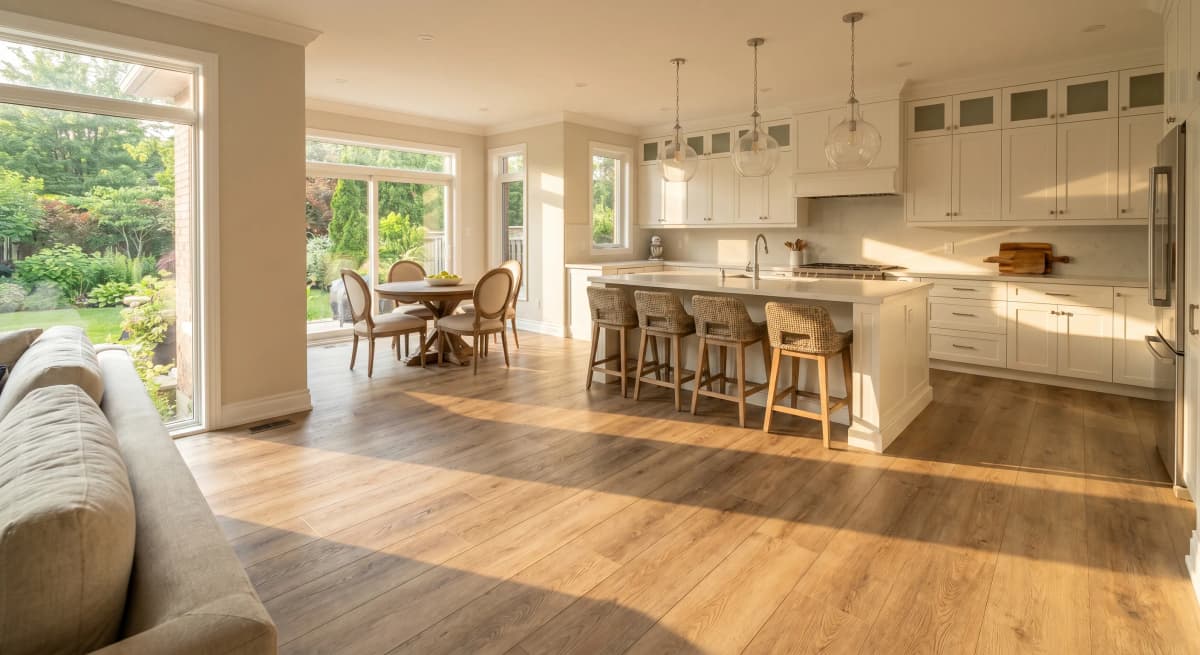
Vinyl plank flooring is 100% waterproof, costs $2.50–$6.00/sqft in materials, and installs over almost any subfloor — including the concrete slabs common in GTA basements. It's the most practical flooring choice for most Canadian homes. But it's not perfect: it can fade under direct UV exposure, dent under heavy point loads, and the cheapest options feel noticeably hollow underfoot. Here's everything you need to know before you buy.
What Exactly Is Vinyl Plank Flooring?
Vinyl plank — often called LVP (Luxury Vinyl Plank) or SPC (Stone Plastic Composite) — is a multi-layer synthetic flooring product. A typical construction from bottom to top: an underlayment pad (sometimes pre-attached), a rigid SPC or WPC core, a printed photographic layer that mimics wood or stone, and a clear wear layer measured in mils (thousandths of an inch). The wear layer thickness is the single most important spec: 6 mil is entry-level, 12 mil is residential standard, and 20+ mil is commercial-grade.
Unlike laminate, the core of SPC vinyl contains no wood fibre — which is exactly why it's permanently waterproof rather than just water-resistant. Unlike engineered hardwood, it cannot be sanded or refinished. That's the core trade-off in a single sentence.
The Real Pros of Vinyl Plank Flooring
1. Permanently 100% Waterproof
This is the headline advantage and it's legitimate. SPC vinyl is impervious to water — full stop. A burst pipe, a dog knocking over a water bowl, a toddler with a sippy cup — none of these will damage the plank itself. This is why waterproof flooring has become the dominant category in GTA basement and main-floor renovations over the past five years. Compare this to laminate: even "waterproof laminate" like the Beachy by Falcon Flooring 12mm Waterproof Laminate ($2.39/sqft) offers 72-hour waterproof protection — excellent for spills, but not for standing water or flooding scenarios.
2. Handles Subfloor Imperfections Better Than Most
SPC vinyl has a rigid core that bridges minor subfloor irregularities. It can float over concrete, existing tile, or plywood without full levelling in many cases (check manufacturer tolerance — typically ±3/16" over 10 feet). This matters enormously in older GTA homes where subfloors have settled unevenly over decades.
3. Comfortable Underfoot and Acoustically Decent
WPC (Wood Plastic Composite) vinyl has a foamed core that feels warmer and softer than SPC. SPC is denser and more dimensionally stable — better for radiant heat and high-traffic areas. Both outperform tile and most laminates for underfoot comfort, especially in the 5mm+ thickness range.
4. Cost-Effective Across the Full Budget Range
Entry-level vinyl plank starts around $1.99/sqft. Mid-range products like the 709 Greek Cabin by Woden Flooring 7mm Vinyl ($2.69/sqft) hit the sweet spot for most residential projects — 7mm total thickness, realistic wood visuals, and a wear layer suitable for busy households. Premium vinyl runs $4.50–$6.00/sqft. For a 1,500 sqft main floor in a typical Markham or Vaughan semi-detached, that's $3,000–$9,000 in materials before installation.
5. DIY-Friendly Click-Lock System
Most vinyl plank uses a click-lock floating installation — no glue, no nails, no professional tools required for competent DIYers. That said, professional installation adds value through proper subfloor prep, seam placement, and transitions at doorways and stairs. Botched DIY installs with poor transitions or inadequate expansion gaps are one of the most common calls we get.
6. Low Maintenance
Sweep, damp mop, done. No waxing, no refinishing, no seasonal humidity management. This is a genuine lifestyle advantage over solid hardwood, which requires humidity between 35–55% year-round — a real challenge during GTA winters when indoor humidity can drop to 20%.
The Real Cons of Vinyl Plank Flooring (What Nobody Tells You)
1. UV Fading Is a Real Problem
Vinyl plank WILL fade and discolour under prolonged direct sunlight. South-facing rooms with large windows are the biggest risk. The photographic print layer degrades under UV exposure over 5–10 years, and unlike hardwood, you cannot sand and refinish it. Mitigation: UV-blocking window film, area rugs, or furniture placement. This is a genuine long-term limitation that budget vinyl is especially vulnerable to.
2. It Dents Under Heavy Point Loads
Refrigerators, piano legs, heavy furniture with small feet — these WILL indent vinyl plank, particularly in the 4mm–6mm range. Use furniture cups or wide-base pads. This is not a defect; it's a physics reality of the material. SPC is more resistant than WPC due to its denser core, but neither is immune.
3. It Cannot Be Refinished
When the wear layer is gone — typically after 15–25 years of heavy use depending on thickness — you replace the floor. There's no sanding, no staining, no second life. Solid hardwood can be refinished 3–5 times over 80+ years. If generational longevity matters to you, look at the Colorado by NAF Elegant Collection 7½" Oak Engineered Hardwood ($4.69/sqft) — it can be lightly sanded and refinished 1–2 times and delivers genuine wood character that vinyl photo-printing cannot fully replicate.
4. Hollow Sound on Floating Installations
Cheap vinyl without pre-attached underlayment, or installed over uneven subfloors, produces a hollow "clicky" sound underfoot. This is one of the most common complaints. Fix: use quality underlayment (2mm–3mm cork or foam), ensure subfloor flatness, and choose products 6mm or thicker.
5. Not Truly "Natural" — Resale Perception Varies
In the $800K–$1.5M GTA home market, buyers in certain segments still view vinyl as a budget material versus hardwood. This is changing rapidly as product quality improves, but it's worth knowing if resale is a near-term consideration. Engineered hardwood or solid hardwood may add more perceived value in premium listings.
6. Temperature Sensitivity During Installation
SPC vinyl must be acclimated to room temperature (18–27°C) for 48 hours before installation. Installing in a cold, unheated space in January and then heating the home causes expansion issues. This is a common mistake in new construction and renovation projects across the GTA.
Vinyl Plank vs. The Alternatives: Full Comparison
| Material | Cost (Material) | Waterproof? | Refinishable? | Best For | Not Suitable For |
|---|---|---|---|---|---|
| SPC Vinyl Plank (LVP) | $1.99–$6.00/sqft | ✅ 100% Waterproof | ❌ No | Basements, kitchens, bathrooms, high-traffic areas | South-facing UV-heavy rooms (without mitigation) |
| Waterproof Laminate | $1.50–$4.00/sqft | ⚠️ 72-hr protection only | ❌ No | Living rooms, bedrooms, above-grade areas | Basements with moisture, bathrooms |
| Engineered Hardwood | $3.50–$9.00/sqft | ❌ Not waterproof | ⚠️ 1–2 times | Main floors, bedrooms, premium renovations | Wet basements, bathrooms |
| Solid Hardwood | $5.00–$14.00/sqft | ❌ Not waterproof | ✅ 3–5 times | Above-grade main floors, long-term investment | Basements, high-moisture areas |
| Porcelain Tile | $2.00–$8.00/sqft | ✅ 100% Waterproof | ❌ No | Bathrooms, mudrooms, entryways | Comfort-sensitive areas, DIY installs |
Vinyl Plank Flooring in the GTA: What Local Conditions Actually Mean for You
Toronto and the surrounding 905 municipalities have specific housing and climate realities that affect your flooring decision in ways that national content never addresses.
Basements: The vast majority of GTA homes have poured concrete slab basements. Concrete is porous and wicks moisture — even "dry" basements in Mississauga or Pickering can have 70–80% relative humidity at slab level in summer. This eliminates solid hardwood entirely and makes laminate risky. SPC vinyl is the correct choice for finished GTA basements, full stop. Always do a calcium chloride moisture test before installation if you're unsure about your slab.
Freeze-Thaw Cycles: Vinyl plank expands and contracts with temperature changes. In unheated garages or cottages that go through freeze-thaw cycles, even SPC can gap or buckle if expansion gaps weren't left at perimeter walls. Leave a minimum 1/4" gap at all walls and transitions.
2000s-Era Builder Homes: A huge portion of the Markham, Richmond Hill, Brampton, and Oakville housing stock was built between 1995–2010 with OSB subfloors over joists. These subfloors are often 3/4" but may have squeaks, soft spots, or unevenness from settling. SPC vinyl handles minor irregularities well, but professional installation including subfloor prep is worth the investment. We also offer carpet removal if you're pulling up builder-grade broadloom that's aged out.
GTA Installation Costs: Professional vinyl plank installation in the GTA runs $2.00–$3.50/sqft for labour, depending on subfloor complexity, stair work, and room configuration. A 1,500 sqft main floor project (materials + installation + underlayment + transitions) typically totals $8,000–$14,000 all-in. Use our quote calculator for a project-specific estimate, or see the full GTA Flooring Cost Guide for 2026.
How to Choose the Right Vinyl Plank for Your Project
Wear layer: 12 mil minimum for households with kids or pets. 20 mil if you have large dogs or very high traffic. 6 mil is acceptable for low-traffic bedrooms only.
Thickness: 5mm–6mm for above-grade with pre-attached underlayment. 6mm–8mm for basements or over existing hard flooring. Thicker = better sound absorption and subfloor forgiveness.
Core type: SPC (Stone Plastic Composite) for basements, kitchens, radiant heat floors. WPC (Wood Plastic Composite) for above-grade comfort-focused rooms.
Plank width: Wider planks (5"–9") look more realistic and are trending. Narrow planks (3"–4") can look dated and show more seams in large rooms.
If you want to see the full range of what's available at every price point, browse our vinyl flooring collection or check the clearance section for in-stock deals on discontinued runs — often 30–50% below regular price.
Your next step
If vinyl plank is the right call for your space, the next move is to see it in person. Browse in-stock vinyl plank flooring with live pricing, then book a free in-home measurement: we confirm square footage, check the subfloor and quote the floor and install ($2.00 per sqft for floating installs) as one firm number. Questions first? Call (647) 428-1111 or visit our Markham showroom (Mon to Sat, 10am to 5pm).
Frequently Asked Questions
How long does vinyl plank flooring actually last?
Quality SPC vinyl with a 12 mil wear layer lasts 15–25 years in a typical residential setting. Commercial-grade 20 mil products can last 25+ years. The limiting factors are wear layer erosion in high-traffic areas and UV fading in sun-exposed rooms. Unlike hardwood, once the wear layer is gone, the floor is replaced — not refinished. Budget products in the 6 mil range may show significant wear in 8–12 years in busy households.
Is vinyl plank flooring safe? What about off-gassing?
Legitimate concern. Vinyl plank can off-gas VOCs (volatile organic compounds), particularly in the first few weeks after installation. Look for products certified to FloorScore, GREENGUARD Gold, or Prop 65 standards — these have been tested for indoor air quality. Open windows and ventilate well during and after installation. All products we carry at BBS Flooring meet current Canadian VOC standards.
Can vinyl plank go over radiant in-floor heating?
Yes — SPC vinyl is compatible with radiant heat systems, but the surface temperature must stay below 27°C (80°F). WPC vinyl is less ideal for radiant heat due to its foam core. Always check the manufacturer's specific radiant heat specifications before installation, and allow proper acclimation time. Do not install vinyl plank directly over electric mat systems without confirming compatibility.
Does vinyl plank add value to a home for resale?
In the GTA market, quality vinyl plank in good condition is neutral-to-positive for resale in the $500K–$900K range — buyers expect functional, clean flooring and vinyl delivers that. In the $1M+ segment, buyers increasingly expect hardwood or engineered hardwood on main floors. Vinyl in a basement or kitchen is universally accepted. If resale is a priority, consider engineered hardwood for main-floor living areas and vinyl for basements and wet zones.
What's the difference between LVP and SPC vinyl plank?
LVP (Luxury Vinyl Plank) is the broad category. SPC (Stone Plastic Composite) and WPC (Wood Plastic Composite) are the two main core types within LVP. SPC has a denser, harder core — better for basements, radiant heat, and high-traffic areas. WPC has a foamed core — softer and warmer underfoot, better for above-grade comfort. Most premium residential vinyl sold today is SPC. When a retailer just says "LVP" without specifying, ask which core type.
Can I install vinyl plank in a bathroom or laundry room?
Yes — this is one of vinyl plank's strongest use cases. The planks themselves are 100% waterproof. The critical detail is seam sealing: water can migrate through click-lock seams over time if the floor is subject to standing water (e.g., around a toilet base or washing machine). Use a bead of waterproof seam sealer at perimeter transitions and ensure proper silicone caulking where the floor meets the tub or shower. Glue-down vinyl is the most watertight option for bathrooms with heavy water exposure.
Ready to see vinyl plank options in person? Visit our showroom at 6061 Highway 7, Markham — we have full-room displays so you can see how products actually look at scale. Call us at (647) 428-1111 or book a free in-home measurement and we'll bring samples to you, measure your space, and give you an all-in quote with no obligation.