White Oak Flooring Guide and Buying Tips (2026 Edition)
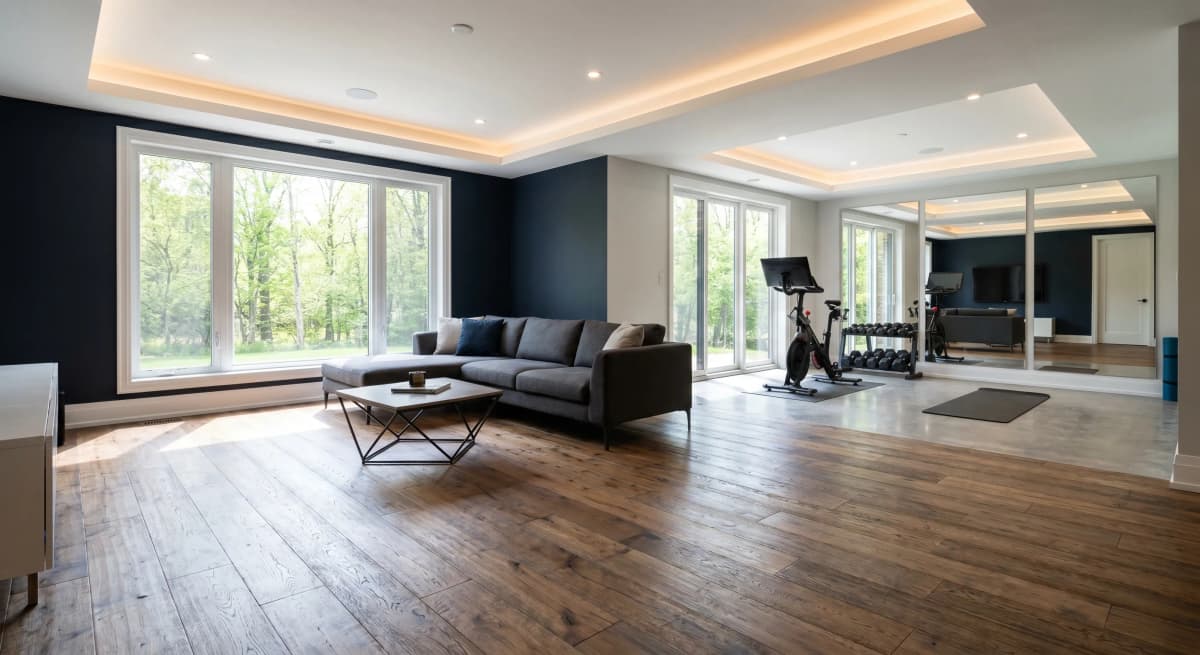
White oak is the most searched flooring species in Canada right now — and for good reason. It offers a cooler, more neutral grain than red oak, takes stain exceptionally well, and works with everything from Scandinavian minimalism to transitional traditional. But "white oak flooring" isn't one product. It's a category that spans solid hardwood ($6–$12/sqft), engineered hardwood ($4–$9/sqft), laminate lookalikes ($1.49–$4/sqft), and LVP ($2.50–$6/sqft) — each with completely different performance profiles, installation requirements, and long-term costs. This guide cuts through the noise so you buy the right version for your actual home.
What Makes White Oak Different From Red Oak?
This question matters because a lot of "oak flooring" at big-box stores is red oak — and buyers assume they're getting the same look. They're not. Here's the practical difference:
- Grain pattern: White oak has a tighter, more linear grain with distinctive ray flecks. Red oak has a more open, wavy grain that's harder to stain evenly.
- Colour undertone: White oak runs beige-to-grey. Red oak has a pink-orange undertone that clashes with cool-toned interiors and grey walls (extremely common in GTA new builds).
- Janka hardness: White oak scores 1360 on the Janka scale. Red oak is 1290. Neither is dramatically harder, but white oak's closed grain makes it slightly more resistant to moisture absorption.
- Stain acceptance: White oak takes stain far more uniformly. If you want a custom grey, charcoal, or natural finish, white oak is the species professionals reach for first.
If you've been scrolling Pinterest and falling in love with wide-plank, light-toned floors — those are almost always white oak. Red oak is the builder-grade staple from the 1990s that's now aging out of GTA homes.
The 4 Types of White Oak Flooring: Which One Is Right for You?
Before you buy a single square foot, you need to understand what you're actually comparing. The table below covers the four main categories you'll encounter when shopping white oak in the GTA.
| Type | Cost (Material Only) | Waterproof? | Can Refinish? | Best For | NOT Suitable For |
|---|---|---|---|---|---|
| Solid White Oak Hardwood | $6–$12/sqft | No | Yes (3–5×) | Main floors, above-grade only | Basements, over radiant heat |
| Engineered White Oak | $4–$9/sqft | No (moisture-resistant only) | 1–2× depending on wear layer | All grades, radiant heat compatible | Wet areas, high-moisture basements |
| White Oak Laminate | $1.49–$4/sqft | 72-hour protection (waterproof laminate only) | No | Budget renovations, rentals | Bathrooms, laundry rooms |
| White Oak LVP/SPC | $2.50–$6/sqft | 100% waterproof | No | Basements, kitchens, bathrooms | Buyers wanting real wood feel underfoot |
Solid White Oak Hardwood: The Real Thing (With Real Limitations)
Solid white oak is exactly what it sounds like — a plank milled from a single piece of white oak lumber. It's the gold standard for resale value and longevity. A properly maintained solid hardwood floor can last 80–100 years with multiple refinishes. But it comes with hard constraints you cannot engineer around:
- It CANNOT go in basements. Concrete slabs in GTA homes — especially those built pre-2005 — release moisture seasonally. Solid hardwood will cup, gap, and buckle. No exceptions.
- It expands and contracts. Toronto's humidity swings from 20% in winter (forced-air heating) to 70%+ in summer. A 4-inch solid plank can move 1–2mm seasonally. Wide planks (5"+) move even more. You need proper expansion gaps and acclimatization (minimum 5 days on-site before install).
- Installation cost is higher. Solid hardwood must be nailed or stapled to a wood subfloor. Add $3–$5/sqft for professional installation in the GTA, plus $0.50–$1/sqft for subfloor prep if needed.
If your home has a wood subfloor above grade and you're planning to stay 10+ years, solid white oak is worth the premium. Browse our solid hardwood collection for current in-stock options.
Engineered White Oak: The Practical Choice for Most GTA Homes
Engineered hardwood is real wood — a genuine white oak veneer (wear layer) bonded over a plywood or HDF core. It's not a laminate photo print. The top surface looks, feels, and ages like solid hardwood. What changes is the structural core, which is dimensionally stable enough to float over concrete, install over radiant heat, and handle GTA humidity fluctuations without the seasonal movement of solid.
The Florence by NAF Flooring ($4.69/sqft) is a strong example of what mid-range engineered white oak looks like done right. At 6½ inches wide, it delivers that wide-plank aesthetic that's dominated GTA renovation projects over the past four years — without the moisture anxiety of solid. The wider plank also means fewer seams per room, which reads as cleaner and more premium in photos and in person.
Key specs to ask about when shopping engineered white oak:
- Wear layer thickness: 2mm minimum for a refinishable floor. 3–4mm gives you two refinishes over the floor's life. Anything under 1.5mm is a wear-and-replace product.
- Core type: Baltic birch plywood core is more dimensionally stable than HDF in high-humidity environments like GTA basements.
- Finish: UV-cured aluminum oxide finish is standard. Hardwax oil finishes look more natural but require more maintenance.
See our full engineered hardwood collection for current white oak options and pricing.
White Oak Laminate: When Budget Is the Priority
Laminate is a photograph of white oak printed on HDF with a protective wear layer on top. It is not real wood. But modern high-definition printing has gotten close enough that in a well-lit room, most guests won't know the difference — especially in a textured embossed-in-register finish.
The honest trade-offs:
- Standard laminate WILL swell if water sits for 72+ hours. It is not appropriate for bathrooms, laundry rooms, or any space with regular moisture exposure.
- Laminate cannot be refinished. When the wear layer is gone, the floor is done.
- It sounds hollow underfoot compared to real hardwood. A quality underlayment (3mm minimum) helps significantly.
That said, at the right price point, laminate is a legitimate choice for rental units, basement rec rooms, or whole-home renovations where budget needs to stretch across 2,000+ sqft. The Tosca Laminate 9904 by Tosca Floors at $1.49/sqft is one of the most cost-effective ways to get a white oak look across a large floor plan without compromising the visual result. At that price, you can cover a 1,500 sqft main floor for under $2,250 in materials.
If moisture is a concern but you still want laminate, the Evergreen 12mm Waterproof Laminate ($3.29/sqft) provides 72-hour waterproof protection — meaning spills and splashes won't damage the floor if cleaned up promptly. It's also 12mm thick, which gives it a more substantial feel underfoot than standard 8mm options. For more waterproof options across all categories, see our waterproof flooring collection.
White Oak Flooring in the GTA: What Local Buyers Need to Know
National flooring guides don't account for the specific conditions in Toronto and the surrounding municipalities. Here's what actually matters for GTA buyers:
Basement moisture is your biggest risk factor. The majority of GTA homes built between 1960 and 2005 have poured concrete basement slabs with no vapour barrier, or an inadequate one. Before installing any wood-based product below grade, you need a moisture test — ideally a calcium chloride test over 72 hours. If readings exceed 3 lbs/1,000 sqft/24 hours, engineered hardwood is risky. LVP/SPC or waterproof laminate are safer bets.
Builder-grade flooring is aging out. A huge number of GTA homes built in the late 1990s and early 2000s have 3¼-inch strip red oak that's been sanded once or twice and is now at end-of-life. Replacing it with wide-plank white oak (5–7 inches) is the single biggest visual upgrade you can make to a dated interior — and it's what we see most commonly in our Markham showroom consultations.
Radiant heat compatibility. If you have in-floor radiant heat (increasingly common in GTA custom builds and renovations), solid hardwood is not recommended. Engineered white oak with a plywood core is the correct choice. Verify that the product you're buying is rated for radiant heat — not all engineered products are.
GTA installation pricing (2026): Expect to pay $3–$5/sqft for professional installation of engineered or solid hardwood, $2–$3/sqft for laminate or LVP. Subfloor levelling adds $1–$3/sqft depending on condition. Stairs are priced per step — typically $50–$90/step for hardwood, $30–$50/step for laminate. See our stair installation page for details, or use our quote calculator for a full project estimate.
If you're replacing carpet before installing new flooring, factor in carpet removal costs — typically $0.50–$1.50/sqft depending on room size and staple density.
For a full breakdown of what flooring costs in Toronto in 2026, see our Flooring Cost Guide.
White Oak Grades: Select, Character, and Rustic Explained
When you shop white oak, you'll encounter grading terminology that affects both price and appearance significantly. Our grade guide covers this in full, but here's the summary:
- Select/Clear Grade: Minimal knots, very consistent colour, tight straight grain. The cleanest, most uniform look. Highest price. Common in contemporary and minimalist interiors.
- Character/Natural Grade: Includes knots, mineral streaks, and colour variation. More visual interest. Mid-range price. Works well in transitional and farmhouse-style homes.
- Rustic/Cabin Grade: Heavy knot presence, significant colour variation, occasional checks. The most organic look. Lowest price per sqft. Popular in cottages and casual spaces.
One important note: "character" in white oak looks intentional and premium. The same grade in red oak can look messy. This is another reason white oak dominates current design preferences — even its lower grades photograph beautifully.
Your next step
The fastest way to turn research into a firm number is to book a free in-home measurement: we confirm the square footage, check the subfloor and quote floor and installation together. Browse the full in-stock catalogue with live pricing, call (647) 428-1111, or visit our Markham showroom (Mon to Sat, 10am to 5pm).
Frequently Asked Questions
Is white oak flooring worth the extra cost over red oak?
For most GTA buyers renovating in 2025–2026, yes. White oak's neutral grey-beige undertone pairs with the cool-toned interiors that dominate current design trends, while red oak's pink-orange undertone fights against grey walls, white trim, and modern cabinetry. White oak also stains more evenly if you want a custom finish. The price premium over red oak is typically $0.50–$2/sqft depending on grade and format — often worth it for resale appeal alone.
Can white oak engineered hardwood go in a basement?
It can, with conditions. You need to confirm that the concrete slab passes a moisture test (calcium chloride or RH probe), and you should use a product with a plywood core rather than HDF. Engineered hardwood is not waterproof — a slow leak or flooding event will damage it. For high-moisture basements or any space where water risk is real, 100% waterproof LVP is the safer choice. See our waterproof flooring options for comparison.
What width of white oak plank should I choose?
For rooms under 120 sqft, 3¼–4-inch planks are proportionally appropriate. For open-concept main floors (the most common GTA layout in homes built after 2000), 5–7-inch wide planks are the current standard and look more premium. Anything over 7 inches in solid hardwood carries higher seasonal movement risk in Toronto's climate — wide engineered planks handle it better. The Florence by NAF at 6½ inches is a practical sweet spot.
How do I know if my subfloor can handle white oak hardwood?
Solid hardwood requires a wood subfloor (plywood or OSB) that is flat to within 3/16 inch over 10 feet and structurally sound. Engineered hardwood can go over concrete with the right underlayment. Before booking installation, we recommend a free in-home measurement — our team assesses subfloor condition as part of the visit and flags any prep work needed before it becomes a surprise cost.
What's the best white oak flooring option for a rental property?
Waterproof laminate or LVP in a white oak finish. Both are significantly cheaper than real hardwood, both resist the kind of spills and neglect that happen in rental units, and both are easy to replace section by section if damaged. The Tosca Laminate 9904 at $1.49/sqft and the Evergreen 12mm Waterproof Laminate at $3.29/sqft are the two price points to compare depending on your moisture exposure level. Check our clearance section for discounted white oak-look options that work well for investment properties.
How long does white oak flooring last?
Solid white oak: 50–100 years with proper maintenance and 3–5 refinishes over its life. Engineered white oak with a 3mm+ wear layer: 25–40 years, with 1–2 refinishes possible. Quality laminate: 15–25 years depending on wear layer thickness (AC3 rating minimum for residential). LVP/SPC: 20–30 years for commercial-grade products (20 mil wear layer). In all cases, longevity depends heavily on proper installation, humidity control (35–55% RH year-round is ideal for wood products), and not letting water pool on the surface.
Ready to choose the right white oak floor for your home? Visit our showroom at 6061 Highway 7, Markham to see white oak options in solid, engineered, and laminate side by side. Call us at (647) 428-1111 or book a free in-home measurement and we'll assess your subfloor, measure your space, and give you a complete material-plus-installation quote. Browse our full white oak flooring collection online before you visit.