Flooring Trends 2026 Canada: What's Actually Selling
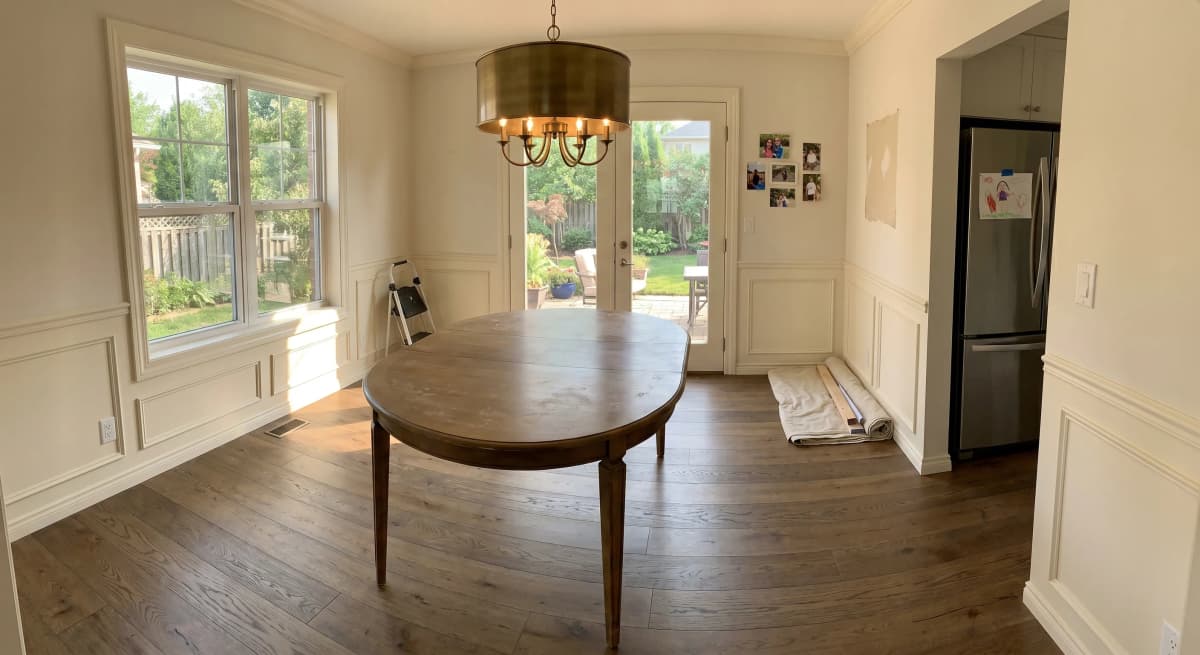
The dominant flooring trends heading into 2026 in Canada are wide-plank engineered hardwood in white oak, rigid-core SPC vinyl for moisture-prone spaces, and a decisive shift away from cool grey tones toward warm beiges, honeys, and natural wood expressions. These aren't Pinterest mood boards — they're what GTA homeowners are actually ordering, driven by resale value pressure, aging builder-grade flooring hitting its 15-year replacement window, and a post-pandemic preference for materials that feel substantial underfoot.
1. Wide-Plank White Oak: The Dominant Hardwood Look of 2026
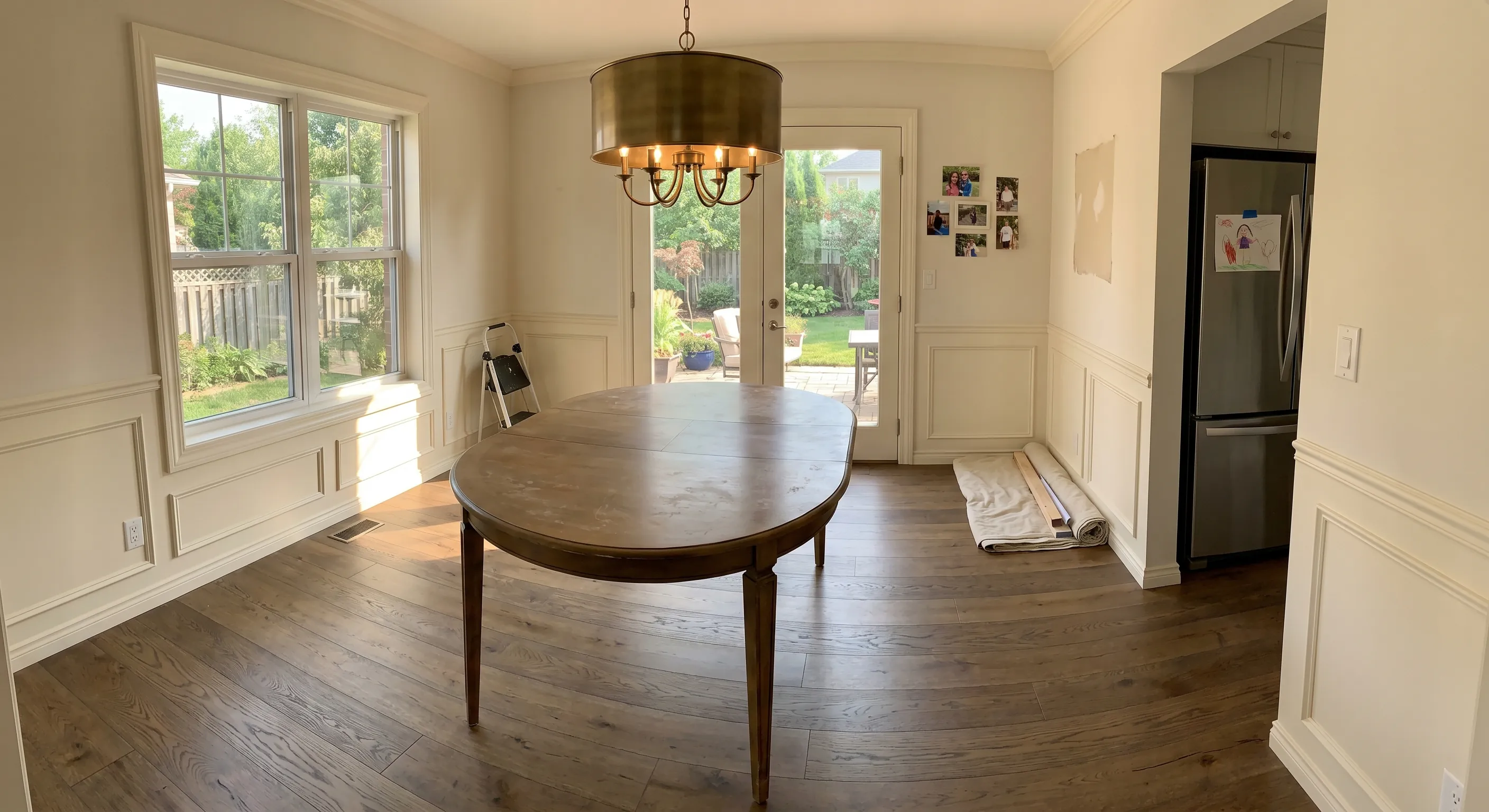
If there's one material defining Canadian flooring in 2026, it's white oak — specifically in planks 6 inches wide and up, with wire-brushed or matte-lacquered finishes that show grain without looking plasticky. The appeal is functional as much as aesthetic: wider planks mean fewer seams, which reads as cleaner and more expensive in listing photos. White oak also holds stain better than red oak, which matters when you're choosing a warm honey or greige tone.
The practical question for most GTA homeowners is whether to go solid or engineered. The honest answer: in most GTA homes built after 1990 — which typically have plywood subfloors over concrete or OSB on upper levels — engineered hardwood performs better. It handles the humidity swings between a dry January at 20% RH and a humid August at 65% RH without cupping or gapping the way solid wood can. Solid hardwood is still excellent, but it belongs on above-grade floors with stable subfloors — never in basements.
The Timberwolf Woden Elite 6½" White Oak Engineered Hardwood by Woden Flooring ($4.59/sqft) is one of the cleaner executions of this trend we carry. At 6.5 inches wide, it hits the sweet spot for the wide-plank look without requiring the more complex installation that comes with 7"+ boards. The white oak species delivers that warm, slightly golden grain that pairs well with the warm-neutral interiors dominating 2026 design. Browse our full white oak flooring collection to see the range of finishes available.
2. The Grey Era Is Over — Warm Neutrals Are In
From roughly 2012 to 2022, cool grey flooring was the default spec for new builds and renovations across the GTA. That era is definitively over. What's replacing it isn't a single colour but a spectrum of warm neutrals: light honey oak, warm greige (grey-beige hybrids that lean warm), whitewashed naturals, and medium browns with visible grain. The common thread is warmth — these floors read as inviting rather than clinical.
This shift has a practical implication for anyone renovating now: if you're replacing cool grey LVP or laminate that was installed 2015–2020, the new floor will look significantly different from your existing trim, doors, and cabinetry if those were also spec'd to grey. Budget for paint or trim updates if you're making a full colour pivot. It's a common oversight that adds $800–$2,500 to a project unexpectedly.
3. SPC Vinyl: The Workhorse of 2026 Renovations
Stone Plastic Composite (SPC) vinyl has become the default choice for GTA basements, main-floor open plans, and rental properties — and for good reason. It's 100% waterproof, dimensionally stable (critical given our freeze-thaw cycles and the moisture that migrates through concrete slabs), and durable enough to handle dogs, kids, and high foot traffic. Installation costs are also lower than hardwood: expect $2.50–$4.00/sqft for professional installation versus $4.00–$6.00/sqft for engineered hardwood.
The Simba Galaxy 6.5mm Vinyl Flooring by Simba Flooring ($2.79/sqft) is a strong entry-level SPC option. At 6.5mm total thickness with an attached underlayment, it provides enough rigidity to bridge minor subfloor imperfections — important in GTA homes where concrete slabs often have small undulations. The 100% waterproof construction makes it appropriate for bathrooms, laundry rooms, and basements where moisture intrusion is a real risk, not a hypothetical one. See our full waterproof flooring range for SPC options across multiple price points.
One honest caveat on SPC: the feel underfoot is harder than engineered hardwood or thick laminate. If you're putting it in a bedroom or a space where you spend a lot of time barefoot, budget for a quality underlayment if it isn't pre-attached, or consider a thicker core (8mm+). The difference in comfort between 6mm and 8mm SPC is noticeable.
4. European Laminate: The Value Play That Doesn't Look Cheap
Laminate has had a reputation problem — partly earned, partly outdated. The 7mm AC1-rated laminate from 2010 that bubbled at the seams deserves its bad reputation. Modern 12mm European laminate is a different product: thicker, quieter, more realistic in texture, and significantly more durable underfoot. For above-grade spaces where budget is a constraint, it remains the most cost-effective way to get a high-end wood look.
The Everest Oak Northernest 12mm European Laminate by Northernest ($2.89/sqft) is a good example of what modern laminate can deliver. The 12mm core provides genuine underfoot comfort and sound dampening — meaningful in two-storey GTA homes where sound transfer between floors is a common complaint. The embossed-in-register texture aligns with the grain print, which is what separates it visually from cheaper laminates where the texture and print are misaligned.
Be honest about laminate's limits: it has 72-hour waterproof protection at the surface, but water that sits longer or penetrates seams will cause swelling. It is not appropriate for bathrooms, laundry rooms, or basements with any moisture history. For those spaces, go to vinyl. For dry above-grade living spaces, dining rooms, and bedrooms, 12mm laminate at $2.89/sqft is genuinely competitive. Explore our laminate flooring collection for the full range.
5. 2026 Flooring Trends: Material Comparison
| Material | Cost/sqft (material) | Waterproof? | Durability | Best For | Not For |
|---|---|---|---|---|---|
| Engineered Hardwood (White Oak) | $4.59–$9.00+ | No — moisture-resistant only | High — refinishable 1–3x | Main floors, bedrooms, living rooms | Basements, bathrooms |
| SPC Vinyl | $2.79–$5.50 | Yes — 100% waterproof | Very high — scratch/dent resistant | Basements, kitchens, bathrooms, rentals | Spaces needing refinishing later |
| 12mm European Laminate | $2.89–$5.00 | 72-hour surface protection only | Good — AC3/AC4 rated options | Above-grade living areas, bedrooms | Bathrooms, laundry, basements |
| Solid Hardwood | $5.50–$14.00+ | No — not water-resistant | Highest — refinishable 5–7x | Above-grade, stable subfloors, heritage homes | Basements, concrete slabs, high humidity |
| Carpet | $1.50–$5.00 | No | Low-medium — 7–12 year lifespan | Bedrooms, basement rec rooms | Kitchens, entryways, pet-heavy homes |
6. What's Declining in 2026: Trends Fading Out
Trend content is only useful if it tells you what to avoid as much as what to chase. Here's what's losing momentum in the Canadian market heading into 2026:
- Cool grey LVP with heavy embossing: The high-gloss, deep-embossed grey vinyl that dominated builder specs from 2016–2022 reads as dated. If you're renovating to sell, replacing this is one of the higher-ROI flooring moves you can make.
- Narrow-plank hardwood (2¼" strip flooring): Still functional, still durable, but it signals "original 1990s spec" rather than "intentional design choice." Wide plank commands a premium in listings.
- Distressed/hand-scraped finishes: The heavy hand-scraped look peaked around 2018. Wire-brushed textures — which show grain naturally without looking artificially aged — have replaced it.
- High-gloss finishes on any material: Gloss shows every scratch, dog nail mark, and footprint. Matte and satin finishes dominate 2026 across hardwood, laminate, and vinyl alike.
- Dark espresso stains: Dark floors were aspirational in the 2010s. They're unforgiving with dust and pet hair, and they're being replaced by medium-to-light warm tones.
7. GTA-Specific Context: What These Trends Mean for Toronto-Area Homes
National trend articles ignore the specific realities of housing stock and climate in the GTA. Here's what actually matters locally:
The 2000s–2010s builder-grade replacement wave: A large portion of GTA homes built between 2000 and 2015 had builder-spec flooring installed — typically 8mm laminate, 3mm LVT, or basic engineered hardwood. That flooring is now 10–20 years old and hitting the end of its functional life. If you're in a townhouse or detached in Markham, Richmond Hill, Vaughan, or Brampton built in that era, you're likely in this replacement window. The trend toward quality upgrades (12mm laminate, 6mm+ SPC, real engineered hardwood) reflects homeowners choosing better than builder-grade the second time around.
Basement moisture is not optional to consider: GTA basements — particularly in homes on clay-heavy soil in Markham, Scarborough, and North York — have concrete slabs that transmit moisture. Any flooring going below grade needs to be 100% waterproof at the material level. Engineered hardwood and laminate are not appropriate for GTA basements unless you've done a calcium chloride moisture test and confirmed readings below 3 lbs/1,000 sqft/24 hours. Assume moisture is present until proven otherwise. Waterproof SPC vinyl is the safe default.
Freeze-thaw and seasonal humidity swings: Toronto's climate creates 40–50% relative humidity swings between winter and summer. Solid hardwood and even some engineered hardwood products will expand and contract measurably across this range. Specify engineered hardwood with a plywood core (not HDF core) for better dimensional stability, and always leave the manufacturer-specified expansion gap at perimeters. For professional installation, this is standard practice — for DIY, it's the most commonly skipped step.
Pricing in the GTA: Material costs are one part of the equation. Installation in the GTA runs $2.50–$4.00/sqft for vinyl, $3.50–$5.50/sqft for laminate, and $4.00–$6.50/sqft for engineered hardwood. A 1,500 sqft main floor in a typical Markham semi-detached, using engineered hardwood at $4.59/sqft material + $5.00/sqft installation, runs approximately $14,000–$16,000 all-in including carpet removal and stair installation. Use our quote calculator to get a project-specific estimate, or review the full GTA flooring cost guide for a detailed breakdown by material and room type.
8. How to Choose: Matching the Trend to Your Actual Situation
Trends matter for resale value and design cohesion, but the right floor depends on your specific space. A quick decision framework:
- Basement or below-grade? Stop here and go to SPC vinyl. No exceptions unless you've professionally tested and confirmed zero moisture.
- Above-grade, pets and kids, budget under $4/sqft material? SPC vinyl or 12mm laminate. Both are more durable day-to-day than entry-level engineered hardwood.
- Above-grade, want real wood, budget $4.50–$7/sqft material? Engineered hardwood in white oak. It hits the 2026 trend, adds resale value, and performs well in GTA humidity conditions.
- Heritage home, above-grade, want maximum longevity? Solid hardwood — it can be refinished 5–7 times over its life, making the higher upfront cost rational over a 40-year horizon.
- Not sure what's in your budget? Book a free in-home measurement — we'll measure your space, assess your subfloor, and give you a written quote before you commit to anything.
If you're looking for quality materials at reduced prices while still hitting 2026 trends, check our clearance section — we regularly carry overstocked engineered hardwood and SPC vinyl at significant discounts.
Your next step
The fastest way to turn research into a firm number is to book a free in-home measurement: we confirm the square footage, check the subfloor and quote floor and installation together. Browse the full in-stock catalogue with live pricing, call (647) 428-1111, or visit our Markham showroom (Mon to Sat, 10am to 5pm).
Frequently Asked Questions
What flooring colour is trending in Canada in 2026?
Warm neutrals are the dominant colour story in 2026 — specifically light honey oak, warm greige (grey-beige leaning warm), and natural medium browns with visible grain. Cool grey flooring, which dominated Canadian new builds from 2014–2022, is declining sharply. If you're renovating to sell, replacing cool grey LVP or laminate with a warm-toned alternative is one of the higher-ROI flooring decisions you can make in the current market.
Is engineered hardwood or vinyl better for a GTA home in 2026?
It depends entirely on where in the home you're installing. For basements and any space with moisture risk — which includes most GTA concrete-slab areas — SPC vinyl is the correct choice because it's 100% waterproof. For above-grade living areas, dining rooms, and bedrooms in a dry, stable environment, engineered hardwood delivers better resale value and a more premium feel underfoot. Many GTA homeowners use both: SPC vinyl in the basement and main floor, engineered hardwood on upper levels.
How much does new flooring cost in the GTA in 2026?
Material costs range from $2.79/sqft for entry-level SPC vinyl to $4.59/sqft and up for engineered hardwood. Add $2.50–$6.50/sqft for professional installation depending on material and complexity. For a typical 1,200–1,500 sqft GTA main floor, expect $8,000–$16,000 all-in for a quality installation including subfloor prep, carpet removal, and stairs. Use our quote calculator or review the 2026 GTA flooring cost guide for a detailed breakdown.
Is laminate flooring still a good choice in 2026?
Yes, for the right spaces. Modern 12mm European laminate — like the Everest Oak Northernest at $2.89/sqft — is significantly better than the thin laminate products from 10–15 years ago. It's appropriate for above-grade dry spaces: living rooms, dining rooms, bedrooms. It is not appropriate for bathrooms, laundry rooms, or basements. It has 72-hour waterproof surface protection but will swell if water penetrates seams or sits longer than that. For wet areas, use SPC vinyl instead.
What is the most durable flooring for families with dogs in Canada?
SPC vinyl is the most durable option for households with dogs. It resists scratches from nails better than hardwood, is 100% waterproof for accidents, and doesn't dent the way softer wood species can. If you want real wood, white oak is the better hardwood choice over maple or pine because of its higher Janka hardness rating and tighter grain. Avoid high-gloss finishes on any material — they show every scratch and nail mark. Matte or satin finishes hide daily wear significantly better.
Should I replace my builder-grade flooring before selling my GTA home?
If your builder-grade flooring is over 10 years old, visibly worn, or in a cool grey colour that reads as dated, replacing it before listing typically returns more than its cost — particularly in the Markham, Richmond Hill, and Vaughan markets where buyers compare multiple similar homes. The highest-ROI moves are replacing worn main-floor flooring with warm-toned engineered hardwood or quality SPC vinyl, and ensuring the basement floor is clean and modern. Book a free measurement to get a quote before you decide.
Ready to act on these trends? Visit our showroom at 6061 Highway 7, Markham to see the Timberwolf White Oak, Simba Galaxy SPC, and Everest Oak laminate in person — samples look very different under showroom lighting than on a screen. Call us at (647) 428-1111 or book a free in-home measurement and we'll come to you, measure your space, assess your subfloor condition, and give you a written quote with no obligation.