Hardwood Floor Refinishing vs Replacing: Which Is Worth It?
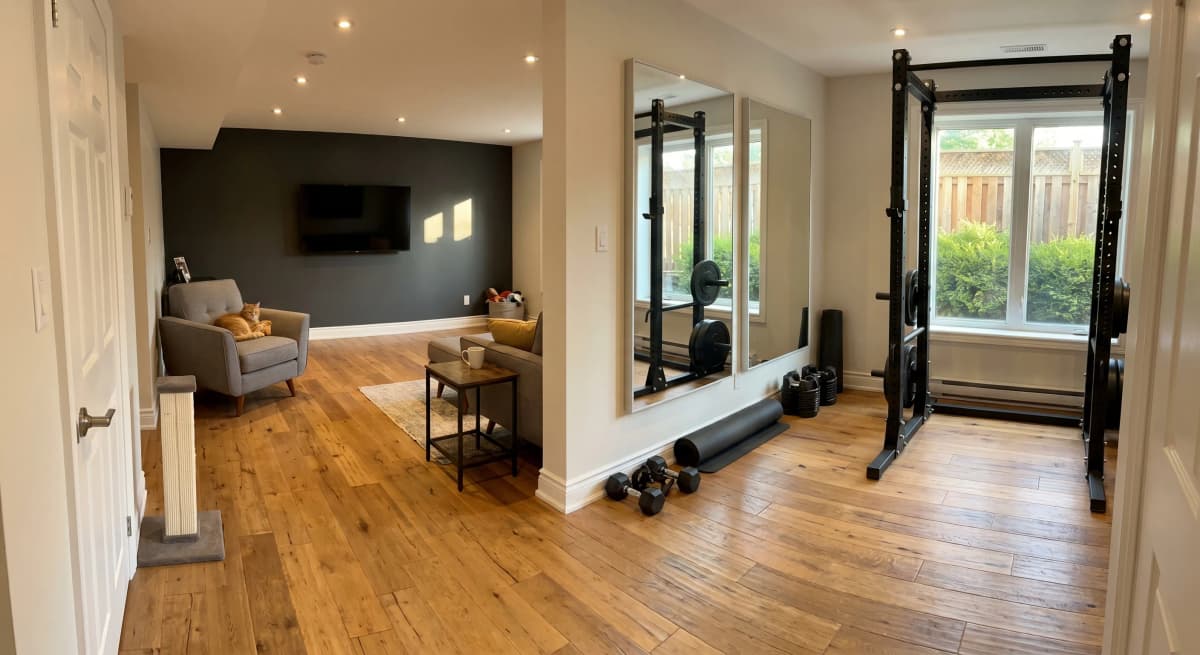
If your hardwood floors are scratched, dull, or just look tired, you have two real options: sand them down and refinish, or rip them out and start fresh. Refinishing wins on cost almost every time — expect to pay $3–$6 per sqft versus $8–$18 per sqft installed for new flooring. But refinishing only works if your floors have enough wood left to sand, no structural damage, and no moisture problems underneath. When those conditions aren't met, replacing is the smarter long-term move — not just the more expensive one.
The Real Cost Breakdown: Refinishing vs Replacing in 2026
Let's put actual numbers on this decision. For a typical GTA home with 800–1,200 sqft of hardwood on the main floor:
- Refinishing (sand + stain + 3 coats polyurethane): $3–$6/sqft = $2,400–$7,200 total
- Replacing with engineered hardwood: $4.89–$7.99/sqft material + $3–$5/sqft installation = $6,312–$15,588 total
- Replacing with solid hardwood: $6.39–$10/sqft material + $4–$6/sqft installation = $8,312–$19,200 total
- Subfloor repairs (if needed): Add $1–$3/sqft — this often tips the math toward replacing
Refinishing saves you real money — sometimes $5,000–$10,000 on a mid-sized home. But those savings evaporate if your floors have been refinished multiple times already, have deep gouges that won't sand out, or if the subfloor has moisture damage that needs addressing anyway. Check our 2026 Flooring Cost Guide for Toronto for a full breakdown of what installation runs by material type.
How to Know If Your Floors Can Actually Be Refinished
This is the question most homeowners skip, and it's the most important one. Here's how to assess your floors before calling anyone:
Check the Wood Thickness
Solid hardwood floors are typically 3/4" thick and can be sanded 4–6 times over their lifetime. Each sanding removes roughly 1/32" of wood. If your floors were installed in the 1980s or 1990s and have been refinished once or twice already, you may have 3–4 sandings left. Engineered hardwood is different — the wear layer (the real wood on top) is typically 2mm to 6mm thick. A 2mm wear layer can be lightly screened and recoated once, maybe twice. A 6mm wear layer can handle a full sand-and-refinish 2–3 times.
To check remaining thickness: find a floor vent, remove it, and look at the edge of the board. You can also use a thin coin to probe near a door threshold where the floor meets tile or carpet.
Look for These Deal-Breakers
- Cupping or crowning: Boards curved up at the edges (cupping) or humped in the middle (crowning) indicate moisture damage. Sanding over a moisture problem doesn't fix it — the boards will move again.
- Deep gouges or cracks: Scratches sand out. Gouges deeper than 1/8" often don't. Pet urine stains that have penetrated the wood will resurface after sanding.
- Squeaky, bouncy, or soft spots: These indicate subfloor problems. You'll need to address those regardless — and once the floor is pulled up, replacement often makes more sense.
- Too-thin wear layer: If you can see the tongue-and-groove joint on the edge of a board, there's not enough wood left to sand safely.
Refinishing vs Replacing: Side-by-Side Comparison
| Factor | Refinishing | Replacing |
|---|---|---|
| Cost (installed) | $3–$6/sqft | $8–$18/sqft |
| Timeline | 3–5 days (off floor 24–48 hrs for cure) | 5–10 days including acclimation |
| Disruption | High dust, strong fumes (water-based less so) | Full furniture move, subfloor exposed |
| Lifespan added | 10–15 years if done properly | 25–75+ years depending on material |
| Change the look? | Yes — new stain color possible | Yes — completely new species, width, finish |
| Addresses subfloor issues? | No | Yes — full access during installation |
| Best for | Structurally sound floors with cosmetic wear | Damaged, thin, or moisture-compromised floors |
| ROI at resale | Strong — buyers notice fresh floors | Very strong — new hardwood is a top selling feature |
When Replacing Makes More Sense Than Refinishing
Refinishing gets the headlines because it's cheaper, but there are clear situations where replacing is the right call — and pushing through with a refinish will cost you more in the long run.
Your Floors Have Moisture Damage
This is the big one in the GTA. Homes built in the 1990s and early 2000s — which make up a huge portion of Markham, Richmond Hill, and Vaughan's housing stock — often have concrete slabs or poorly ventilated crawl spaces that allow moisture to wick up into hardwood. If your boards are cupped, the subfloor is soft, or you're seeing black staining (mold), refinishing is putting lipstick on a structural problem. You need to fix the moisture source, potentially replace the subfloor, and then install new flooring.
You Want to Change the Width or Species
Refinishing can change the color, but it can't change the fact that you have 2¼" strip oak when you want 6½" wide-plank hickory. If your design goals require a different look, replacing is the only path. The Meyerside by NAF Flooring ($4.89/sqft) is a 6½" engineered hickory that's a popular upgrade from narrow-strip builder-grade oak — it reads as a completely different floor.
You're Installing Over Radiant Heat or in a Below-Grade Space
Solid hardwood and radiant heat are a difficult combination. Solid hardwood is NOT suitable for basements — the moisture fluctuation will cause movement no finish can protect against. If your basement has hardwood that's failing, replacing with engineered hardwood or a quality waterproof vinyl is the correct solution, not refinishing what's there.
The Floors Have Been Refinished Too Many Times
A professional can tell you this in about 60 seconds by checking the remaining wood thickness. If there's less than 3/32" of wood above the tongue, sanding risks cutting through to the tongue-and-groove joint — which destroys the floor structurally. At that point, you're replacing regardless.
What Replacement Actually Costs in the GTA (2026)
When you're replacing hardwood, you have three main material directions:
Solid Hardwood
The solid hardwood category starts around $5/sqft for standard grades and climbs quickly with species and width. The Natural Appalachian Solid Maple by Appalachian Flooring ($6.39/sqft) is a strong value for main-floor applications — maple is one of the hardest domestic species (Janka rating ~1,450) and holds up well in high-traffic kitchens and hallways. Add $4–$6/sqft for professional installation, plus $1–$2/sqft if you need carpet removal first. Total landed cost: $11–$15/sqft.
Engineered Hardwood
Engineered hardwood is the practical choice for most GTA main floors and the only hardwood choice for above-grade areas with in-floor heating. It's dimensionally more stable than solid wood because the cross-ply construction resists the seasonal expansion and contraction that our Ontario freeze-thaw cycle drives. The Vivid White by Woden Vermont Flooring ($3.99/sqft) is a 6½" white oak engineered plank — one of the most searched looks right now — at a price point that makes full replacement genuinely competitive with refinishing costs. See more options in our white oak flooring collection.
Waterproof Alternatives
If moisture is why you're replacing in the first place, consider whether hardwood is the right material at all. Waterproof SPC vinyl runs $2.50–$5/sqft installed and is 100% waterproof — no 72-hour window, no moisture concerns. For basements, mudrooms, and kitchens with a history of water issues, this is often the smarter long-term call than re-installing hardwood.
GTA-Specific Realities That Change This Calculation
National flooring guides miss the details that actually matter in the Greater Toronto Area. Here's what changes the math locally:
- Builder-grade oak from the 1990s–2000s: The majority of detached homes in Markham, Pickering, Ajax, and Whitby were built with 2¼" strip red oak, typically 3/4" thick, often already refinished once by the previous owner. These floors are usually good for one more refinish — but check the wear layer first.
- Concrete subfloors in newer builds: Many GTA condos and townhomes built after 2005 have concrete subfloors throughout, including the main level. Solid hardwood cannot be glued directly to concrete without a proper moisture barrier and acclimatization protocol. Engineered hardwood handles this installation type much better.
- Ontario humidity swings: Toronto humidity ranges from roughly 20% in winter (forced air heating) to 80%+ in summer. This 60-point swing is brutal on solid hardwood. If your floors are gapping badly in winter and swelling in summer, that's a climate-management issue — a refinish won't fix it. A humidifier in winter (target 35–45% RH) is often the first fix.
- Labour costs in the GTA: Skilled floor refinishers charge $3–$6/sqft in the 905/416 area. Be wary of quotes under $2.50/sqft — they often skip the critical first cut with a drum sander or use cheap oil-based finishes that yellow quickly. For installation, budget $3–$5/sqft for engineered and $4–$6/sqft for solid hardwood nailed down. Use our quote calculator to get a fast estimate for your specific square footage.
- Stair matching: If you're refinishing or replacing main-floor hardwood, don't forget the stairs. Mismatched stair treads are one of the most common complaints after a partial refinish. Budget $60–$120 per stair tread for refinishing, or $150–$300 per tread for full replacement with matching hardwood.
The ROI Question: What Actually Adds Value at Resale?
If you're refinishing or replacing to sell, the calculus is different. Real estate agents in the GTA consistently report that fresh hardwood — whether refinished or new — is one of the highest-return pre-sale investments. Here's the honest breakdown:
- Refinishing before listing: Cost $3,000–$6,000 on a typical main floor. Adds perceived value of $10,000–$20,000 in buyer psychology (buyers discount heavily for "needs new floors"). ROI: strong.
- Replacing with new engineered hardwood: Cost $8,000–$15,000. Can justify a higher list price and reduces time on market. ROI: strong if you choose a neutral, current style (wide-plank, matte finish, natural tones).
- Replacing with trendy or bold choices: Dark espresso stains, very narrow strips, or unusual species can actually hurt resale. Buyers want to see themselves in the space. Stick to natural oak tones, white oak, or classic maple if resale is the goal.
Not sure what your specific floor situation calls for? Our team offers free in-home measurements — we'll assess your existing floors, check wear layer thickness, and give you an honest recommendation before you spend a dollar.
Your next step
If engineered hardwood is where you are landing, see the boards in person before you decide. Browse in-stock engineered hardwood with live pricing, then book a free in-home measurement. We confirm square footage, check the subfloor and quote the floor and installation as one firm number. Call (647) 428-1111 or visit our Markham showroom (Mon to Sat, 10am to 5pm).
Frequently Asked Questions
How many times can hardwood floors be refinished before they need replacing?
Solid hardwood (3/4" thick) can typically be refinished 4–6 times over its lifetime. Engineered hardwood depends entirely on the wear layer — a 2mm layer allows 1–2 light screenings, while a 6mm layer can handle 2–3 full sands. The safest way to know is to check the remaining thickness above the tongue at a floor vent or threshold. Once you're below 3/32" of usable wood, refinishing risks structural damage and replacement is necessary.
Is it worth refinishing hardwood floors before selling a house?
Yes, in most cases. GTA buyers heavily discount homes with visibly worn floors, and a professional refinish costs $3,000–$6,000 on a typical main floor while adding significantly more to perceived value. The exception is if the floors have structural issues — cupping, soft spots, or moisture damage — where refinishing won't hold and buyers' home inspectors will flag the underlying problem anyway.
Can engineered hardwood floors be refinished?
It depends on the wear layer thickness. Engineered hardwood with a 2mm wear layer can be lightly screen-and-recoated once, but cannot handle a full drum-sand refinish. Engineered hardwood with a 4–6mm wear layer can be fully sanded and refinished 1–3 times. Always check the manufacturer's specs before scheduling a refinish — a contractor who doesn't ask about your wear layer thickness before quoting is a red flag.
What's the cheapest way to replace hardwood floors in Toronto?
The most cost-effective replacement path is engineered hardwood in a floating installation — no glue, no nails, and faster labour. The Vivid White by Woden Vermont at $3.99/sqft is one of the sharpest price points for a real-wood look. Also check our clearance section for end-of-run engineered hardwood that can cut material costs by 30–50%. See our full grade guide to understand how grading affects both price and appearance.
How long does hardwood floor refinishing take?
A professional sand-and-refinish on 800–1,200 sqft takes 3–5 days total: one day for sanding, one day for staining and first coat, one day per additional coat. Water-based polyurethane dries faster (2–4 hours between coats) and has lower fumes than oil-based (8–12 hours between coats). You can walk on the floor within 24 hours of the final coat, but should avoid rugs and heavy furniture for 5–7 days while the finish fully cures.
Is laminate or vinyl a good alternative if my hardwood can't be saved?
Yes — and in some rooms, they're the better choice. If your hardwood failed due to moisture (basement, bathroom-adjacent areas, mudrooms), replacing with hardwood again creates the same vulnerability. 100% waterproof SPC vinyl and water-resistant laminate are purpose-built for those environments. Laminate offers a hardwood look at $2–$4/sqft installed but will swell if water sits for 72+ hours — it's not the right call for basements or rooms with active moisture risk.
Still not sure which way to go? Bring us your floor photos or come see us at our Markham showroom at 6061 Highway 7. We'll tell you honestly whether your floors are worth saving or whether replacement makes more sense — no upsell, just the straight answer. Call (647) 428-1111 or book a free in-home measurement and we'll assess your floors on-site.