Is Vinyl Flooring Safe for Health? VOCs, Off-Gassing & the Truth
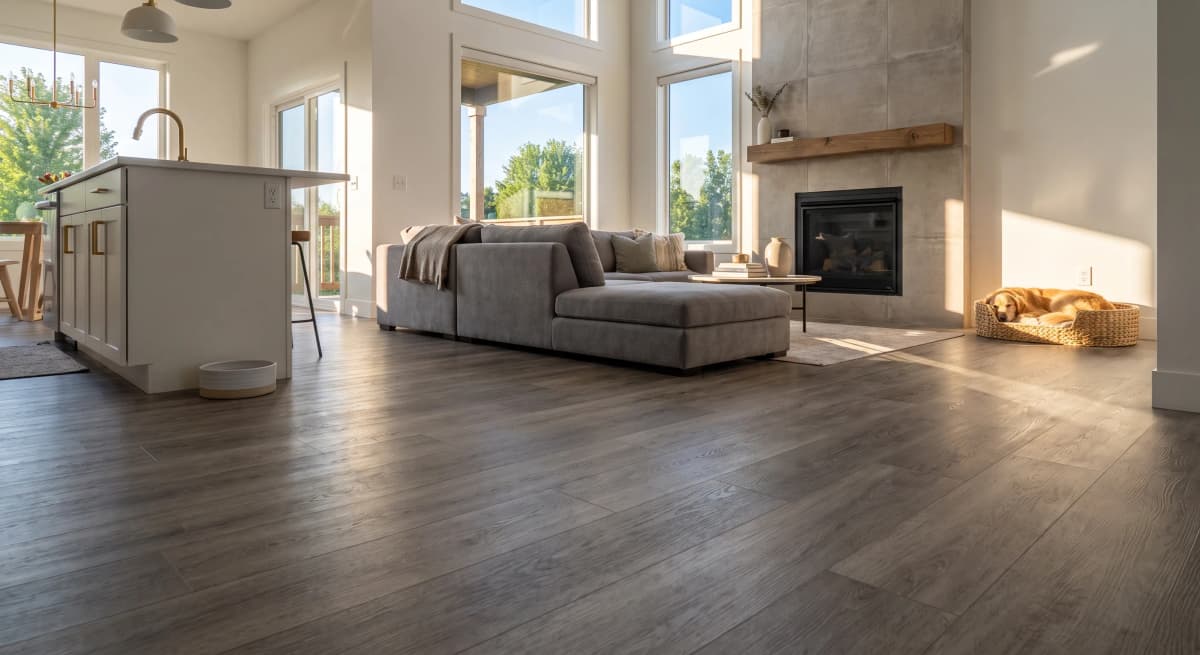
Yes — modern vinyl flooring is safe for most homes, including those with children and pets, provided you buy certified products and follow proper ventilation during installation. The concern isn't vinyl flooring as a category; it's uncertified, low-grade vinyl that skips third-party emissions testing. FloorScore-certified and GREENGUARD Gold-certified vinyl planks emit VOCs at levels well below health authority thresholds. The nuance matters: a $0.89/sqft no-name import and a $2.29/sqft FloorScore-certified SPC plank are not the same product, and your lungs know the difference.
What Are VOCs and Why Do They Matter in Flooring?
VOC stands for Volatile Organic Compound — a broad class of carbon-based chemicals that evaporate at room temperature and enter the air you breathe. In flooring, VOCs come primarily from three sources: the core material itself, the adhesive used during manufacturing (especially in the wear layer lamination), and any installation adhesive applied on-site.
Common VOCs found in low-quality flooring include formaldehyde, benzene, toluene, and phthalates. At high concentrations, prolonged exposure to these compounds is linked to respiratory irritation, headaches, and — in the case of formaldehyde — has been classified as a probable carcinogen by the IARC. At the trace levels emitted by certified vinyl flooring, the scientific consensus is that risk is negligible for healthy adults. For infants who spend significant time on the floor, or for people with asthma or chemical sensitivities, choosing a certified product is not optional — it's necessary.
The good news: the flooring industry has largely cleaned up its act since the 2015 CBS News/60 Minutes exposé on Chinese-manufactured laminate. Reputable manufacturers now submit to independent third-party emissions testing, and the certifications to look for are clearly defined.
FloorScore, GREENGUARD Gold, and CARB2: What the Certifications Actually Mean
These three certifications are the credible benchmarks for indoor air quality in flooring. Here's what each one actually requires:
- FloorScore (SCS Global Services): The most widely recognized flooring-specific certification. Products must meet California's South Coast Air Quality Management District (SCAQMD) Rule 1168 for adhesives and the California Department of Public Health (CDPH) Standard Method v1.2 for emissions. This is the gold standard for hard surface flooring. Look for it on vinyl, laminate, and engineered hardwood.
- GREENGUARD Gold (UL Environment): More stringent than standard GREENGUARD, with stricter chemical thresholds specifically designed for environments where children and vulnerable populations spend time — schools, hospitals, and homes with young children. A product with GREENGUARD Gold has been tested for over 10,000 chemicals.
- CARB2 (California Air Resources Board Phase 2): Primarily targets formaldehyde emissions from composite wood products. Relevant for laminate and engineered hardwood cores. If a vinyl product carries CARB2 compliance, it means the composite elements in its core have been tested. This is a minimum threshold, not a premium one — CARB2 compliance is table stakes for any reputable product sold in North America.
When shopping for vinyl flooring, ask for the certification documentation. Any reputable supplier can produce it. If they can't, walk away.
Is Vinyl Flooring Toxic? Breaking Down the Phthalate Question
Older PVC-based vinyl flooring — particularly sheet vinyl manufactured before the mid-2000s — used phthalate plasticizers to keep the material flexible. Certain phthalates (DEHP, DBP, BBP) are classified as endocrine disruptors and have been restricted or banned in children's products across the EU, Canada, and the United States under CPSC regulations.
Modern luxury vinyl plank (LVP) and SPC (Stone Plastic Composite) flooring has largely moved away from problematic phthalates. SPC flooring, in particular, uses a rigid limestone composite core that requires minimal plasticizer. Products certified to GREENGUARD Gold are tested for phthalate content as part of their chemical screening protocol.
The practical takeaway: if you're buying SPC or LVP from a brand that publishes third-party test results and holds current GREENGUARD Gold or FloorScore certification, phthalate exposure from the flooring itself is not a meaningful health risk. The risk profile is highest with very old sheet vinyl (pre-2000) that may also contain asbestos in the adhesive layer — a separate issue entirely that requires professional assessment before any removal.
For families with infants or toddlers who spend hours on the floor, we'd also recommend looking at our waterproof flooring options — SPC specifically — as the rigid core produces lower emissions than flexible LVP in most third-party tests.
Off-Gassing: How Long Does It Last and How Do You Minimize It?
Off-gassing — the process of VOCs releasing from new flooring into your indoor air — is highest in the first 72 hours after installation and typically drops to negligible levels within 7–14 days. This is true for vinyl, laminate, and most engineered products. The rate of off-gassing accelerates with heat and humidity, which is relevant for GTA homes in summer.
To minimize exposure during and after installation:
- Ventilate aggressively for the first 72 hours. Open windows, run exhaust fans, and if possible, avoid sleeping in the room for the first two nights. This is especially important in winter when GTA homes are sealed tight.
- Allow the flooring to acclimate before installation. Leaving planks in the room for 48 hours before installation — standard practice for our installation team — allows some off-gassing to occur before the product is sealed to the subfloor.
- Use low-VOC or zero-VOC adhesives if a glue-down installation method is required. Floating installations (click-lock) eliminate adhesive VOCs entirely.
- Don't store flooring in a hot garage or car trunk. Heat accelerates off-gassing. Bring it inside at room temperature.
- Run an air purifier with a HEPA + activated carbon filter in the room for the first week. The activated carbon layer captures VOC molecules that a HEPA filter alone cannot.
For people with severe chemical sensitivities, we recommend scheduling installation when you can be out of the home for 48–72 hours and returning to a fully ventilated space.
Vinyl vs. Alternatives: Health and Safety Comparison
Vinyl isn't the only option, and the health profile of each flooring type differs. Here's an honest comparison:
| Material | VOC Risk | Certifications Available | Moisture/Mold Risk | Cost/sqft (GTA) | Best For |
|---|---|---|---|---|---|
| SPC Vinyl | Low (certified products) | FloorScore, GREENGUARD Gold, CARB2 | Very Low — 100% waterproof | $2.29–$4.50 | Basements, kitchens, whole-home |
| LVP Vinyl | Low–Moderate (varies by brand) | FloorScore, GREENGUARD Gold | Low — 100% waterproof | $2.29–$5.00 | Main floors, rental units |
| Laminate | Moderate — HDF core can emit formaldehyde | FloorScore, CARB2 | Moderate — swells if water sits 72+ hours | $1.99–$4.00 | Dry above-grade living areas |
| Engineered Hardwood | Low–Moderate — plywood core varies | FloorScore, CARB2 | Moderate — not waterproof | $4.00–$9.00 | Main floors, bedrooms |
| Solid Hardwood | Very Low — natural wood, minimal binders | FloorScore | High — not suitable for basements | $6.00–$14.00 | Above-grade, low-humidity rooms |
| Carpet | Moderate — traps allergens, dust mites | Green Label Plus (CRI) | High — mold risk if wet | $2.00–$5.00 installed | Bedrooms (with regular cleaning) |
One counterintuitive note: solid hardwood has the lowest VOC profile of any manufactured flooring because it uses minimal adhesives or binders in its construction. The trade-off is that it's the most moisture-sensitive and the most expensive. Engineered hardwood sits in the middle — its plywood core uses more binders than solid wood, so certification matters there too.
The Three Safest Vinyl Products We Carry — With Real Specs
We're not going to tell you every vinyl we sell is equally safe. Here are three specific products with documented health credentials that we stock and recommend for health-conscious buyers:
1. TF SPC 310 by Triforest Flooring ($2.29/sqft)
This 4.2mm SPC plank uses a rigid stone-plastic composite core — meaning no HDF wood fiber that can harbor formaldehyde. The limestone-polymer construction is inherently lower in VOC-generating binders than flexible LVP. At $2.29/sqft, it's one of the most cost-effective certified SPC options we carry. Suitable for basements, kitchens, and any area where moisture is a concern — which in GTA homes means most of the house.
2. 604 — Woden 6mm Vinyl Flooring by Woden Flooring ($2.29/sqft)
At 6mm total thickness with an attached underlay, the Woden 604 is a floating click-lock installation — no adhesive required, which eliminates on-site adhesive VOCs entirely. The floating installation method also means no glue off-gassing during or after installation. A practical choice for above-grade living areas where you want clean indoor air without sacrificing budget.
3. 817 — Simba Universe 6.5mm Vinyl Flooring by Simba Flooring ($2.59/sqft)
The Simba Universe is 6.5mm — the thicker gauge reduces subfloor telegraphing and adds acoustic dampening, which indirectly supports indoor air quality by reducing the need for thick foam underlays (some foam underlays carry their own VOC concerns). The extra half-millimeter matters in older GTA homes with uneven concrete slabs or legacy subfloor imperfections. At $2.59/sqft, it's a reasonable step up for main-floor installations where you want longevity and lower long-term replacement frequency.
All three products are available to view in person at our Markham showroom. Use our quote calculator to estimate material costs for your square footage before you visit.
GTA-Specific Health Considerations: What Toronto Homes Add to the Equation
The health conversation around vinyl flooring isn't purely about the product — it's about the environment it goes into. GTA homes present specific conditions that affect both product selection and health outcomes:
Basement moisture and mold risk: Toronto-area homes built between 1960 and 1990 frequently have poured concrete basement slabs with no vapour barrier. Relative humidity in these spaces can hit 70–80% in summer without a dehumidifier. Any flooring installed over a damp concrete slab without proper moisture mitigation creates mold risk — and mold is a far more serious indoor air quality threat than VOCs from certified vinyl. SPC vinyl is 100% waterproof and doesn't support mold growth in its core, making it the correct choice for these basements. Laminate is not appropriate here — it will swell and delaminate, and the damp HDF core can become a mold substrate.
Freeze-thaw and subfloor movement: GTA's climate produces significant seasonal movement in wood subfloors — expansion in humid summers, contraction in dry winters when forced-air heating drops indoor humidity to 20–30%. Floating SPC installations accommodate this movement without cracking or gapping. Glue-down installations in these conditions can stress the adhesive bond and potentially re-release adhesive VOCs over time as the bond flexes.
Removing old carpet in aging homes: Many GTA homes built in the 1980s and 1990s still have original carpet over subfloor. Old carpet is a reservoir for dust mites, pet dander, mold spores, and legacy pesticide residues tracked in from outside. Replacing it with certified vinyl is a genuine indoor air quality improvement — not a step backward. Our carpet removal service handles the disposal, including proper bagging to prevent allergen dispersal during removal.
Builder-grade flooring aging out: Homes built in the early 2000s across Markham, Richmond Hill, and Vaughan were often installed with thin builder-grade LVP or laminate that predates current certification standards. If your flooring is 15+ years old and you're experiencing unexplained respiratory irritation, the flooring itself may be contributing — not from active off-gassing, but from physical degradation of the wear layer releasing microparticles. Replacement with a current certified product is worth considering. See our 2026 flooring cost guide for current GTA pricing benchmarks.
We offer free in-home measurement across the GTA — our team can assess your subfloor conditions and moisture levels before recommending a product, which is the only way to give you an honest recommendation.
What to Ask Before You Buy Any Vinyl Flooring
Before you commit to any vinyl flooring purchase — from us or anyone else — ask these five questions:
- Does this product hold a current FloorScore or GREENGUARD Gold certificate? Ask for the certificate number, not just a claim on a spec sheet. You can verify FloorScore certificates at scsglobalservices.com.
- Where is it manufactured? This isn't xenophobia — it's supply chain accountability. Products manufactured for the North American market by established brands (regardless of country of origin) are typically held to CARB2 and CDPH standards by their retail buyers. Generic imports with no brand accountability are the risk category.
- What installation method is required? Floating click-lock = no adhesive VOCs. Glue-down = ask for the adhesive's VOC content (g/L) and choose a product under 50 g/L.
- What's the wear layer thickness? Thicker wear layers (12 mil and above) last longer, reducing replacement frequency — and every replacement cycle means another round of off-gassing and installation disruption.
- Is there an attached underlay? Some foam underlays contain antimicrobial additives (like OBPA) that have their own toxicity concerns. Ask what the underlay is made of if it's pre-attached.
Your next step
If vinyl plank is the right call for your space, the next move is to see it in person. Browse in-stock vinyl plank flooring with live pricing, then book a free in-home measurement: we confirm square footage, check the subfloor and quote the floor and install ($2.00 per sqft for floating installs) as one firm number. Questions first? Call (647) 428-1111 or visit our Markham showroom (Mon to Sat, 10am to 5pm).
Frequently Asked Questions
Is vinyl flooring safe for babies and toddlers who play on the floor?
Yes, with the right product. Choose FloorScore-certified or GREENGUARD Gold-certified SPC or LVP flooring. These products have been independently tested to confirm VOC emissions are below thresholds set for sensitive populations. Ventilate the room well for the first week after installation before allowing infants to spend extended time on the new floor. Avoid flexible sheet vinyl of unknown origin, which may contain older-generation phthalate plasticizers.
How long does vinyl flooring off-gas?
Off-gassing is highest in the first 24–72 hours after installation and drops significantly within 7–14 days. By 30 days, emissions from certified products are typically undetectable by standard air quality testing. Ventilating the space aggressively in the first week — open windows, fans running — dramatically accelerates this timeline. Heat speeds up off-gassing, so a summer installation in a well-ventilated space will clear faster than a sealed winter install.
Is SPC flooring safer than regular LVP for indoor air quality?
Generally yes, for two reasons. First, the rigid limestone composite core in SPC requires fewer chemical plasticizers than the flexible PVC core in standard LVP, resulting in lower potential VOC sources. Second, SPC is typically installed as a floating floor without adhesive, eliminating on-site adhesive VOCs entirely. Both types can be FloorScore-certified, but the underlying chemistry of SPC gives it a structural advantage in emissions profile.
Does vinyl flooring cause cancer?
There is no credible scientific evidence that certified, modern vinyl flooring causes cancer under normal residential use conditions. The concern historically arose from formaldehyde in laminate flooring (a different product) and from asbestos in pre-1980 vinyl floor tiles and adhesives. Current vinyl flooring — LVP, SPC — does not contain asbestos or meaningful levels of formaldehyde. Products certified to GREENGUARD Gold are tested against a database of over 10,000 chemicals including known carcinogens. The risk from uncertified, low-grade imports is unknown and therefore worth avoiding.
Is it safe to remove old vinyl flooring yourself?
It depends on the age of the flooring. Vinyl floor tiles and sheet vinyl installed before 1980 may contain asbestos in the tile body or the black mastic adhesive beneath it. Do not sand, scrape, or cut this material without professional asbestos testing first. Flooring installed after 1985 is almost certainly asbestos-free, but if you're unsure, a $30–$50 bulk sample test from an accredited lab is worth the peace of mind. For post-1990 vinyl, DIY removal is generally safe with a dust mask and proper disposal. Our removal service handles both carpet and old vinyl if you'd prefer a professional approach.
How does vinyl flooring compare to laminate for indoor air quality?
Certified vinyl and certified laminate are both safe, but they have different risk profiles. Laminate's HDF core is a wood-fiber composite that can emit formaldehyde, which is why CARB2 compliance matters specifically for laminate. Vinyl's core — particularly SPC — uses limestone and polymer rather than wood fiber, giving it a lower inherent formaldehyde risk. However, laminate from reputable brands with current FloorScore certification is also a responsible choice for above-grade dry areas. The bigger practical difference is moisture: laminate will swell if water sits for 72+ hours, which in a GTA kitchen or basement creates a mold risk that vinyl avoids entirely. See our full laminate flooring page for certified options.
Ready to choose a certified, health-safe vinyl floor for your GTA home?
Visit our showroom at 6061 Highway 7, Markham to see the Simba Universe, Woden 604, and Triforest SPC 310 in person — we keep certification documentation on file for every product we carry.
Call us at (647) 428-1111 or book a free in-home measurement and our team will assess your subfloor moisture conditions before recommending a product — because the right floor for your health depends as much on what's under it as what's on top.
Use our quote calculator to get a material estimate before your visit, and check our grade guide to understand what separates entry-level vinyl from commercial-grade product.