Flooring Installation in Markham: Costs, Materials & What to Expect
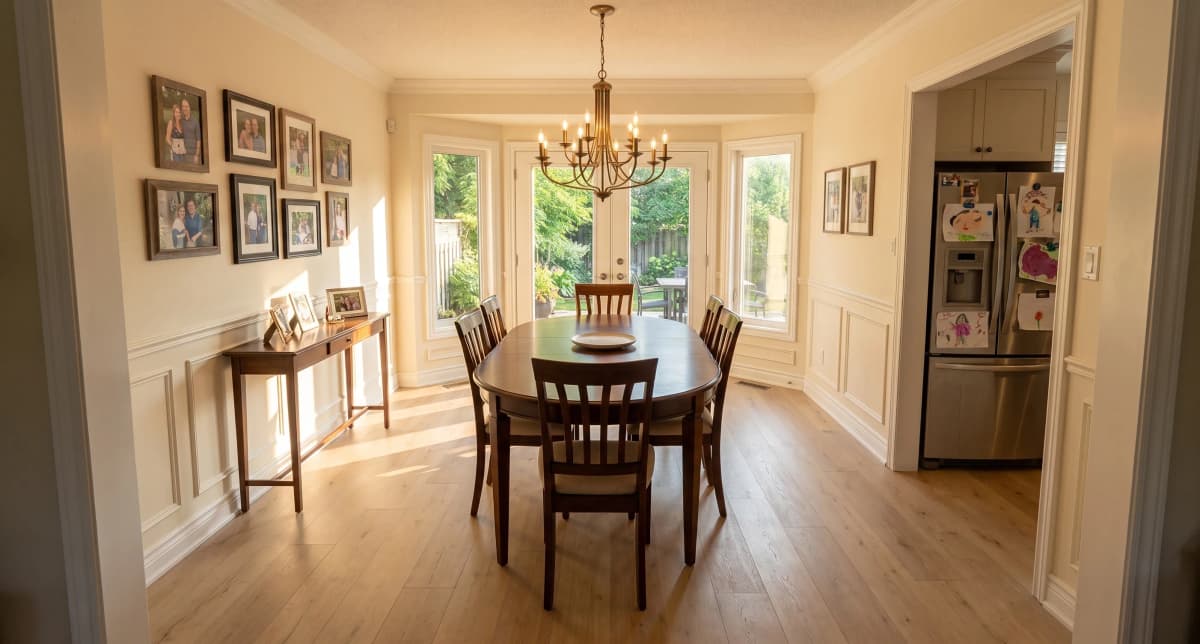
Flooring installation in Markham typically costs between $3.50 and $9.00 per square foot installed, depending on the material you choose, your subfloor condition, and whether stairs or carpet removal are part of the job. For a 1,500 sqft main floor — which is close to the average for a semi-detached or townhome in Markham's Cornell, Unionville, or Cathedraltown neighbourhoods — you're looking at a total project budget of roughly $5,250 to $13,500. That range is wide because material choice is the single biggest variable. This guide breaks down every factor so you can plan accurately before a single plank goes down.
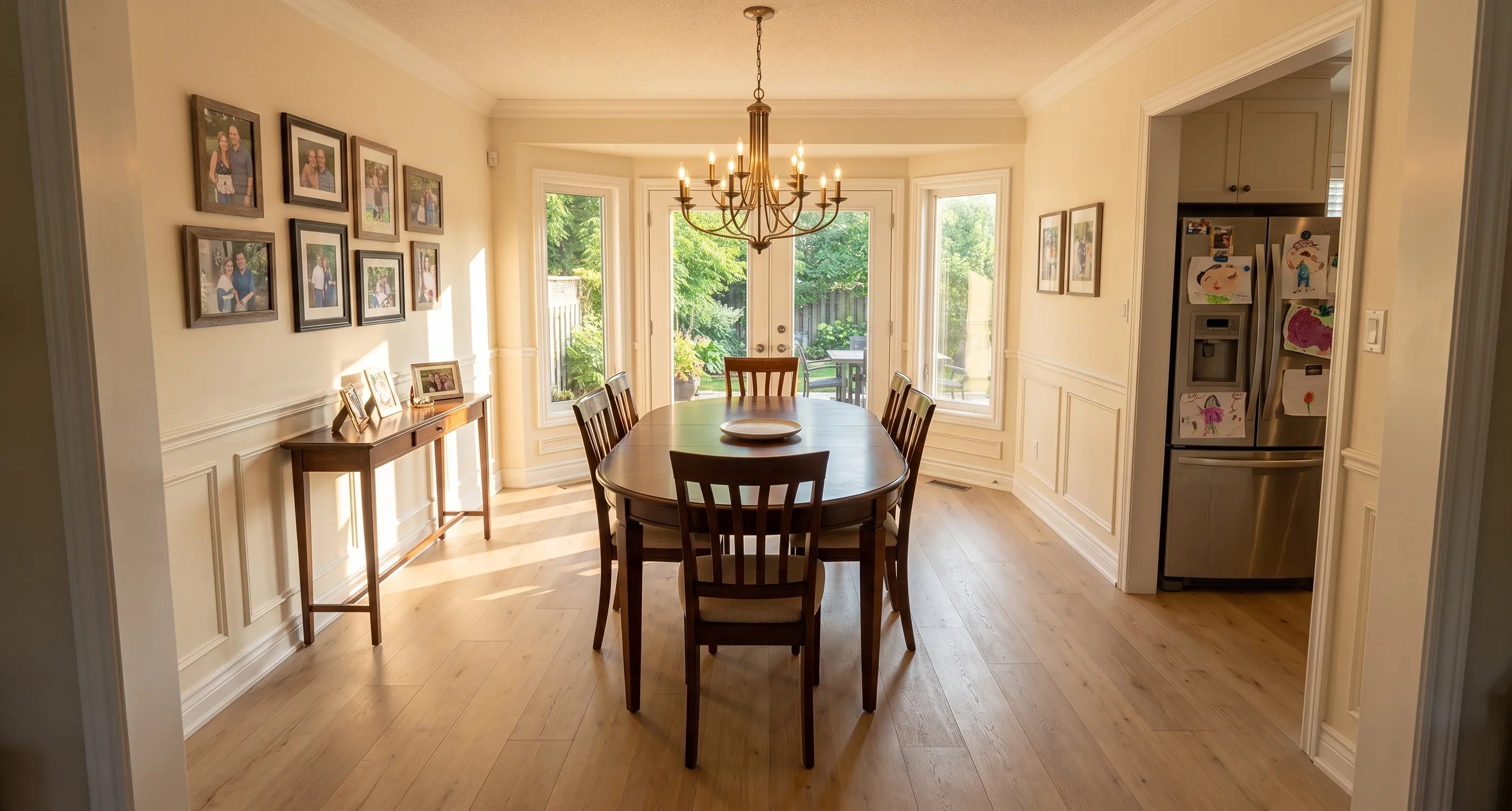
What Does Flooring Installation Actually Cost in Markham?
Labour rates in the GTA run higher than national averages. Expect to pay $1.50–$3.00 per sqft for labour alone on a standard floating floor installation (LVP or laminate). Glue-down vinyl and nail-down hardwood are more labour-intensive and typically run $2.50–$4.50 per sqft for labour. Here's how the full installed cost breaks down by material:
| Material | Product Cost ($/sqft) | Labour ($/sqft) | Total Installed ($/sqft) | Waterproof? | Best For |
|---|---|---|---|---|---|
| Dry-Back Vinyl (Glue-Down) | $2.69–$4.00 | $2.50–$4.00 | $5.19–$8.00 | Yes — 100% waterproof | Commercial, high-traffic, below-grade |
| Floating LVP / SPC | $3.00–$5.50 | $1.50–$2.50 | $4.50–$8.00 | Yes — 100% waterproof | Whole-home, basements, kitchens |
| 12mm Waterproof Laminate | $2.99–$4.50 | $1.50–$2.50 | $4.49–$7.00 | 72-hour waterproof protection | Living rooms, bedrooms, low-moisture areas |
| Engineered Hardwood | $4.79–$9.00 | $2.00–$3.50 | $6.79–$12.50 | No — moisture-sensitive | Main floors, above-grade living areas |
| Solid Hardwood | $6.00–$12.00 | $3.00–$5.00 | $9.00–$17.00 | No — not suitable for basements | Above-grade main floors, formal dining |
For a detailed breakdown of what drives these numbers, see our 2026 Flooring Cost Guide for Toronto. You can also get a project-specific estimate using our online quote calculator — enter your square footage and material preference for an instant ballpark.
The 3 Materials We Install Most in Markham (And Why)
1. Dry-Back Vinyl — The Commercial-Grade Option for Busy Homes
Glue-down dry-back vinyl is the most dimensionally stable flooring you can install. Because it's adhered directly to the subfloor, there's zero flex, no hollow sound underfoot, and no risk of the planks shifting in high-traffic areas. The Duca by NAF AquaPlus Commercial 3mm Dry-Back Vinyl ($2.69/sqft) is a strong choice for Markham homeowners who want a commercial-grade surface without the commercial price tag. It's 100% waterproof, handles pet accidents and spills without any swelling risk, and at 3mm with a glue-down installation, it sits nearly flush with adjacent tile — which matters when you're transitioning between rooms in an open-concept layout.
The trade-off: removal is harder than a floating floor. If you ever want to change materials, plan for more labour time and potentially adhesive residue on the subfloor. For most people who are installing to live in the home long-term, that's a non-issue. Browse our full vinyl flooring collection to see thickness and wear-layer options.
2. 12mm Waterproof Laminate — The Budget-Conscious Upgrade
If your priority is the look of hardwood at a fraction of the cost, 12mm waterproof laminate delivers the closest visual match. The 2024 by Evergreen Building Materials 12mm Waterproof Laminate ($2.99/sqft) offers 72-hour waterproof protection — meaning if a glass of water sits on it overnight, you're fine. What it won't survive is a slow basement leak or a dishwasher that drips unnoticed for a week. Be honest with yourself about your home's risk profile before choosing laminate for kitchens or basements.
At 12mm, this product has a noticeably solid feel underfoot — thinner laminates (7–8mm) are where you get the hollow tap sound that makes laminate feel cheap. Pair it with a quality underlayment and it performs well for main-floor living areas, bedrooms, and finished basements with low moisture risk. See the full laminate flooring range for AC rating and texture options.
3. Engineered Hardwood — The Real Wood Option That Actually Works in Ontario
Solid hardwood is not suitable for basements, and it's risky in any room with fluctuating humidity — which describes most GTA homes from November through March. Engineered hardwood solves this by using a real hardwood veneer over a plywood core, which is far more dimensionally stable across humidity swings. The Natural by NAF 6½" Hickory Engineered Hardwood ($4.79/sqft) is a wide-plank format that reads as genuinely premium — the 6.5" width is wide enough that you see the full grain character of the hickory. It can be installed floating or glue-down on above-grade and on-grade concrete slabs (with a proper moisture barrier). It cannot be installed below grade.
If you're comparing engineered to solid, the honest answer is: for most Markham homes, engineered is the smarter choice. Solid hardwood is ideal if you want to sand and refinish multiple times over decades. Engineered can typically be refinished once or twice depending on the veneer thickness. Explore our engineered hardwood collection for species, stain, and finish options.
GTA-Specific Installation Realities Markham Homeowners Need to Know
National flooring guides don't account for what's actually happening in Markham homes. Here's what does:
Subfloor Conditions in 2000s–2010s Markham Builds
The majority of Markham's housing stock — the detached and semi-detached homes in communities like Cornell, Greensborough, and Wismer — were built between 1999 and 2015. These homes typically have OSB subfloors on the main and upper levels, and concrete slabs in the basement. OSB is generally in good shape unless there was a water event, but it does require checking for squeaks and high spots before installation. Any high spot over 3/16" across 10 feet needs grinding or self-levelling compound — skipping this step is the #1 cause of floating floor failures and warranty voids.
Basement concrete slabs in the GTA are notorious for moisture migration, especially in homes without a proper vapour barrier. Before installing any flooring in a Markham basement, a moisture test (calcium chloride or RH probe) is non-negotiable. This is why we recommend 100% waterproof waterproof flooring options for any below-grade application.
Freeze-Thaw Cycles and Expansion Gaps
Ontario winters drive indoor humidity as low as 25–30% RH when heating systems run continuously. Summers can push humidity to 60–70% RH in unconditioned spaces. This seasonal swing is why expansion gaps (typically 1/4" to 3/8" around the perimeter) are mandatory — not optional — for all floating floors. Installers who skip or minimize expansion gaps to avoid buying extra trim are setting you up for buckling by February. Our installation team follows manufacturer specs on every job.
Builder-Grade Flooring That's Aging Out
If your Markham home still has the original builder-installed laminate or vinyl from 2005–2012, it's likely at end of life. Early 2000s laminate was typically 7–8mm with a thin AC2 wear layer — it scuffs, chips, and the joints swell from years of mopping. Replacing it is one of the highest-ROI upgrades you can make before listing a home, or simply to stop living with flooring that looks worn out.
What's Included in a BBS Flooring Installation — and What Costs Extra
Transparency matters here because flooring quotes vary wildly depending on what's included. Our standard flooring installation service includes:
- Subfloor inspection and minor prep (filling small gaps, securing loose boards)
- Installation of your chosen flooring material
- Perimeter trim (baseboards or quarter-round, depending on what's existing)
- Transition strips between rooms
- Cleanup and debris removal
What typically costs extra:
- Carpet removal: $0.50–$1.00/sqft depending on carpet type and staple density. We offer a dedicated carpet removal service — this is worth doing professionally rather than DIY, especially with tack strips on hardwood subfloors.
- Subfloor levelling: Self-levelling compound runs $1.50–$3.00/sqft for areas that need it. Grinding high spots is usually included for minor issues.
- Stair installation: Stairs are priced per step, typically $35–$65 per step depending on material and whether you're doing a full wrap or just treads. See our stair installation page for details.
- Furniture moving: We move standard furniture but not pianos, built-ins, or appliances.
How to Get an Accurate Quote Before You Commit
The single biggest mistake Markham homeowners make is getting a per-sqft quote over the phone without a site visit. Subfloor conditions, room configurations, the number of transitions, and whether stairs are involved can swing a project cost by 20–30%. The right process is:
- Use the online calculator to get a rough range: BBS Quote Calculator.
- Book a free in-home measurement — our team visits, checks the subfloor, measures accurately (accounting for waste factor), and gives you a written quote: Free Measurement.
- Visit the showroom at 6061 Highway 7, Markham to see and feel materials before deciding. Samples on a screen don't tell you how a floor feels underfoot or how it reads in natural light.
If you're working with a tighter budget, check our clearance flooring section — end-of-run stock at significant discounts, same quality materials. Also worth reviewing our grade guide to understand how wear layer thickness and AC ratings translate to real-world durability.
Your next step
Removal and installation are quoted together so there are no surprises at invoice time: carpet removal is $1.00 per sqft, vinyl, laminate or hardwood removal $1.50 per sqft, and floating installs $2.00 per sqft. book a free in-home measurement and we confirm the numbers on site, or call (647) 428-1111. Browse the full in-stock catalogue to pick the new floor while you are at it.
Frequently Asked Questions
How long does flooring installation take in a typical Markham home?
For a 1,200–1,500 sqft main floor with a floating LVP or laminate, expect 1–2 days for installation once the subfloor is prepped. Glue-down vinyl adds drying time and typically runs 2–3 days. Engineered hardwood nail-down installations on larger homes (2,000+ sqft) can take 3–4 days. Stairs add half a day to a full day depending on count and complexity.
Can I install new flooring directly over my existing floor?
Sometimes, but not always. Installing over existing vinyl or laminate is possible if it's fully adhered, level, and in good condition — but it raises your floor height, which affects door clearances and transitions. Installing over existing hardwood is generally not recommended because it adds height and can hide moisture issues. In most cases, removal gives you a cleaner result and better subfloor visibility. Our team will assess during the free measurement visit.
Is vinyl or laminate better for a Markham basement?
Vinyl — specifically 100% waterproof LVP or dry-back vinyl — is the right choice for Markham basements. Laminate, even 12mm waterproof laminate with 72-hour protection, is not designed for the moisture levels typical of below-grade concrete slabs in Ontario. A slow moisture migration from the slab over months will eventually compromise laminate. Vinyl's waterproof core means moisture from below doesn't damage the material itself.
Do I need to remove baseboards before installation?
For floating floors (LVP, laminate), the cleaner approach is to remove baseboards so the floor runs underneath them — this gives a professional finish without visible quarter-round. For glue-down or nail-down installations, baseboards typically come off as well. Our installers handle baseboard removal and reinstallation as part of the standard process. If your baseboards are painted and caulked, budget for minor touch-up painting after reinstallation.
What's the best flooring for a Markham home with dogs?
For homes with large or active dogs, prioritize scratch resistance and waterproofing. A commercial-grade dry-back vinyl like the Duca NAF AquaPlus (3mm, $2.69/sqft) handles both — the glue-down installation means no movement or noise when dogs run across it, and the waterproof core handles accidents without swelling. If you prefer the look of hardwood, a hard-species engineered hardwood (hickory, white oak) with an aluminum oxide finish is more scratch-resistant than softer species like maple or pine. Avoid solid hardwood in high-dog-traffic areas — it dents and scratches more visibly.
How much extra material should I order to account for waste?
The standard waste factor for straight-lay installations is 10%. For diagonal or herringbone patterns, order 15%. For rooms with many cuts (L-shaped rooms, lots of doorways), 12% is a safe buffer. Ordering short and having to match a dye lot weeks later is a real problem — it's always cheaper to have a few extra boxes than to run short mid-job.
Ready to move forward? Book your free in-home measurement and get a written quote with no obligation. Or call us directly at (647) 428-1111 to speak with someone who knows Markham subfloors, Markham housing stock, and what actually holds up here. Our showroom is at 6061 Highway 7, Markham — walk in any time to see the full product range in person.