What Flooring Increases Home Value Most? (2026 GTA Guide)
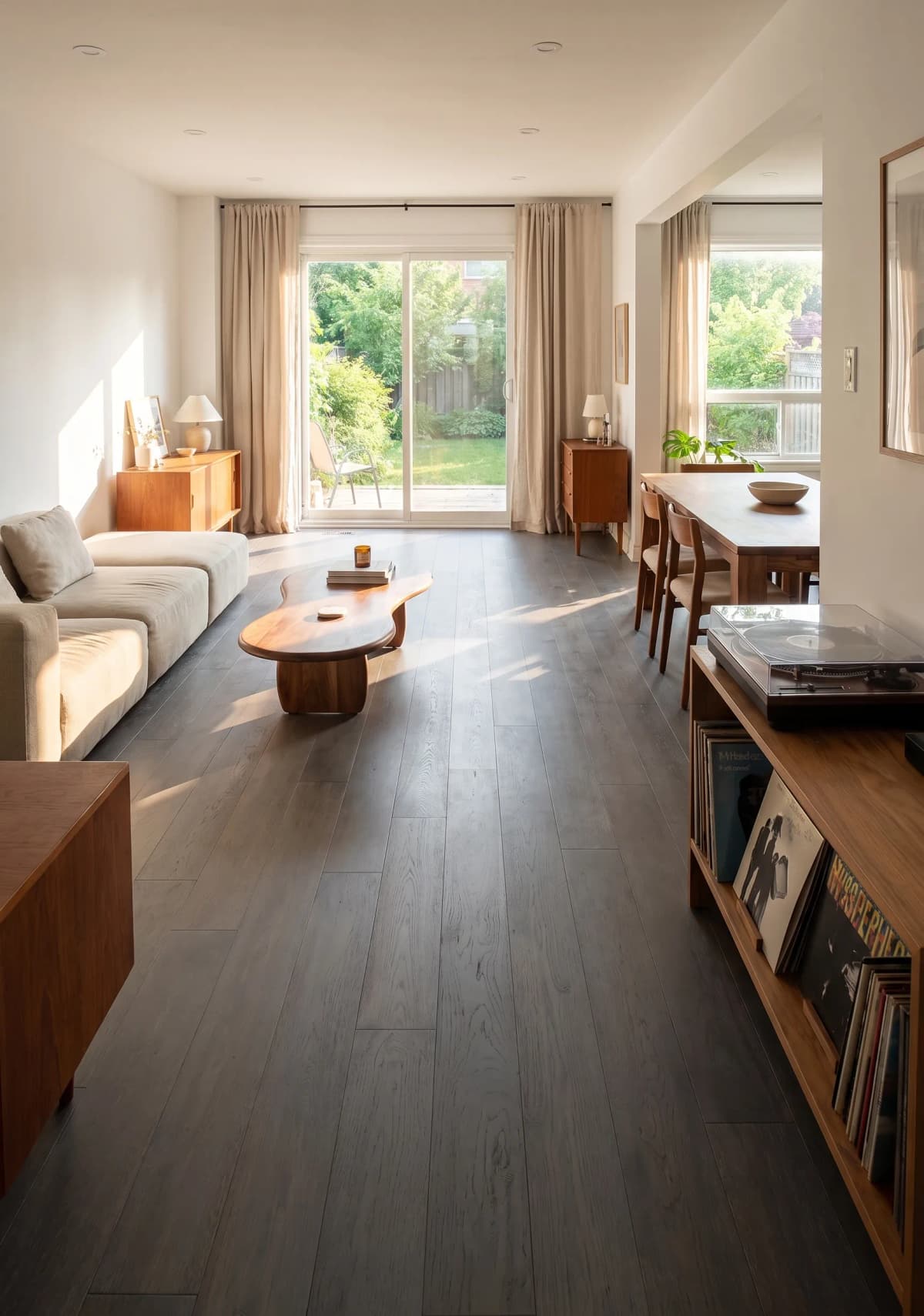
What Flooring Increases Home Value Most?
Hardwood flooring — engineered or solid — consistently delivers the highest return on investment when selling a home in the Greater Toronto Area. GTA realtors report that homes with hardwood throughout the main floor sell 3–5% faster and command $8,000–$15,000 more on average compared to identical homes with builder-grade carpet or aging laminate. That said, the right answer depends on which room you're flooring, your budget, your timeline to sale, and whether your subfloor is concrete or wood. A $5.69/sqft engineered hardwood in the living room hits differently than a $2.99/sqft vinyl in a basement — and both can move the needle if chosen strategically.
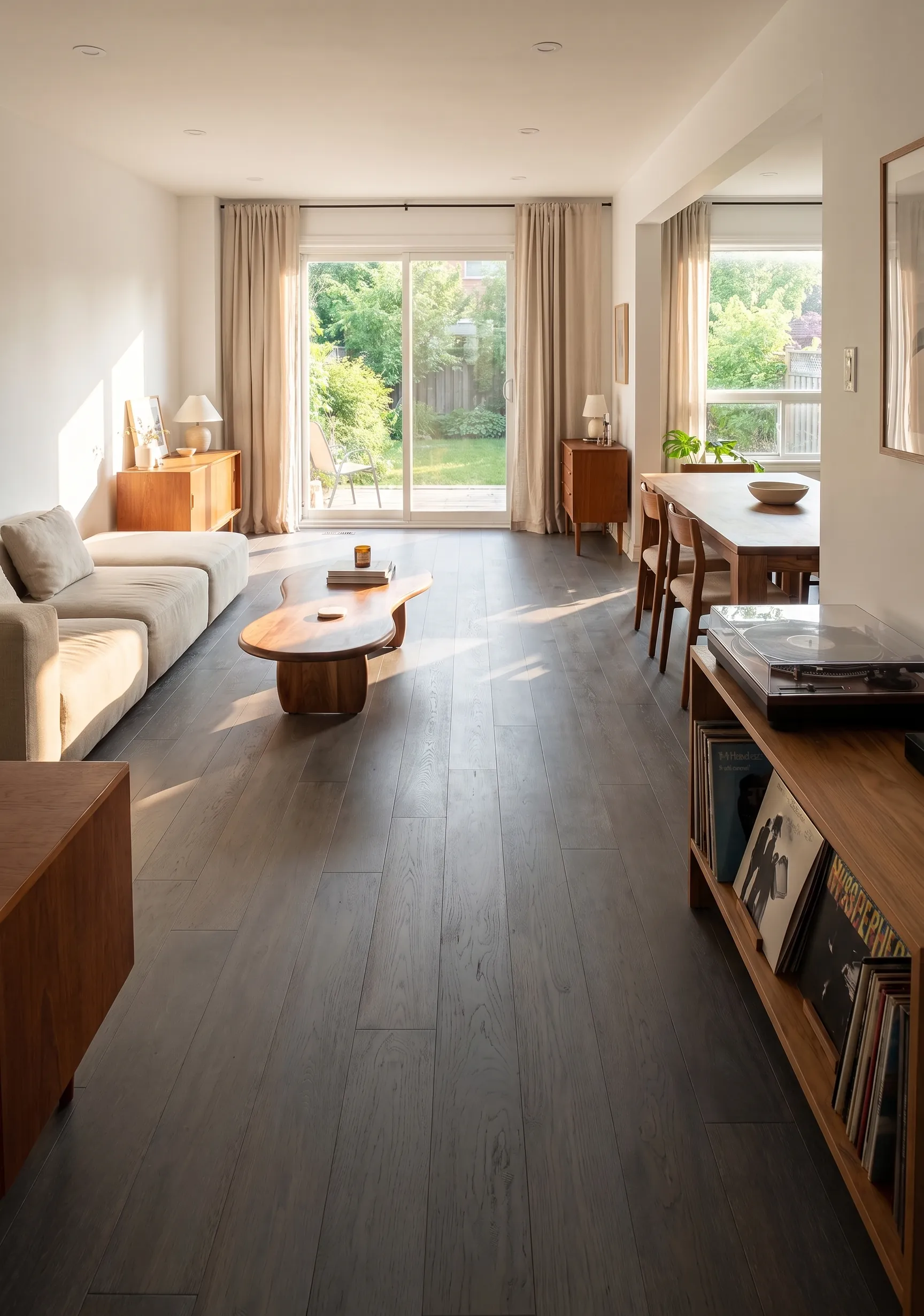
Why Hardwood Still Wins With Buyers
Ask any GTA realtor what their clients ask for in a resale home and the answer is almost always the same: hardwood floors. This isn't aesthetic preference — it's financial psychology. Buyers see hardwood as a permanent upgrade they won't have to revisit for 20–30 years. Carpet signals hidden problems (pet odors, stains, mystery subfloor conditions). Laminate signals builder-grade. Hardwood signals someone took care of this home.
The data backs this up. A 2024 National Association of Realtors survey found that 54% of home buyers said they would pay more for a home with hardwood floors — and the average premium they'd pay was $2,080 over asking. In the GTA, where detached homes regularly trade above $1M, that psychological lift can be considerably higher. Local agents frequently advise sellers to replace main-floor carpet with hardwood before listing, citing it as one of the few renovations that reliably returns more than it costs.
The caveat: not all hardwood is equal, and solid hardwood is not appropriate for every situation. If your main floor sits over a concrete slab (common in GTA townhomes and condos built in the 2000s), engineered hardwood is the correct choice — it handles the moisture vapor that concrete emits without the cupping and gapping that solid planks develop over time.
Engineered Hardwood vs. Solid Hardwood: Which Adds More Value?
Most buyers cannot tell the difference between a quality engineered hardwood and solid hardwood once it's installed — especially in wider plank formats. What they see is the real wood face. What matters for value is species, plank width, and finish quality.
Wide-plank European Oak and Hickory are the formats moving GTA listings right now. The Versailles 7½" European Oak by Northernest ($5.19/sqft) is a strong example of what buyers respond to: the 7.5-inch plank width reads as premium, the wire-brushed texture hides everyday wear, and the European Oak species photographs beautifully for listings. At $5.19/sqft in material alone, a 1,200 sqft main floor costs roughly $6,228 in product — plus $3–$4/sqft for professional installation, bringing the total project to approximately $9,800–$11,000. That investment routinely returns $12,000–$18,000 in added sale price in current GTA market conditions.
If you prefer a more textured, American character look, the Transitional Gray 6½" Engineered Hickory by Canadian Standard ($5.69/sqft) offers the natural variation of hickory — the hardest domestic North American species — in a cool gray tone that photographs well and appeals to the 35–50 buyer demographic dominating GTA resale purchases. Hickory's Janka hardness rating of 1820 also means it will look good at the time of sale even if you live in the home for another 3–5 years before listing.
Solid hardwood still commands a slight premium in the minds of some buyers, particularly in older Markham, Richmond Hill, and North York homes where solid wood was the original spec. However, the installation flexibility of engineered — it can float, glue, or nail down, and works on all subfloor types — makes it the practical recommendation for most GTA homes built after 1990.
Room-by-Room ROI: Where Flooring Upgrades Pay Off Most
Not every room has equal impact on perceived value. Here's how to prioritize your flooring budget for maximum return:
- Main floor living/dining/kitchen (highest ROI): This is the first thing buyers see. Consistent hardwood or engineered hardwood throughout the main floor — no transitions between rooms — is the single highest-return flooring investment you can make. Buyers deduct mentally when they see mismatched floors or carpet in one room and hardwood in another.
- Primary bedroom (high ROI): Buyers increasingly want hardwood here too. Carpet in the primary bedroom is becoming a listing liability in the GTA above $900K price point.
- Basement (moderate ROI, different calculus): Buyers don't expect hardwood in the basement — they expect it to be functional and finished. A waterproof vinyl plank that looks like wood is the smart play here. It signals a finished, livable space without the risk of moisture damage that would come with wood over concrete.
- Bathrooms (low flooring ROI): Tile is expected. Upgrading from builder tile to large-format porcelain matters more than the flooring type itself.
- Stairs (often overlooked, high visual impact): Buyers walk up your stairs on the way to every bedroom. Matching stair nosings and risers to your main floor hardwood creates a cohesive, high-end impression that photographs well and reads as intentional design.
Flooring Value Comparison Table
| Material | Material Cost (GTA) | Waterproof? | Buyer Perception | Best For (Value) | Estimated ROI |
|---|---|---|---|---|---|
| Solid Hardwood | $6–$12/sqft | No | Premium / Legacy | Main floor, wood subfloor only | 70–80% cost recovery + speed of sale |
| Engineered Hardwood | $4–$9/sqft | No — moisture-resistant only | Premium / Modern | Main floor, any subfloor | 75–85% cost recovery + speed of sale |
| Luxury Vinyl Plank (LVP/SPC) | $2.50–$5/sqft | Yes — 100% waterproof | Practical / Functional | Basement, kitchen, bathrooms | 60–70% cost recovery, strong in basements |
| Laminate | $1.50–$3.50/sqft | Water-resistant (not waterproof) | Neutral / Builder-grade | Bedrooms, low-traffic areas | 40–55% cost recovery |
| Carpet | $2–$5/sqft installed | No | Negative in most GTA markets | Basement rec rooms (budget) | Negative ROI in main living areas |
The GTA-Specific Reality: What Local Buyers Actually Want
The GTA housing market has specific characteristics that national flooring guides ignore entirely. Here's what actually matters locally:
Subfloor types in GTA homes: Homes built before 1985 in areas like North York, Scarborough, and older Markham neighborhoods typically have plywood subfloors over joists — ideal for solid or engineered hardwood. Homes built between 1990–2010 in Markham, Richmond Hill, Vaughan, and Mississauga are frequently on concrete slab at grade level or have concrete in the basement — which rules out solid hardwood and makes engineered the correct choice. If you're unsure, this is something our team checks during a free in-home measurement.
Freeze-thaw cycles and moisture: Ontario's climate means concrete slabs experience significant moisture vapor fluctuation between November and March. Installing solid hardwood over concrete — even with a vapor barrier — is a risk that will likely show up as cupping or gapping within 2–3 heating seasons. Engineered hardwood's cross-ply construction resists this movement. This is not a theoretical concern; it's a common call we receive from homeowners who had solid hardwood installed by someone who didn't account for GTA's climate reality.
What GTA buyers are filtering for in 2025–2026: Real estate agents in the 905 and 416 report that buyers in the $800K–$1.4M range are specifically looking for wide-plank hardwood (5" minimum, 6–8" preferred), neutral warm tones (not the cool gray of 2015–2020), and consistent flooring throughout the main level with no transitions. The white oak category has seen the most growth in buyer requests since 2023.
Basement finishing: In the GTA, a finished basement adds $40,000–$80,000 in perceived value depending on the neighborhood. The flooring choice matters here — buyers want to see a livable space, not a utility room. A 100% waterproof vinyl plank like the Tobermory NAF AquaPlus Select 7mm ($2.99/sqft) is the practical choice: permanently waterproof, warm underfoot compared to tile, and convincingly wood-like in appearance. At $2.99/sqft for a 600 sqft basement, the material cost is under $1,800 — a fraction of what it contributes to the finished basement's perceived value.
See our full GTA Flooring Cost Guide for current installed pricing across all categories.
The Carpet Problem: Why Removal Comes Before Installation
If your home has carpet on the main floor, the first question isn't "what flooring should I install" — it's "what's under this carpet." In GTA homes built between 1975 and 1995, original hardwood is frequently hiding under builder-installed carpet. Pulling that carpet and refinishing the existing hardwood can cost as little as $1.50–$2.50/sqft — significantly less than new flooring — and delivers the same buyer response.
If the subfloor is plywood with no salvageable hardwood, professional carpet removal is the necessary first step before any new flooring installation. Budget $0.50–$1.00/sqft for removal and disposal. Don't let a contractor skip this step or install over existing carpet — it creates height transitions at doorways and compromises the integrity of the new floor.
Our quote calculator includes carpet removal costs so you can see the full project number before committing.
What About Waterproof Flooring Throughout?
A common question from families with young children or pets: should I just do waterproof flooring everywhere for practicality? The honest answer is: it depends on your timeline and buyer profile.
If you're selling within 12–24 months, hardwood will outperform vinyl with most GTA buyers above $900K. The perception gap is real. If you're staying for 5–10 years and have kids, dogs, or both, a high-quality SPC vinyl throughout the main floor is a legitimate choice — it's 100% permanently waterproof, extremely durable, and the technology has advanced to the point where 6mm+ products with attached underlayment are genuinely comfortable underfoot. When you do sell, you'll likely need to disclose it as vinyl, but a clean, modern vinyl floor beats a scratched or water-damaged hardwood every time.
The worst outcome for home value is hardwood that has been visibly damaged — deep scratches, water staining, or pet odor absorption. A well-maintained vinyl is worth more at sale than neglected hardwood.
How to Maximize Your Flooring Investment Before Listing
- Replace carpet on the main floor first. This is the highest-ROI single action you can take. Even a mid-grade engineered hardwood beats carpet in buyer perception.
- Match your floors throughout the main level. No transitions between living room, dining room, and kitchen. Consistent flooring reads as intentional and high-end.
- Don't ignore the stairs. Matching stair treads and risers to your main floor creates a cohesive look that photographs well and impresses buyers on the way to every bedroom.
- Finish the basement with waterproof vinyl. A finished basement with clean, modern flooring adds significantly more perceived value than the cost of the flooring itself.
- Get a professional measurement before budgeting. GTA homes have irregular layouts, waste factors vary by plank size and installation angle, and a professional measurement prevents the costly mistake of ordering too little — or too much. Our free measurement service covers the full GTA.
Your next step
The fastest way to turn research into a firm number is to book a free in-home measurement: we confirm the square footage, check the subfloor and quote floor and installation together. Browse the full in-stock catalogue with live pricing, call (647) 428-1111, or visit our Markham showroom (Mon to Sat, 10am to 5pm).
Frequently Asked Questions
Does hardwood flooring actually increase home sale price in the GTA?
Yes — consistently. GTA realtors report that main-floor hardwood contributes $8,000–$15,000 in additional sale price on average for homes in the $800K–$1.4M range, and can reduce days on market by 15–25%. The exact premium depends on species, plank width, and condition at time of sale. Wide-plank European Oak and Hickory are currently the formats generating the strongest buyer response in the 905 and 416.
Is engineered hardwood as good as solid hardwood for resale value?
For most GTA homes, yes — and in some cases better. Buyers cannot distinguish a quality engineered hardwood from solid once it's installed. Engineered hardwood is also the correct choice for any home with a concrete subfloor, which includes the majority of GTA townhomes and condos built after 1990. Solid hardwood installed over concrete in Ontario's climate will cup and gap within a few heating seasons — a problem that will show up in a buyer's home inspection.
What's the best flooring for a GTA basement to add value?
A 100% waterproof vinyl plank (SPC construction, 6mm+) is the correct choice for GTA basements. Concrete slabs emit moisture vapor year-round, and Ontario's freeze-thaw cycles intensify this in winter. Hardwood — solid or engineered — is not suitable for below-grade installation. A clean, modern waterproof vinyl signals a finished, livable space to buyers and contributes meaningfully to the overall impression of a well-maintained home.
How much does it cost to replace flooring before selling a house in Toronto?
For a typical 1,200–1,500 sqft GTA main floor: engineered hardwood at $5–$6/sqft material plus $3–$4/sqft installation totals $9,600–$15,000 fully installed, including carpet removal. Luxury vinyl plank at $3–$4/sqft material plus $2.50–$3.50/sqft installation runs $6,600–$11,250 for the same area. Use our quote calculator for a project-specific number, or see the full GTA flooring cost breakdown.
Does laminate flooring hurt home value?
It depends on the quality and condition. Fresh, high-quality laminate (12mm AC4+) is neutral to slightly positive — it reads as clean and functional. Older laminate (pre-2015, thin, with visible seams or swelling at edges) actively hurts value because buyers immediately price in a replacement. Laminate will swell if water sits for 72+ hours, and the visible damage from past moisture events is a red flag in buyer walk-throughs. If your laminate shows any swelling, lifting, or discoloration, replace it before listing.
Should I install the same flooring throughout the whole house before selling?
On the main level, yes — consistent flooring throughout the living room, dining room, hallway, and kitchen (where possible) is strongly recommended. Mixed flooring types and excessive transitions signal a piecemeal renovation history and give buyers something to mentally deduct. In bedrooms, matching the main floor species and tone is ideal but not always required. Bathrooms and the basement follow different rules and should be treated separately based on the appropriate material for each space.
Ready to see what flooring upgrade makes sense for your home and budget? Visit our showroom at 6061 Highway 7, Markham to see wide-plank engineered hardwood, SPC vinyl, and everything in between in full-size samples. Call (647) 428-1111 to speak with a flooring specialist, or book a free in-home measurement and we'll come to you — measure your space, assess your subfloor, and give you a project-specific quote with no obligation.