Carpet to Hardwood Stairs Cost Guide (GTA 2026)
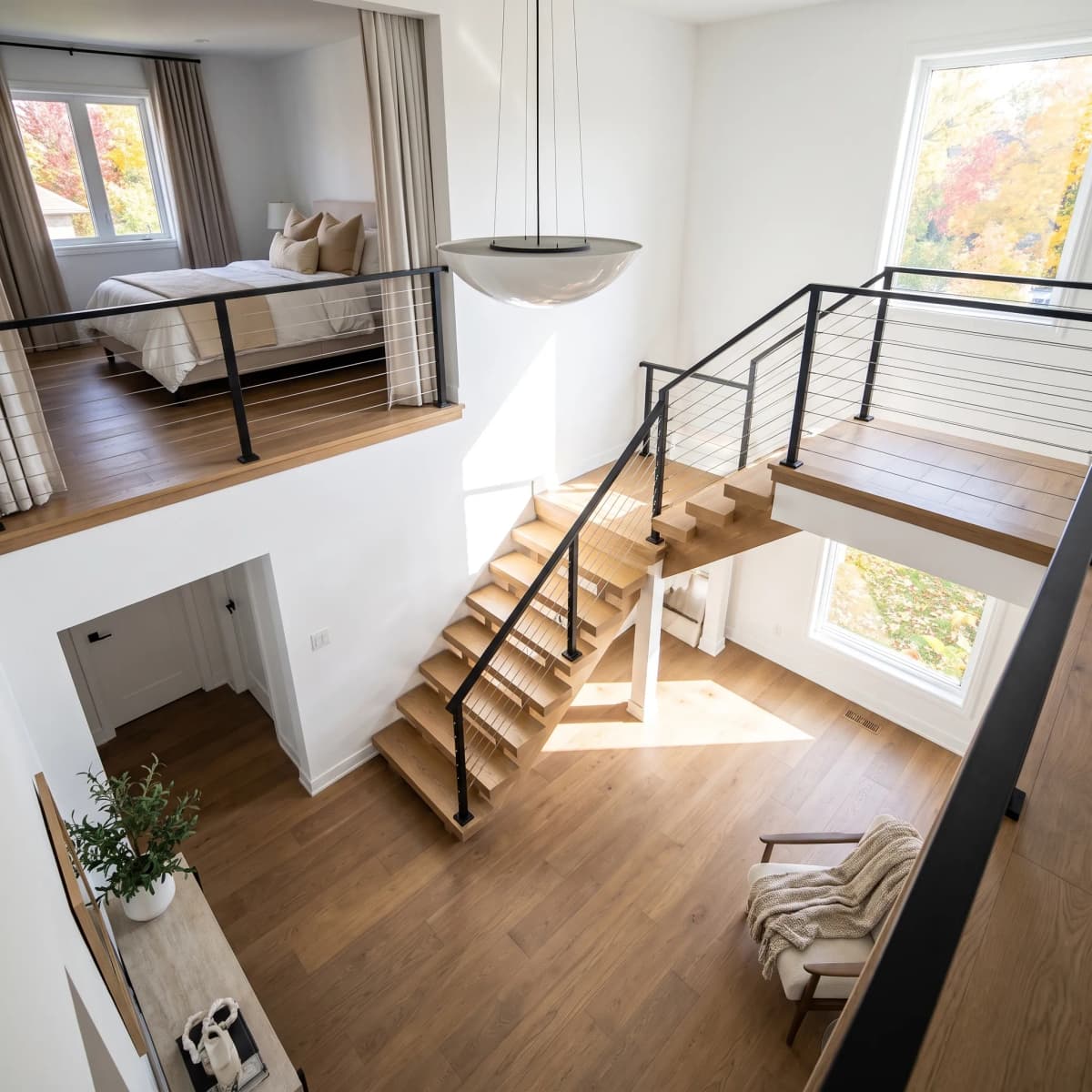
Converting carpeted stairs to hardwood costs more per square foot than almost any other flooring job in your home — and unlike a bedroom or living room, no reputable GTA contractor will give you an honest flat per-step price without seeing your staircase first. That's because a straight run of 13 standard steps with no landing costs dramatically less to convert than a staircase with a curve, a landing, winders, or open risers. This guide breaks down exactly what determines your stair conversion cost: whether you're refinishing hardwood that's hidden under your carpet right now, recapping a plywood/OSB stair with new hardwood treads, or dealing with a specialty staircase that needs custom templating.
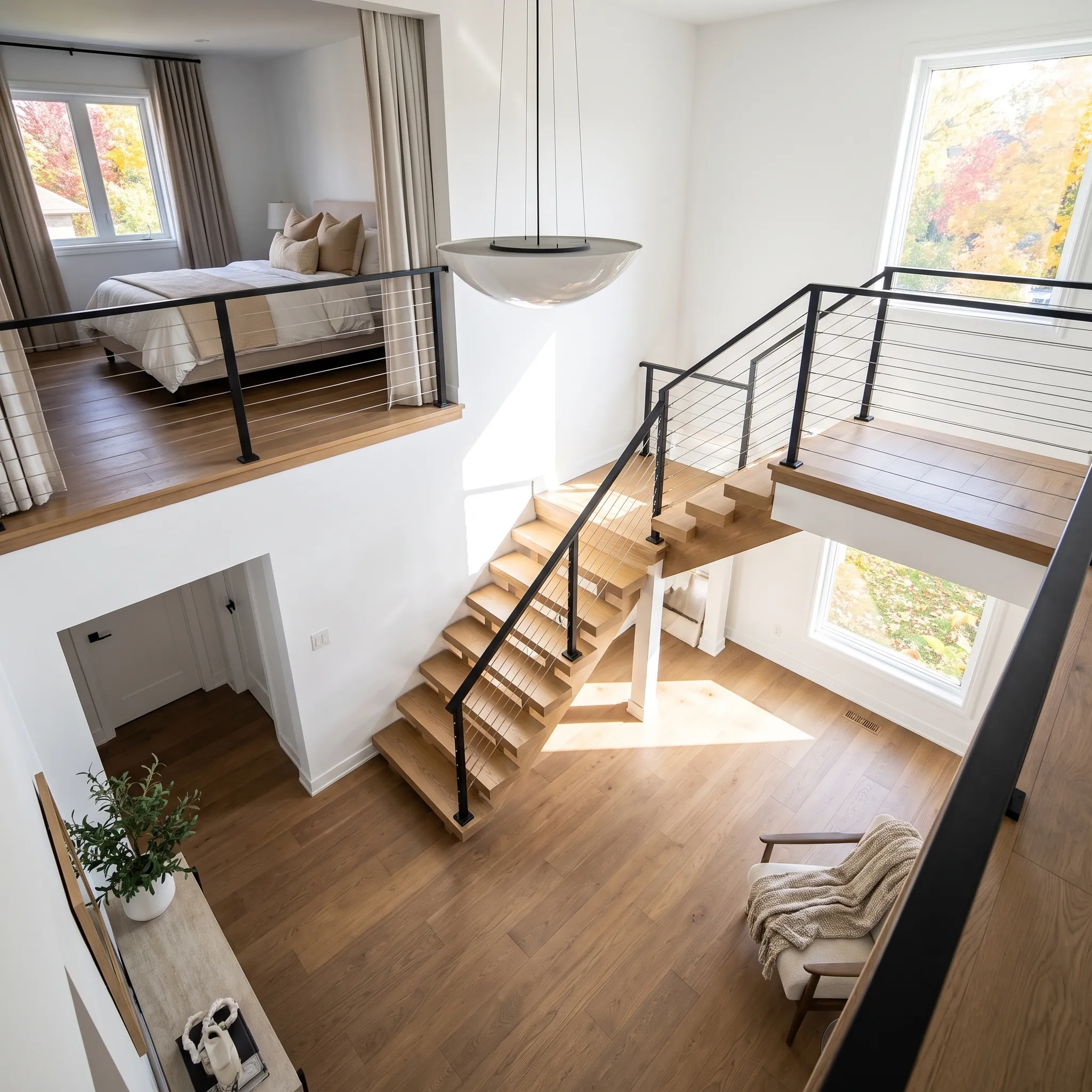
Most homeowners searching this term have already priced a full whole-home flooring conversion and are now zeroing in on the staircase specifically, because it's often quoted separately from the flat rooms. That's the right instinct — stairs are priced by the step, not the square foot, and the factors below explain why.
Refinishing vs. Recapping vs. Full Stair Replacement — What's the Difference?
There are three distinct scenarios, and they land in very different price tiers:
- Refinishing existing hardwood: Many GTA homes built before the mid-1990s — especially in older pockets of Markham, Unionville, and central Toronto — have solid oak stair treads hidden under wall-to-wall carpet. Pull the carpet, and if the wood underneath is intact, sanding and refinishing is the fastest and least expensive path. This is the entry-level option on our stairs page.
- Recapping with new hardwood treads: Builder-grade homes from the 2000s onward almost always have plywood or OSB stair substrates with no hardwood underneath the carpet at all. In this case you're installing new solid or engineered hardwood treads, risers, and stringer trim from scratch — this is the middle tier and the most common scenario we quote in the GTA.
- Specialty steps: Curved stairs, winders, open-riser designs, and landings require custom templating for every single piece because no two are identical. These sit at the top of the pricing tier regardless of species chosen.
On top of any of these, trim pieces — nosing, quarter round, shoe mould — are priced individually since a straight 13-step run needs far fewer pieces than a staircase with a landing and a turn.
What Actually Affects Your Stair Conversion Price?
Six variables determine where your job lands within these tiers:
- Step count: A typical GTA two-storey home has 12–16 steps from main floor to second floor, plus another 12–14 to the basement if you're doing both.
- Substrate condition: Hardwood underneath (refinish) vs. bare plywood/OSB (recap) is the single biggest cost driver.
- Geometry: Straight runs are cheapest. Landings, winders, curves, and open risers all add labor and material complexity.
- Species and finish: Solid hardwood, engineered hardwood, and prefinished vs. site-finished all carry different material costs — see the section below.
- Railings and spindles: If balusters need to be temporarily removed and reinstalled to access the treads properly, that adds labor.
- Colour matching: Matching new stair treads to existing hardwood on the floors above and below often requires custom staining rather than a stock prefinished product.
Because these variables compound differently on every single staircase, we — and every legitimate GTA flooring contractor — confirm final stair pricing only after a free in-home measurement. Anyone quoting a flat per-step price over the phone hasn't seen your stairs.
Carpet Removal and Stair Prep — What's Actually Involved
Removing carpet from a staircase is more labor-intensive than pulling it from a flat room. Tack strips are nailed into each individual tread and riser, staples are often driven directly into the wood or substrate at the nosing, and padding can be glued rather than just stapled. For flat-surface rooms, our standalone carpet removal service runs $1.00/sqft, but stair carpet removal is rolled into the per-step conversion quote because the labor doesn't scale the same way square footage does.
Once the carpet is off, we can finally tell you which tier you're in: intact hardwood underneath means refinishing is on the table; damaged or bare substrate means recapping. This is genuinely impossible to determine without pulling back a corner of carpet or having a technician assess it on-site.
Hardwood Species and Finish Options for Stairs
Stairs see more concentrated foot traffic per square foot than any other surface in your home — every single step gets walked on multiple times a day, at a pivot point (the nosing) that takes the most wear. This is not the place to cut corners on grade or finish; check our grade guide before choosing a species.
Solid hardwood ($5.10–$7.25/sqft) is the traditional choice for stair treads because it can be re-sanded multiple times over its life, which matters given how quickly stair nosing wears compared to a flat floor. Engineered hardwood is increasingly used for treads too, provided the wear layer is thick enough — the Enhance - Lucid Engineered American Oak by Canadian Standard ($6.39/sqft) is a solid option when you want the stairs to match an engineered floor installed elsewhere in the house. If budget matters more than matching an existing oak floor, the African Hickory Engineered Hardwood by Northernest ($4.99/sqft) brings hardwood's natural hickory grain and hardness at a lower price point than most solid options.
One honest caveat: laminate is not our recommendation for stair treads. Products like the Cloud - Platino Laminate by Impressive ($2.45/sqft) work beautifully in adjacent hallways and bedrooms, but laminate stair nosing can become slippery underfoot and doesn't hold up as well to the concentrated point-load of feet landing on the front edge of every step, day after day. If budget is the driver, a hardwood recap on stairs paired with laminate in the connecting rooms is usually the smarter split. Browse full options on our engineered hardwood, solid hardwood, and laminate pages, or check clearance for discontinued runs that can stretch a tight budget further.
| Approach | Waterproof? | Durability | Best For | Cost Tier |
|---|---|---|---|---|
| Refinish existing hardwood | No | High (re-sandable) | Older homes with hardwood hidden under carpet | Entry |
| Recap with engineered hardwood | No | Good, depends on wear layer | Matching an existing engineered floor upstairs | Mid |
| Recap with solid hardwood | No | Highest, re-sandable multiple times | Long-term durability, heavy-traffic staircases | Mid-to-Premium |
| Specialty steps (curved, winders, open-riser) | Depends on material | High, but custom-built | Custom or older homes with non-standard geometry | Premium |
Why Your GTA Staircase Probably Isn't "Standard"
Toronto and GTA housing stock varies enough that quoting your stairs sight-unseen is a genuine liability. Builder-grade subdivisions built from the early 2000s through the 2010s across Markham, Vaughan, and Richmond Hill overwhelmingly used plywood or OSB stair stringers with carpet applied directly to bare wood — no hardwood hiding underneath, meaning recapping is almost always required. Older housing stock in central Toronto and pockets of original Unionville and Thornhill sometimes has solid oak treads under the carpet, which can be refinished at a fraction of the cost of a full recap — but you won't know until the carpet comes up.
Custom-built homes on ravine lots in Markham and Richmond Hill frequently feature open-riser or curved staircases as architectural features, which fall into the specialty tier regardless of species. And if your staircase leads to a basement, remember that solid hardwood is never recommended near a concrete slab prone to moisture — for basement stairs and landings, engineered hardwood or a waterproof vinyl product is the safer call. Check our vinyl and white oak flooring pages if you're trying to match a specific look while managing basement moisture risk.
DIY vs. Professional Installation — Why Stairs Are Not a DIY Project
Stairs are the single most technical and dangerous flooring job in a home. Ontario Building Code has specific requirements around riser height consistency, nosing overhang, and tread depth — get any of these wrong and you've created a trip hazard, not just a cosmetic problem. Squeaks, uneven nosing, and improperly secured treads are the most common results of a rushed or DIY stair job we see when homeowners call us to fix a previous attempt.
Our crews are BBS employees, not subcontractors, and every stair job is backed by our 2-year workmanship warranty (product warranties are handled by the manufacturer). Learn more about how we approach installs on our installation page.
How to Get an Accurate Stair Quote
Start with our quote calculator for a rough sense of material costs if you're bundling stairs with a full-floor project. But for the stairs specifically, the only accurate quote comes from a technician standing on your staircase, counting steps, checking the substrate under the carpet, and noting any curves, landings, or open risers. Book a free in-home measurement and we'll confirm exactly which pricing tier your staircase falls into before any work begins.
Frequently Asked Questions
How much does it cost to convert carpet stairs to hardwood in the GTA?
It depends on whether you're refinishing existing hardwood, recapping with new treads, or dealing with a specialty staircase (curved, winders, open-riser, or landings) — these are three distinct pricing tiers. Because step count and geometry vary on every staircase, final pricing is confirmed after a free in-home measurement rather than quoted as a flat per-step rate over the phone.
Do I need to remove the carpet before getting a quote?
No — a technician can assess your staircase and often tell you what's likely underneath based on the home's age and construction era, but pulling back a small section of carpet at the site visit gives the most accurate read on whether you're looking at a refinish or a full recap.
Is engineered hardwood okay for stairs, or does it have to be solid?
Engineered hardwood can absolutely be used on stair treads provided the wear layer is thick enough to handle repeated point-load traffic at the nosing; solid hardwood remains the traditional choice because it can be re-sanded multiple times over its lifespan, which matters given how quickly stair edges wear compared to flat flooring.
Can I put laminate on my stairs instead of hardwood?
We don't recommend it — laminate stair nosing can become slippery and doesn't hold up as well to the concentrated foot traffic every stair edge takes, so hardwood is the safer and more durable choice for treads even if laminate is used in the connecting rooms.
What's the difference between refinishing and recapping stairs?
Refinishing sands and refinishes hardwood that already exists under your carpet, while recapping installs entirely new hardwood treads, risers, and trim over a bare plywood or OSB substrate — recapping is more common in GTA homes built from the 2000s onward.
Are basement stairs different from main-floor stairs?
Yes — basement stairs are closer to concrete slab moisture, so solid hardwood is not recommended there; engineered hardwood or waterproof vinyl are safer choices for basement stairs and landings.
Ready for real numbers on your specific staircase? Call us at (647) 428-1111 or visit our Markham showroom at 6061 Highway 7 to see stair-grade hardwood samples in person, or book a free measurement and we'll confirm your exact pricing tier on-site.