Vinyl Flooring in Markham: Prices, Products & What to Buy in 2026
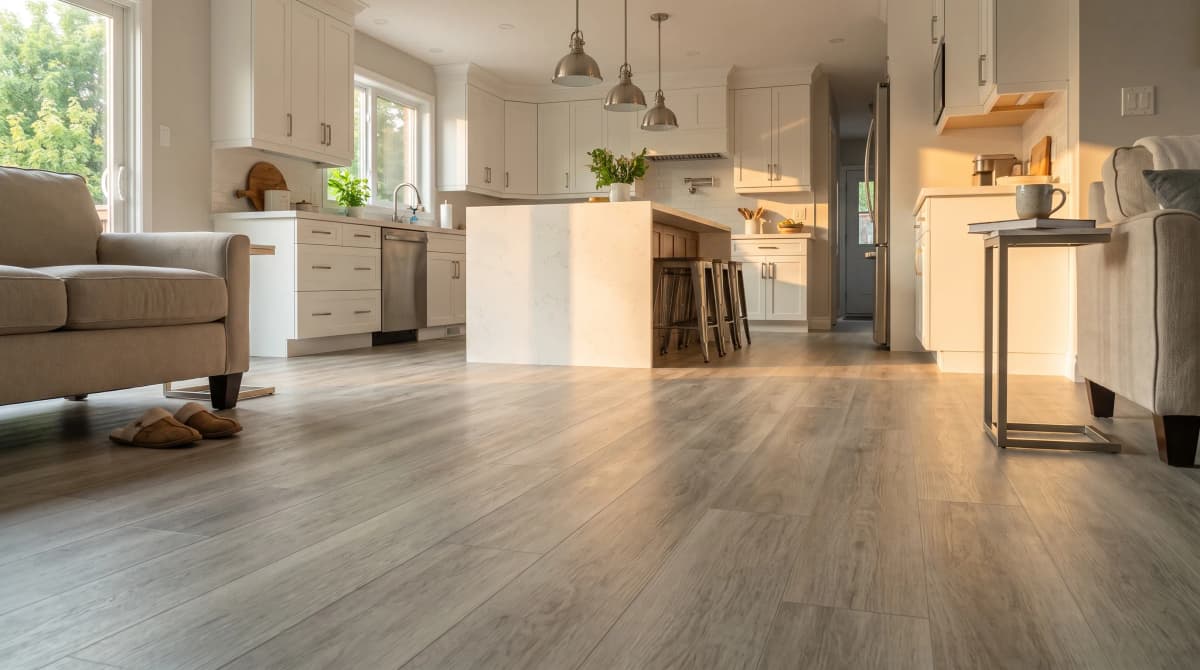
Vinyl flooring is the most practical choice for the majority of Markham homes — and the price range in 2026 runs from $2.49/sqft for entry-level SPC vinyl up to $5.50+/sqft for premium rigid-core options, before installation. It's 100% waterproof, dimensionally stable through Ontario's freeze-thaw seasons, and it installs over concrete slabs without the moisture anxiety that kills engineered hardwood projects. If you're replacing builder-grade carpet or worn laminate in a 1,500–2,200 sqft semi-detached or townhome, vinyl plank is almost certainly the right call — the only real question is which product and thickness.
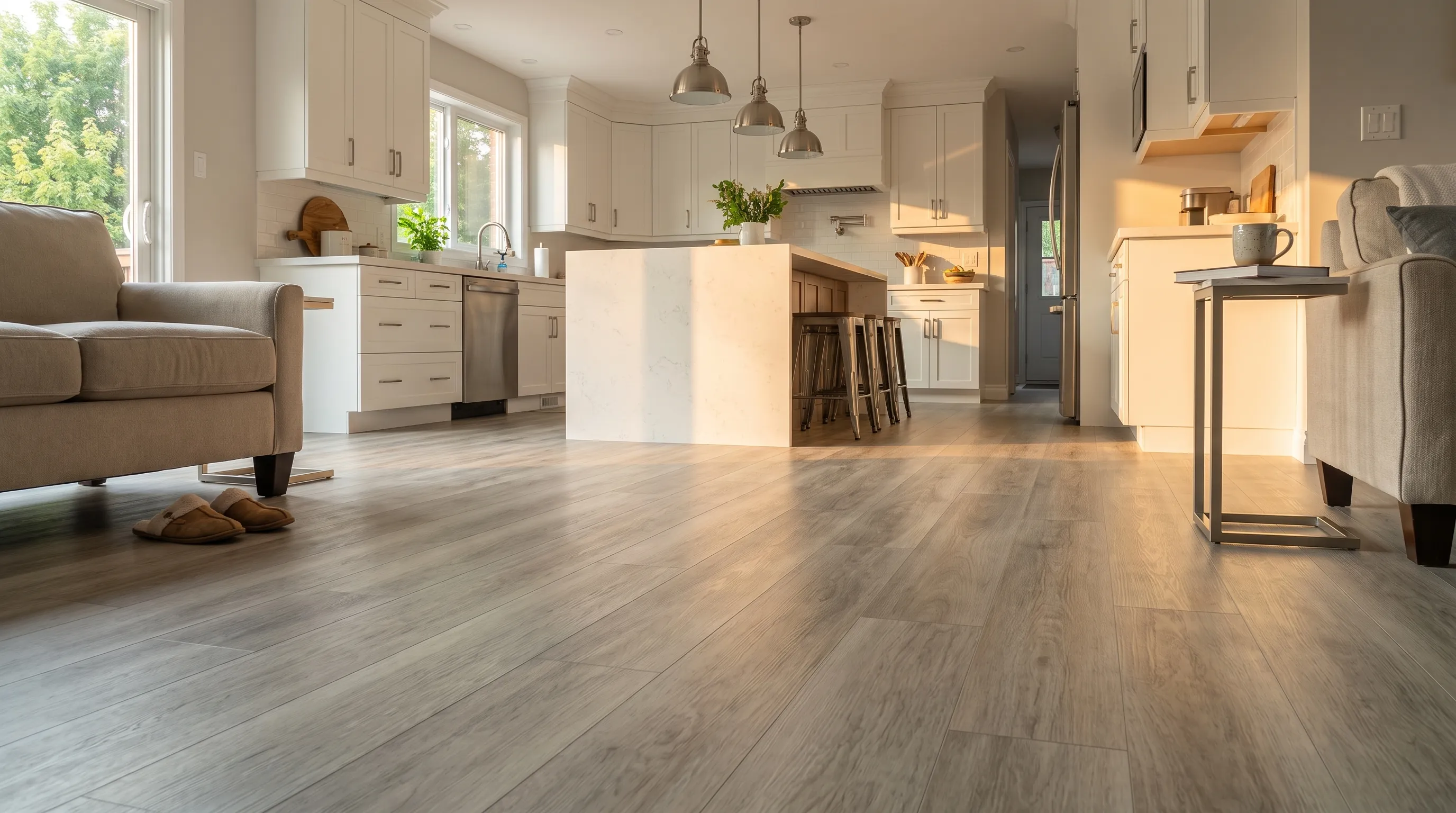
What Does Vinyl Flooring Actually Cost in Markham Right Now?
Here's the honest breakdown for a typical Markham home in 2026. These are real numbers — not "starting at" teaser prices.
- Entry-level SPC vinyl (6–7mm): $2.49–$2.99/sqft for material. Total installed cost on a 1,500 sqft main floor typically runs $6,500–$8,500 including underlayment, transitions, and labour.
- Mid-range SPC vinyl (8mm, wider planks): $3.50–$4.50/sqft material. Installed on 1,500 sqft: $9,000–$12,000.
- Premium rigid-core / designer vinyl: $4.50–$6.00/sqft material. Installed: $12,000–$16,000 for a full main floor.
- Stairs add-on: Budget an extra $40–$65 per stair tread and riser, depending on profile complexity. See our stair flooring service page for specifics.
If you're pulling up old carpet first, add $1.00–$1.50/sqft for carpet removal and disposal — this is a real cost that a lot of quotes conveniently leave out until the day of installation.
Want a number specific to your floor plan? Use our online quote calculator or book a free in-home measurement and we'll give you a firm price before you commit to anything.
SPC vs LVP vs WPC: Which Type of Vinyl Is Right for You?
"Vinyl flooring" is an umbrella term covering several distinct constructions. The differences matter — especially in a GTA climate where basements run cool and humid, and main floors go through significant seasonal temperature swings.
| Type | Core Material | Typical Thickness | Waterproof? | Best For | Price Range (material) |
|---|---|---|---|---|---|
| SPC (Stone Plastic Composite) | Limestone + PVC | 6–8mm | ✅ 100% | Basements, kitchens, high-traffic areas | $2.49–$4.50/sqft |
| LVP (Luxury Vinyl Plank) | Flexible PVC | 4–6mm | ✅ 100% | Above-grade floors, renovations on a budget | $1.99–$3.50/sqft |
| WPC (Wood Plastic Composite) | Foamed polymer | 8–12mm | ✅ 100% | Comfort underfoot, over radiant heat | $3.50–$6.00/sqft |
| Standard Sheet Vinyl | Flexible PVC | 2–3mm | ✅ 100% | Laundry rooms, utility spaces | $1.00–$2.00/sqft |
The short answer for most Markham buyers: SPC is the sweet spot. It's denser than flexible LVP (so it handles point loads from furniture better), it's dimensionally stable in temperature swings between -5°C and 25°C, and it doesn't require a perfectly smooth subfloor the way thinner LVP does. For basement installations specifically — where concrete slab moisture is a real variable — SPC is the safer call every time.
Two Vinyl Products Worth Looking at Closely
We stock a wide range of vinyl flooring options at our Markham showroom, but two products consistently stand out for the value they deliver at their price point:
The 369 by Simba Universe 6.5mm Vinyl Flooring ($2.49/sqft) is an honest entry-level SPC that punches above its price. At 6.5mm total thickness with an attached underlayment, it covers minor subfloor imperfections (up to 3/16" per 10 feet) and installs with a standard click-lock system. For a 1,400 sqft Markham townhouse where you're watching the budget, this is a legitimate floor — not a compromise product.
The Powder Grey by Falcon Flooring 7mm Vinyl ($2.59/sqft) adds an extra half-millimetre of core density and comes in a cooler, greyer tone that works exceptionally well in the open-concept main floors common in Markham's 2000s-era builds. The wear layer handles pet claws and rolling chairs without showing stress marks within the first two years — which is where cheaper vinyl tends to fail visibly.
Both products are 100% waterproof. Both are suitable for basements and above-grade installations. Neither requires acclimatization longer than 48 hours before install.
Vinyl vs. Laminate vs. Engineered Hardwood: The Honest Comparison
This is the comparison most Markham buyers are actually trying to make. Here's the real picture — no spin:
| Material | Material Cost/sqft | Waterproof? | Basement Safe? | Refinishable? | Realistic Lifespan |
|---|---|---|---|---|---|
| SPC Vinyl | $2.49–$5.50 | ✅ 100% | ✅ Yes | ❌ No | 15–25 years |
| Laminate | $1.99–$4.50 | ⚠️ 72-hr protection only | ⚠️ Risky | ❌ No | 10–20 years |
| Engineered Hardwood | $4.69–$9.00 | ❌ Not waterproof | ⚠️ With precautions | ✅ 1–3 times | 25–40 years |
| Solid Hardwood | $6.00–$14.00 | ❌ Not waterproof | ❌ Not suitable | ✅ Multiple times | 50–100 years |
Where vinyl wins clearly: Basements, kitchens, bathrooms, homes with pets or young children, and any situation where moisture is a variable. Laminate will swell permanently if water sits for 72+ hours — a burst dishwasher line or a slow basement seep will destroy it. Engineered hardwood is beautiful and refinishable, but it's not the right call for a below-grade rec room or a kitchen that sees heavy use.
Where vinyl loses: Resale perception and refinishability. Some buyers still associate vinyl with the sheet flooring of 1980s kitchens. Premium SPC has changed that conversation significantly, but if long-term home value and the ability to sand and refinish are priorities, solid hardwood on above-grade floors is worth the investment. For a full cost breakdown across all flooring types, see our 2026 Flooring Cost Guide for Toronto.
GTA-Specific Realities: Why Markham Homes Have Specific Vinyl Requirements
National flooring content ignores the details that actually matter in the GTA. Here's what's specific to Markham and the surrounding 905 corridor:
Concrete slab moisture in basements: Markham's housing stock — particularly the detached and semi-detached homes built between 1995 and 2010 — sits on poured concrete slabs that regularly test at 4–6% moisture content in spring and fall. Standard LVP with no vapour barrier can buckle within 18 months in these conditions. SPC's stone-plastic composite core is impervious to moisture migration, which is why it's the correct specification for below-grade Markham installations. Always test with a calcium chloride test or a moisture meter before install — we do this as part of our measurement process.
Freeze-thaw movement: Ontario's temperature range from -20°C in January to +35°C in July creates real expansion and contraction cycles in flooring. Rigid SPC handles this better than flexible LVP because its dimensional change coefficient is lower. Expansion gaps of at least 10mm at all perimeter walls are non-negotiable in Markham homes — installers who skip this step create floors that buckle by year two.
Builder-grade subfloors in 2000s-era homes: Many Markham homes built between 2000 and 2015 have 3/4" OSB subfloors that have developed minor unevenness over 15–20 years of seasonal movement. SPC vinyl at 6.5mm+ can bridge gaps and minor dips that would telegraph through thinner flooring. If your subfloor has deflection greater than 3/16" per 10 feet, self-levelling compound is required before any floating floor installation — this is a cost to factor in.
Radiant heat compatibility: A growing number of Markham new builds and renovations include in-floor radiant heating. Most SPC vinyl products are compatible up to 27°C surface temperature — verify the specific product spec before install, as exceeding this threshold voids most manufacturer warranties.
For a broader look at how flooring grades affect pricing and performance, our grade guide explains the AC rating system used across vinyl and laminate products.
What to Check Before You Buy Vinyl Flooring in Markham
These are the questions that separate a good purchase from a regrettable one:
- Wear layer thickness: Minimum 12 mil for residential with pets. 20 mil for commercial or heavy residential traffic. Anything under 8 mil will show scratching within 3–5 years.
- Total thickness: 6mm minimum for floating installation. Thinner products require near-perfect subfloor prep and are less forgiving of minor imperfections.
- Underlayment: Pre-attached underlayment is convenient but usually thinner than a separate 2mm foam. For basement installs on concrete, a 6-mil poly vapour barrier under the underlayment is worth adding regardless of what the product spec says.
- Warranty terms: Read the residential vs. commercial warranty split. A "lifetime residential warranty" often excludes commercial use and has clauses that void coverage if installation instructions aren't followed exactly.
- Plank width and length: Wider planks (7"+ wide) look more contemporary and show fewer seams in open-plan spaces. Narrower planks (4–5") can look more appropriate in older homes with traditional trim profiles.
If you want to compare the full range of waterproof flooring options — including SPC vinyl, waterproof laminate, and hybrid products — our showroom at 6061 Highway 7 has physical samples of every product we stock. Seeing and feeling the difference between a 6.5mm and an 8mm product on a concrete subfloor mock-up is worth more than any spec sheet.
When Vinyl Isn't the Right Answer
Vinyl is the right floor for a lot of Markham homes — but not all of them. Be honest with yourself about these situations:
- If you're planning to sell in 10+ years and want maximum resale value: Engineered or solid hardwood on above-grade floors still commands a premium with buyers. Vinyl is no longer seen as a negative, but real wood is still seen as a positive. Consider engineered hardwood for main floor living areas and vinyl for basement and secondary spaces.
- If your subfloor has significant structural issues: Vinyl hides cosmetic imperfections but it doesn't fix structural deflection. Squeaky, bouncy subfloors need to be addressed before any new flooring goes down.
- If you want the look of white oak specifically: Some vinyl wood-look products do a credible job, but if the authentic grain variation and texture of real white oak matters to you, look at our white oak flooring options — including the Purdy by NAF 6½" Oak Engineered Hardwood ($4.69/sqft), which is a genuinely beautiful floor for above-grade installations where moisture isn't a concern.
Your next step
If vinyl plank is the right call for your space, the next move is to see it in person. Browse in-stock vinyl plank flooring with live pricing, then book a free in-home measurement: we confirm square footage, check the subfloor and quote the floor and install ($2.00 per sqft for floating installs) as one firm number. Questions first? Call (647) 428-1111 or visit our Markham showroom (Mon to Sat, 10am to 5pm).
Frequently Asked Questions
How much does vinyl flooring installation cost in Markham in 2026?
Labour for vinyl flooring installation in Markham typically runs $2.00–$3.50/sqft depending on subfloor condition, room complexity, and whether stairs are involved. For a 1,500 sqft main floor using mid-range SPC vinyl at $2.99/sqft, expect a total installed cost of approximately $7,500–$9,500 including underlayment, transitions, and labour. Carpet removal adds $1.00–$1.50/sqft if needed. Use our quote calculator for a number specific to your project.
Is vinyl flooring good for basements in Ontario?
SPC vinyl is the best floating floor option for Ontario basements. It's 100% waterproof, unaffected by the concrete slab moisture levels common in GTA homes (typically 4–6%), and dimensionally stable through the temperature swings between a heated and unheated basement. Laminate and engineered hardwood carry real risk in below-grade installations — laminate will swell with sustained moisture exposure, and engineered hardwood is not designed for below-grade use without extensive moisture mitigation.
What's the difference between SPC and LVP vinyl flooring?
SPC (Stone Plastic Composite) has a rigid core made from limestone powder and PVC, making it denser, more dimensionally stable, and more resistant to heavy loads than flexible LVP (Luxury Vinyl Plank). LVP is more flexible and can be slightly easier to install in rooms with irregular shapes, but it's more susceptible to temperature-related expansion and less forgiving over imperfect subfloors. For most Markham homes — especially basements and kitchens — SPC is the better specification.
How long does vinyl flooring last in a high-traffic home?
Quality SPC vinyl with a 20 mil wear layer will realistically last 20–25 years in a high-traffic home with pets and children. Entry-level products with 8–12 mil wear layers typically show visible wear in high-traffic corridors and around kitchen islands within 8–12 years. The wear layer thickness is the single most important spec to verify before purchasing — it's more predictive of longevity than brand name or total plank thickness.
Can vinyl flooring be installed over existing tile or hardwood?
Yes, in most cases. Vinyl can float over existing tile if the tile is fully adhered (no hollow spots), the grout lines are no deeper than 1/8", and the total floor height increase is acceptable for transitions and door clearances. Installing over existing hardwood is also possible if the hardwood is flat, secure, and has no significant cupping or raised edges. In both cases, a professional measurement and subfloor assessment before committing to materials is strongly recommended — book a free measurement and we'll assess your specific situation.
Does BBS Flooring carry vinyl flooring in stock at the Markham location?
Yes. BBS Flooring at 6061 Highway 7, Markham stocks a full range of SPC and LVP vinyl flooring products, including entry-level options starting at $2.49/sqft and mid-range products up to $5.50/sqft. We also carry clearance vinyl at reduced pricing — check our clearance page for current availability. Call (647) 428-1111 to confirm stock before visiting, or book a free in-home measurement and we'll bring samples to you.
Ready to move forward? Call (647) 428-1111 or visit us at 6061 Highway 7, Markham. Our free in-home measurement service includes a subfloor moisture assessment and a firm written quote — no obligation, no surprise add-ons on install day. Our installation team works exclusively in the GTA and knows exactly what Markham subfloors require.