Do You Need a Moisture Barrier for Flooring on Concrete?
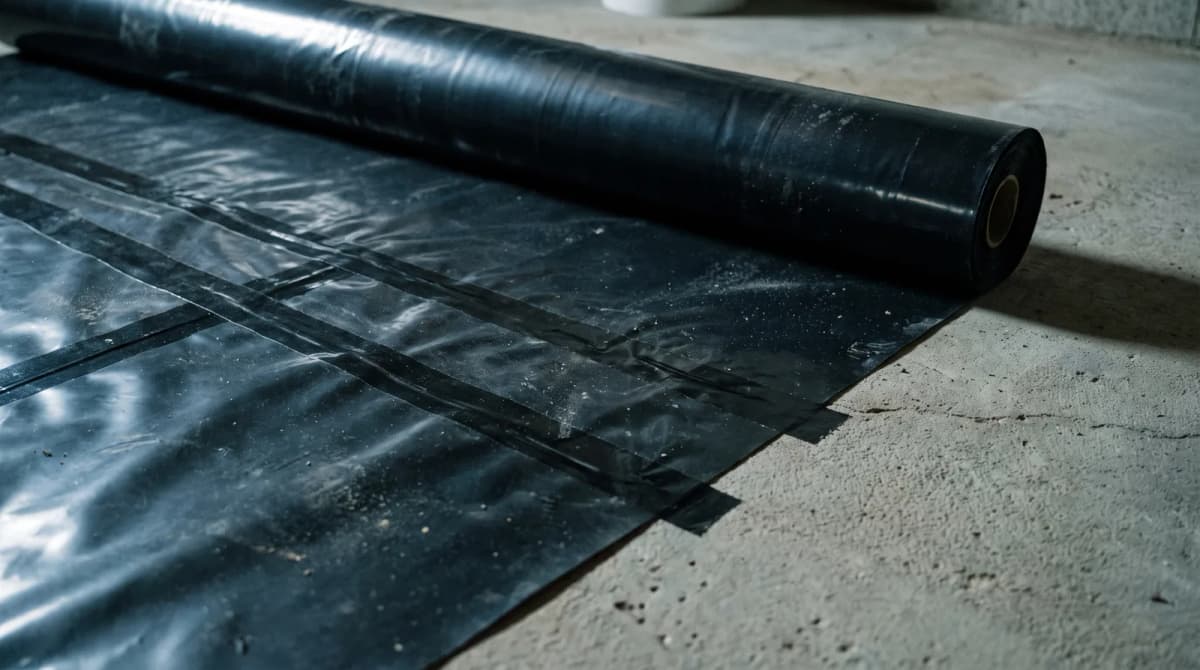
Concrete slabs release moisture vapour continuously from below, and most flooring materials aren't built to sit directly on top of that without a barrier. Floating engineered hardwood and laminate on concrete need a 6-mil poly sheet (or an underlayment with one built in). Solid hardwood uses a different, breathable wax paper instead. Basements and condo slabs are the two situations where skipping this step causes the most callbacks.
The Basic Physics of a Concrete Slab
Concrete looks solid and inert, but it's actually porous at a microscopic level, and the ground beneath any slab-on-grade or below-grade pour is rarely bone dry. Water in the surrounding soil migrates upward through the concrete as vapour, driven by the difference in humidity between the ground and the room above. This isn't a defect or a sign something went wrong with the pour, it's how concrete behaves, permanently, regardless of how new or old the slab is. The only real variable is how much vapour is moving through at any given time, which is exactly what a moisture test measures.
Why Concrete Is Different From Plywood
Plywood subfloors over joists don't generally have a standing moisture problem, there's an air gap and a crawlspace or basement below doing the work. Concrete is poured directly on or near grade, and it keeps releasing water vapour from the ground below for years, sometimes decades, after the pour. That vapour has nowhere to go once flooring seals it in, which is exactly the mechanism that causes cupping, buckling, mould, and adhesive failure if you don't plan for it.
6-Mil Poly: The Standard for Floating Floors on Concrete
For floating engineered hardwood and laminate going over a bare concrete slab, a 6-mil polyethylene sheet is the standard vapour barrier. Lay it down first, overlap seams generously, and run it up the walls slightly before trimming. This is the layer that stops slab moisture from ever reaching the underside of your flooring.
Roberts Moisture Barricade is our stocked option, rated for engineered hardwood and laminate, sold in a 120 sq ft roll.
If you're using an underlayment that already integrates a moisture layer, our 3mm Black Acoustic or 5mm Airflow Bubble underpads both do, a separate poly sheet is redundant. Check your underlayment spec before buying both; doubling up doesn't add protection, it just adds a step.
Wax Paper: The Different Rule for Solid Hardwood
Solid hardwood plays by different physics. It's nail-down, not floating, and it needs to acclimate and breathe with the room's humidity from both faces of each board. Sealing it under a true vapour barrier can trap moisture against the underside of the wood and cause exactly the cupping or buckling you were trying to prevent.
Instead, solid hardwood goes down over a rosin or wax paper slip sheet, Toolway Wax Paper Underlayment in our lineup. It's not a vapour barrier by design; it's a slip layer that reduces friction and minor moisture/dust transfer between the wood and the subfloor while still letting the assembly breathe.
| Product | Function | Use case | Price |
|---|---|---|---|
| Roberts Moisture Barricade (6-mil poly) | True vapour barrier | Floating engineered hardwood & laminate on concrete | $22.10/120 sq ft roll |
| Toolway Wax Paper | Breathable slip sheet | Nail-down solid hardwood | $50.45/750 sq ft roll |
How to Actually Install 6-Mil Poly
Roll the poly out across the full room, working from one wall to the other. Overlap seams by at least 6–8 inches. This is not the place to butt edges tight, since even a small gap defeats the point of a vapour barrier. Run the sheet up the base of the walls a couple of inches and trim it after your baseboard or underlayment goes down, rather than cutting it flush with the wall first. Tape seams and wall overlaps with a compatible tape if your underlayment doesn't already have a self-sealing edge. A barrier with gaps at every seam is only doing a fraction of its job.
If you're using an underlayment with a built-in moisture layer instead of standalone poly, the same logic applies to its seams: follow the manufacturer's overlap or tape instructions on the roll exactly, since the barrier only works as a continuous layer across the room.
New Pour vs. Old Slab: Different Moisture Stories
A newly poured concrete slab, common in additions, new condo builds, or a redone basement floor, is still releasing the water used to mix the concrete itself, and that process can take months longer than people expect. A slab poured 60 days ago can still be testing wet well above safe thresholds for flooring. An older slab, by contrast, has usually finished its initial cure, but can still show ongoing moisture from ground contact, a failed or missing original vapour retarder, or seasonal groundwater changes. Neither age tells you the actual number, which is exactly why testing matters more than assuming a slab is "probably fine" because it's been there for twenty years.
RH Testing and Calcium Chloride: The Basics
Before you commit to a flooring type or adhesive on any concrete slab you don't know the history of, testing tells you what you're actually working with:
- Calcium chloride test: measures moisture vapour emission from the slab surface over a set period, expressed in pounds per 1,000 sq ft per 24 hours. Most standard adhesives cap out around 3 lbs/1,000 sq ft/24hr.
- In-slab RH probe (ASTM F2170): measures relative humidity inside the slab itself, considered the more reliable modern method. High-RH-rated adhesives and moisture-control systems can handle readings up to 99% RH, but that's specifically because they're engineered for it, not because a normal product will tolerate it.
If you can't get a slab tested, the safe default is to treat it as a moisture risk: full vapour barrier under floating floors, a high-RH adhesive for glue-down vinyl (see our glue-down vinyl guide), and a primer that's rated for the substrate before any self-leveler goes down.
Winter and the GTA Freeze-Thaw Cycle
Toronto and Markham winters put a specific twist on basement moisture that homeowners in milder climates don't deal with. As the ground around a foundation freezes, moisture that would otherwise slowly evaporate gets trapped, then releases in a rush during spring thaw as the soil around the foundation warms and drains. A basement slab can test dry in January and considerably wetter in April, which is one more reason a single moisture test isn't necessarily the final word, and why a full vapour barrier under any basement floating floor is the safer default rather than a product you only reach for on a positive test result.
Basement and Condo Scenarios
Basements are the classic case, older concrete, grade-level or below-grade moisture pressure, and often no idea what vapour barrier (if any) was installed under the original slab. Always assume moisture risk in a basement until proven otherwise.
Condos get overlooked because the slab is above grade, but many condo pours are relatively new and still curing, or sit above parking garages and mechanical rooms with their own moisture load. Condo boards frequently require documentation on both acoustic underlayment and moisture protection before sign-off. Plan for both, not just the sound rating.
Why This Is Cheap Insurance
Against the total cost of a flooring project, a moisture barrier is one of the smallest line items on the materials list, a 120 sq ft roll runs $22.10, covering a modest room for a fraction of what a single box of flooring costs. The downside of skipping it isn't proportional to that savings: cupped or swollen flooring from moisture intrusion usually means the whole floor comes back up, plus the labour to redo it, plus the moisture problem is still sitting there waiting for the next install. It's one of the rare cases in a reno where the cheap option and the correct option are the same choice.
Products We Stock
- Roberts Moisture Barricade 6-mil Poly (120 sq ft), $22.10
- Toolway Wax Paper Underlayment (750 sq ft roll), $50.45
- 3mm Black Acoustic Underpad (built-in barrier), $70.00/200 sq ft roll
- 5mm Airflow Bubble Underpad (built-in barrier), $100.00/100 sq ft roll
See the full range at Underlay & Moisture Barriers, or size your room with our quantity calculator.
Common Moisture Barrier Mistakes
- Assuming an old slab is automatically dry. Age doesn't equal dryness, ground contact, missing original vapour retarders, and seasonal swings all matter more than how many decades the concrete has been down.
- Sealing solid hardwood under a true vapour barrier. This traps moisture against the wood rather than protecting it, use a breathable wax paper slip sheet instead, never 6-mil poly, under nail-down solid hardwood.
- Leaving gaps at seams. A vapour barrier with unsealed seams is only doing a fraction of its job, overlap generously and tape if the product doesn't self-seal.
- Doubling up unnecessarily. If your underlayment already has an integrated moisture layer, adding a separate poly sheet underneath doesn't add meaningful protection, check the spec before buying both.
- Testing once and assuming it's settled. A slab's moisture reading can shift seasonally, especially in a GTA basement through freeze-thaw, when in doubt, install the barrier regardless of a single test result.
Not Sure What Your Slab Needs?
If you don't know your slab's history or moisture reading, bring it up when you book a free measurement, and we can talk through what your subfloor actually needs before you buy the wrong barrier for the job.
Pick up rolls at our Markham showroom, or call (647) 428-1111 for a quote.
Your next step
Everything referenced above is in stock or available to order through our installation supplies section, with per-unit coverage listed so you can buy the right quantity the first time. Not sure what your subfloor needs? Call (647) 428-1111 or book a free in-home measurement and we will spec the adhesive, underlay and prep with the floor.
Frequently Asked Questions
Does every floor over concrete need a moisture barrier?
Not if your underlayment already has one built in. Our 3mm Black Acoustic and 5mm Airflow Bubble underpads both include an integrated moisture layer, so a separate poly sheet is redundant. If you're using a basic foam pad with no vapour layer, or installing solid hardwood, you need a standalone barrier.
What's the difference between 6-mil poly and the wax paper used under hardwood?
6-mil polyethylene film is a true vapour barrier, it blocks moisture vapour almost completely, which is what floating engineered hardwood and laminate need on concrete. Wax (rosin) paper under nail-down solid hardwood is not a vapour barrier; it's a slip sheet that lets the wood move slightly against the subfloor and cuts down on minor moisture and dust transfer, without trapping the wood in a sealed pocket.
Why can't I just use 6-mil poly under solid hardwood?
Solid hardwood needs to breathe and acclimate to the room's humidity from both sides. Sealing it against a true vapour barrier can trap moisture against the wood and lead to cupping or buckling. That's why nail-down solid hardwood uses a permeable wax paper slip sheet instead of a sealed poly barrier.
How do I know if my basement slab has a moisture problem?
A proper test uses either a calcium chloride kit or an in-slab RH probe per ASTM F2170, both measure how much moisture is actually moving through the concrete, rather than guessing from a visual check. If you can't get a slab tested, treat any basement or older concrete floor as a moisture risk by default and use a full vapour barrier and a moisture-tolerant adhesive.
Is a condo slab a moisture risk even though it's not a basement?
Yes. Condo concrete slabs sit above grade but are often newer pours that haven't fully cured, or sit over parking garages and mechanical spaces with their own humidity. Treat a condo slab the same as a basement until it's tested, use a vapour barrier under floating floors and a high-RH-rated adhesive for glue-down installs.