Why Your Floors Squeak — And When It's Your Subfloor
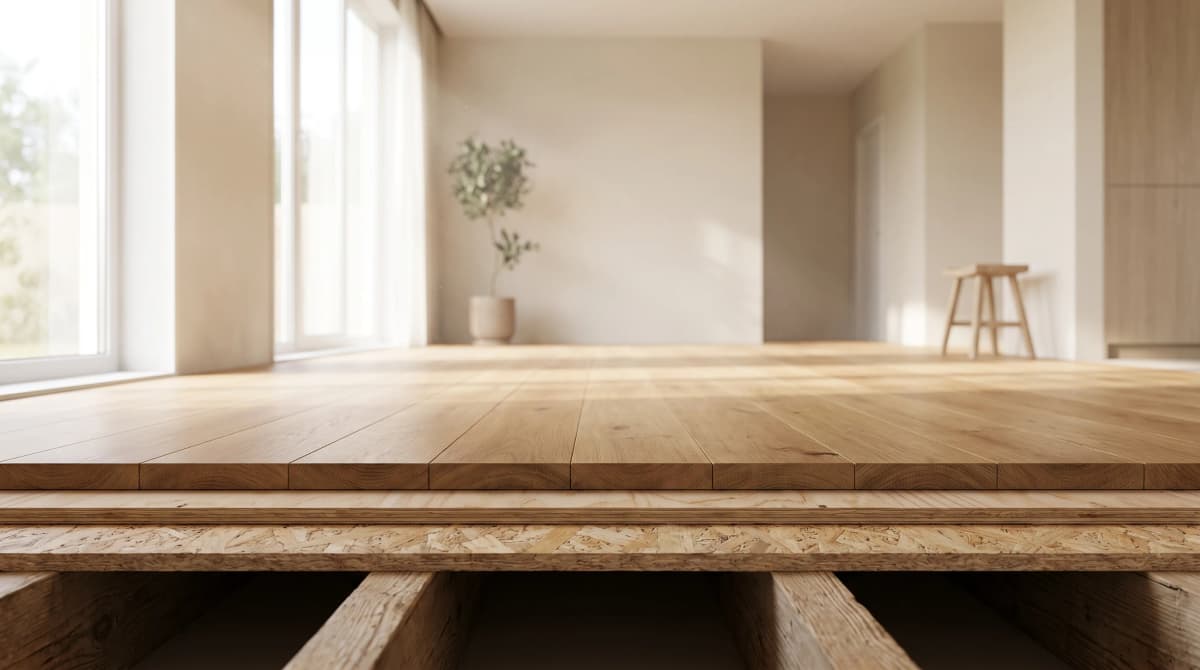
Here's what most Markham and Toronto homeowners don't know: a squeaky floor and a failing subfloor can sound almost identical from the surface. One is a loose fastener. The other is a structural problem that gets significantly more expensive the longer it sits. The squeak is the same. The fix — and the cost — are worlds apart. That gap is exactly why guessing is the wrong move.
At BBS Flooring, we do free in-home squeak and subfloor diagnoses across the GTA — no obligation, honest verdict on the spot. We'll tell you whether you're looking at a straightforward fix or something that needs real attention before it costs you more. Call us at (647) 428-1111 or book your free in-home diagnosis here. Then read on so you understand exactly what we're looking for when we get there.
Why GTA Homes Squeak More Than You'd Think
The GTA housing stock creates specific squeak conditions that aren't common everywhere. Most homes built between 1990 and 2010 — which covers a huge portion of Markham, Richmond Hill, Vaughan, and Mississauga — use ¾" OSB or plywood subfloor over engineered I-joists. That system performs well when it's installed right and stays dry. But Ontario winters push indoor relative humidity down to 20–25% in January when the furnace is running hard, then summer brings it back up to 45–50%. That seasonal swing makes wood components shrink and expand repeatedly, and over time it works fasteners loose from the joists below.
Pre-1960 Toronto homes — think Leslieville, East York, the Beaches — have a different setup: plank subfloor over solid dimensional joists. The planks were often face-nailed and have had decades to move. The squeak mechanism is the same (wood rubbing against wood or a loose fastener), but the underlying condition of those old joists matters a lot before you do anything.
Condos and finished basements are different again. There, you typically have plywood glued directly over a concrete slab. When slab moisture rises — and in a GTA basement, it often does — the adhesive bond can fail in patches. The plywood lifts slightly, loses contact with the slab, and flexes underfoot. That flex produces a squeak. It also means the subfloor is no longer fully supported. A screw-down fix on a debonded plywood-over-concrete subfloor does nothing useful.
The Free Diagnosis First — Here's Why That Order Matters
The single most common mistake we see is homeowners (or even handymen) treating every squeak as a fastener problem. The logic makes sense on the surface: squeaks are often loose fasteners, screw-downs are cheap, so fix it fast and move on. The problem is that a screw-down over a compromised subfloor is money spent twice. The squeak comes back — sometimes within months — because you've addressed the symptom without touching the cause. Now you've paid for a patch and you still need the real fix, and the window to catch it early and inexpensively has closed.
A proper in-home diagnosis — walking the floor, feeling for flex, checking moisture, looking at what's accessible from below — tells you which situation you're actually in. That's what our free visit does. We're not going to upsell you on subfloor work you don't need. If it's a simple fastener issue, we'll say so plainly. But if there's subfloor movement, soft spots, or moisture involvement, you need to know that before anyone drives a screw.
Cosmetic Squeak vs. Structural Problem: What We're Looking For
Signs It's Likely a Fastener or Surface Issue
- Squeak is isolated to one or two spots, not spreading
- Floor feels solid underfoot — no flex, no give
- No soft spots when you press firmly in the squeaky area
- Squeak appeared after a dry winter and may have reduced slightly in summer humidity
- Home is a 1990s–2010s build with OSB subfloor that's otherwise been dry
Signs It May Be Your Subfloor
- Floor flexes or 'gives' noticeably when you walk — you feel it in your knees
- Squeak is spreading to adjacent areas over months
- Soft or spongy spots anywhere near the squeak
- You're in a basement or condo slab situation and the squeak developed after a wet season
- Visible floor finish damage — cupping, bubbling, or gaps opening between boards — alongside the squeak
- The squeak returned after a previous 'fix'
None of these lists are a reliable self-diagnosis — they're indicators. A floor that feels solid can still have subfloor delamination that only shows up when you get under it or use a moisture meter. A floor with some flex isn't always a structural emergency. The point is that the surface tells you something, but not everything. That's what the in-home visit resolves.
What Subfloor Work Actually Costs — So You Understand the Stakes
We're straight with our customers about numbers because understanding the range is what makes a free diagnosis obviously worth your time.
Subfloor repair — sistering joists, replacing damaged OSB or plywood sections, re-gluing and fastening debonded panels — typically runs $800 to $2,500 for a contained area in a GTA home, depending on access and scope. Full subfloor replacement in a room before new flooring goes down can reach $3,000 to $6,000+ depending on square footage and what's underneath. If a failing subfloor has allowed moisture to reach joists or framing, you're potentially into remediation territory that goes beyond flooring entirely.
Caught early — when it's a small delaminated section or a few compromised fastener points — subfloor work is manageable. Left alone until the floor finish is visibly damaged and the flex has spread, the scope grows. The free diagnosis is how you find out which side of that line you're on right now.
How We Actually Diagnose a Squeak (The 4-Point Check)
A squeak sounds simple. Fix it wrong and you're pulling up flooring six months later. Here's the exact method our installation team runs on every free in-home visit — and why eyeballing it from the surface almost always misses the real cause.
- Map and isolate the squeak. We walk the floor in a grid pattern, marking every squeak and every flex point separately. That distinction matters: a squeak that follows a straight line usually tracks a joist, which tells us something completely different than a random cluster near a doorway or under a transition strip.
- Flex and deflection test. We shift weight slowly across the marked zones and feel for give. A solid subfloor has almost no movement. A spongy one — even a subtle one — means the problem isn't the finish floor at all. Screwing through hardwood into a compromised subfloor just moves the noise two feet down the hall.
- Moisture read. We put a calibrated moisture meter directly on the subfloor or slab. In GTA homes — especially finished basements, older Markham bungalows, and condo units over parkade slabs — moisture variance is the hidden driver behind delamination, fastener backout, and chronic squeaking that no surface fix touches.
- From-below inspection. Where basement or crawlspace access exists, we go under. We check joist tops for staining, look for subfloor delamination, and confirm whether fasteners have backed out. What you see from below in five minutes answers questions the surface never will.
Guessing skips all four steps — and that's how a small squeak becomes a full subfloor replacement. Book your free in-home diagnosis and we'll have a clear answer before we leave your door.
What Goes Down After the Subfloor Is Right
Once you have a confirmed flat, stable, dry subfloor, the flooring options open up considerably. Here's what we'd recommend based on your situation:
For Main Floor Living Areas
If you want real wood character with dimensional stability over GTA's seasonal humidity swings, Naked Walnut by Vidar Design Flooring is engineered American black walnut at $7.29/sqft — a genuinely beautiful product that handles the humidity cycle better than solid hardwood because of its cross-ply construction. It still needs a properly prepared subfloor; engineered hardwood amplifies subfloor problems rather than hiding them. Browse our full engineered hardwood and hardwood flooring range for more options.
For Basements, Condos, or Anywhere Subfloor Moisture Is a Factor
If the diagnosis reveals moisture involvement — common in GTA basements and condo slabs — the product choice matters as much as the subfloor fix. Our 1106 Twilight Woden 11mm SPC Vinyl at $4.35/sqft is 100% waterproof, dimensionally stable, and floats over imperfect subfloors better than wood-based products. It's the right call when you've addressed the moisture source but want insurance against future fluctuation. See the full vinyl flooring collection.
For Budget-Conscious Rooms With Good Subfloor Conditions
Canyon Mist NAF 14mm Waterproof Laminate at $3.39/sqft offers 72-hour waterproof protection and a 14mm profile that bridges minor subfloor irregularities better than thinner products. It's a strong value option in above-grade rooms where the subfloor checks out. Explore the laminate flooring range for the full selection.
Our installation team handles subfloor prep, transitions, and stair work as part of a complete job — so the flooring goes down once, correctly, and stays quiet. For background on installation methods and subfloor compatibility, see our guides on engineered hardwood over concrete subfloors and floating vs. glue-down vs. nail-down installation.
The Honest Bottom Line
A squeak is information. It's telling you something moved that shouldn't move, or something separated that should be bonded. What it can't tell you — from the surface — is how serious that movement is or how far it's progressed. That requires a real look: someone walking the floor deliberately, checking for flex patterns, using a moisture meter, and ideally getting eyes on the subfloor from below if access allows.
That's what our free in-home diagnosis gives you. Not a sales pitch. Not a guess. A straight answer: here's what you have, here's what it needs, here's what it'll cost. If it's minor, we'll tell you. If it's something that needs real work before new flooring goes down, you'll know that too — and you'll be glad you found out before paying for flooring that goes over a problem subfloor and starts squeaking again in six months.
Book your free in-home squeak and subfloor diagnosis: call (647) 428-1111, visit us at 6061 Highway 7, Markham, or schedule online here. No obligation. Honest verdict. One visit.
Frequently Asked Questions
Can I tell from the surface whether my squeak is a fastener problem or a subfloor problem?
Sometimes the signs point strongly one way — a single isolated squeak on a solid-feeling floor after a dry winter is more likely a fastener issue than a spreading squeak with noticeable flex. But surface indicators aren't reliable enough to act on without a proper look. Subfloor delamination, for example, can exist under a floor that feels reasonably solid until you use a moisture meter or check from below. The safe move is a proper in-home diagnosis before anyone does anything — which is exactly what BBS offers for free.
My floor squeaked last winter and stopped in summer. Does that mean it fixed itself?
Not exactly. What you're describing is the seasonal humidity cycle doing what it does in GTA homes: wood shrinks in dry furnace heat (January RH can drop to 20–25% indoors) and fasteners work loose, then summer humidity causes slight expansion that can temporarily reduce friction. The underlying looseness is still there. Each cycle tends to make it a little worse. If it came back last winter, it'll likely come back again — and potentially spread. Worth having it looked at properly before the next heating season.
Someone quoted me $400–600 to drive screws through the subfloor and into the joists. Is that a good fix?
It can be the right fix in the right situation — specifically when the squeak is genuinely caused by loose fasteners and the subfloor itself is structurally sound and dry. The risk is that a screw-down over a compromised or moisture-affected subfloor doesn't address the real problem. The squeak returns, and now you've spent money on a patch and still need the underlying work. The only way to know which situation you're in is a proper diagnosis before committing to any repair. Our free in-home visit tells you exactly that.
I'm in a condo with a concrete slab. Can a squeak even be a subfloor issue there?
Yes — and it's actually a common one in GTA condos and finished basements. The typical setup is plywood glued over the concrete slab. When slab moisture rises (which happens seasonally in many GTA buildings), the adhesive bond can fail in patches. The plywood lifts slightly, loses full contact with the slab, and flexes underfoot — that flex is your squeak. A screw-down fix doesn't help a debonded plywood panel. Addressing it properly means identifying where the bond has failed and what's driving the moisture. That's something we can assess on-site.
How long does the free in-home diagnosis take, and what does it involve?
Usually 30–45 minutes for a typical room or area of concern. We walk the floor systematically, note where the flex and squeak patterns are, check for soft spots, use a moisture meter on suspect areas, and — if there's basement or crawlspace access — get eyes on the subfloor from below. At the end, you get a straight answer: what's causing it, what it needs, and a realistic cost range. No obligation to proceed with BBS. Call (647) 428-1111 or book at bbsflooring.ca/free-measurement.
If the diagnosis shows I need subfloor work, does BBS handle that too?
Yes. Our installation team handles subfloor prep, repair, and replacement as part of a complete flooring job. That includes sistering joists, replacing damaged OSB or plywood sections, re-bonding plywood-over-concrete, and ensuring the surface is flat and stable before any new flooring goes down. Doing the subfloor and the flooring as one job means one crew, one warranty, and no finger-pointing if something comes up later.